A Chemiluminescent Magnetic Enzyme Immunoassay Method for 2 Triazole Pesticide Detection in Wheat
Xin Shi, Kai Huang, Baoyuan Guo, Xinbao Liu, Hongmei Liu, Wei Zhang, Yang Wang, Zhe Wang, Chun’e Zhang

TL;DR
A new immunoassay method was developed to detect two triazole pesticides in wheat with high sensitivity and specificity.
Contribution
A novel chemiluminescent magnetic enzyme immunoassay method for detecting triazolone and tebuconazole in wheat.
Findings
The method achieved detection limits of 0.002835 μg·mL−1 for triazolone and 0.00064 μg·mL−1 for tebuconazole.
Recovery rates ranged from 90.1% to 103.6% with relative standard deviation below 10%.
The method showed less than 0.1% cross-reaction with structural analogs and matched UHPLC-MS/MS results in real samples.
Abstract
We developed an alkaline phosphatase (AP) chemiluminescence immunoassay method by combining the superparamagnetic magnetic beads and the biotin–streptavidin signal amplification system to detect the triazolone and tebuconazole in wheat. Through optimization of the extraction solution and extraction time, acetonitrile–PBS was selected as the extraction solution with an extraction time of 5 min as the optimal pretreatment condition. Optimizing the dilution ratio of antigen antibodies, the optimal detection conditions were selected as the dilution ratios of 1:8000 and 1:20,000 for the triazolone monoclonal antibody solution and biotinylated triazolone solution, and 1:4000 and 1:20,000 for the tebuconazole monoclonal antibody solution and biotinylated tebuconazole solution, respectively. Under the optimal conditions, the method demonstrated that the limits of detection (LOD) of triazolone…
Genes, proteins, chemicals, diseases, species, mutations and cell lines named across the full text — each resolved to its canonical identifier and authoritative record.
Click any figure to enlarge with its caption.
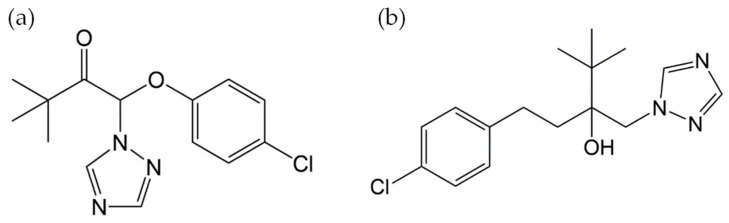 Figure 1
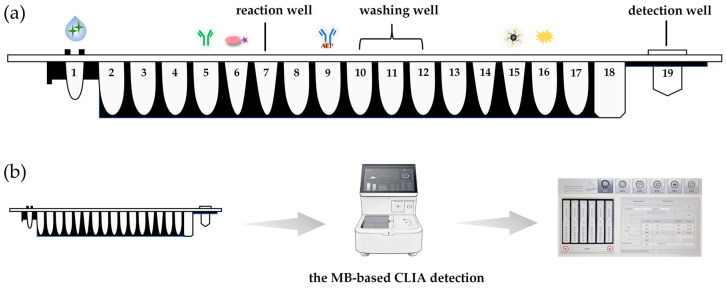 Figure 2
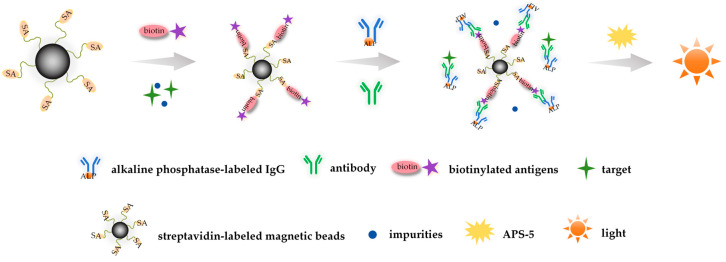 Figure 3
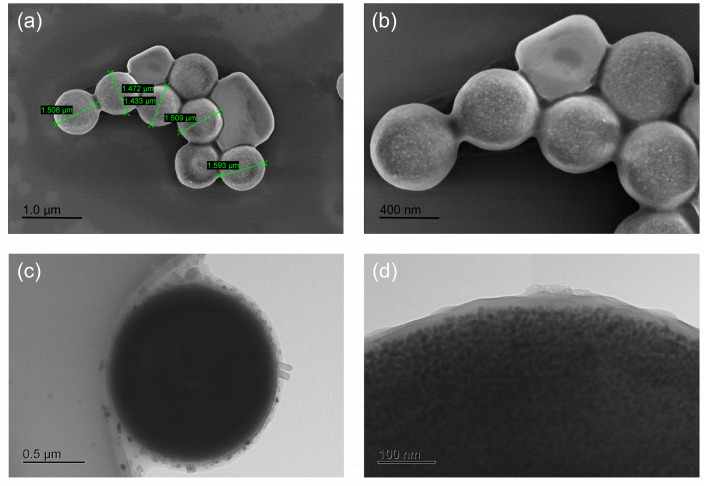 Figure 4
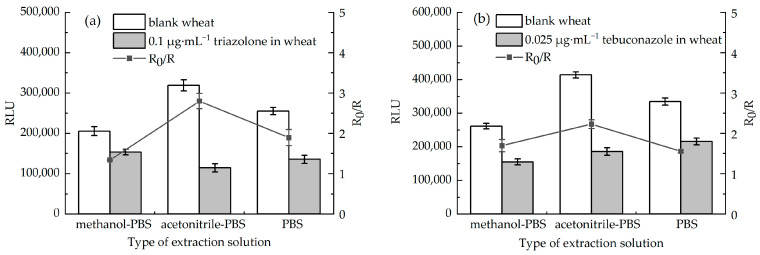 Figure 5
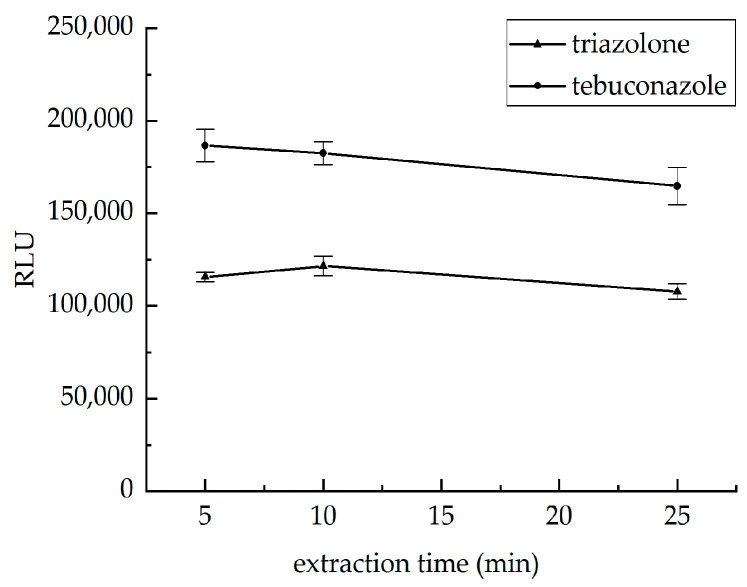 Figure 6
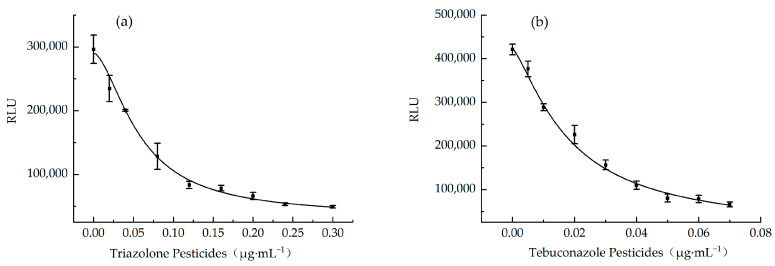 Figure 7
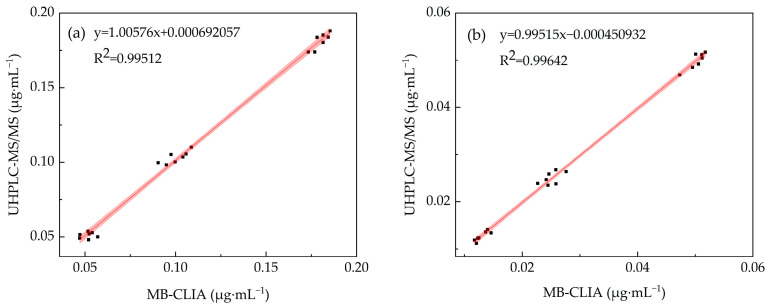 Figure 8
Peer Reviews
No public reviews on file for this paper yet. If you reviewed it on a platform where reviews are public (OpenReview, ICLR, NeurIPS, ICML), you can paste yours below so the community can read it here.
Videos
No videos yet. Explain this paper in a talk, walkthrough, or lecture? Add one.
Taxonomy
TopicsCarbon and Quantum Dots Applications · Analytical chemistry methods development · Biosensors and Analytical Detection