Prognostic Significance of Erythrocyte Sedimentation Rate for Survival in Equine Colic
Federica Meistro, Riccardo Rinnovati, Edoardo Blanc, Priscilla Berni, Silvia Napoli, Elisa Marcucci, Paola D’Angelo, Marco Ruggeri, Alessandro Spadari, Rodolfo Gialletti

TL;DR
Low erythrocyte sedimentation rate (ESR) at admission is linked to poor survival in horses with colic, suggesting it could help identify at-risk animals early.
Contribution
This study is the first to characterize ESR behavior in equine colic and demonstrate its potential as an early prognostic tool.
Findings
Non-survivors had significantly lower ESR at admission compared to survivors.
ESR increased in surviving horses within 24 hours but remained low in non-survivors.
Low ESR at admission is associated with poor survival outcomes in horses undergoing colic surgery.
Abstract
Colic is one of the most common and severe emergencies in horses and continues to represent a major cause of death in equine practice. One of the main clinical challenges is identifying, as early as possible, which horses are at greater risk of deterioration or death, particularly at the time of hospital admission when rapid decisions are required. Although several biomarkers are used to support prognostic evaluation, many of them increase slowly and may be of limited value during the early stages of severe disease. In this study, we investigated the erythrocyte sedimentation rate, a non-specific indicator of systemic inflammation widely used in human medicine and recently made available for routine use in horses through automated analysis. This parameter was measured at admission in horses presenting with colic and, in surgical cases, again 24 h later. Horses that did not survive…
Genes, proteins, chemicals, diseases, species, mutations and cell lines named across the full text — each resolved to its canonical identifier and authoritative record.
Click any figure to enlarge with its caption.
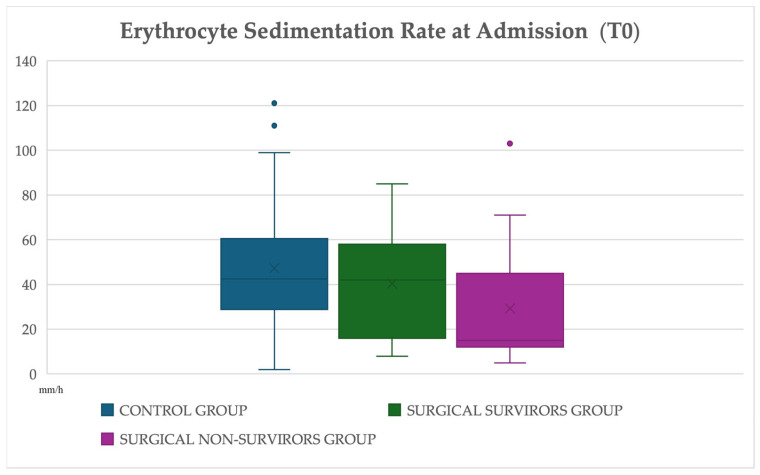 Figure 1
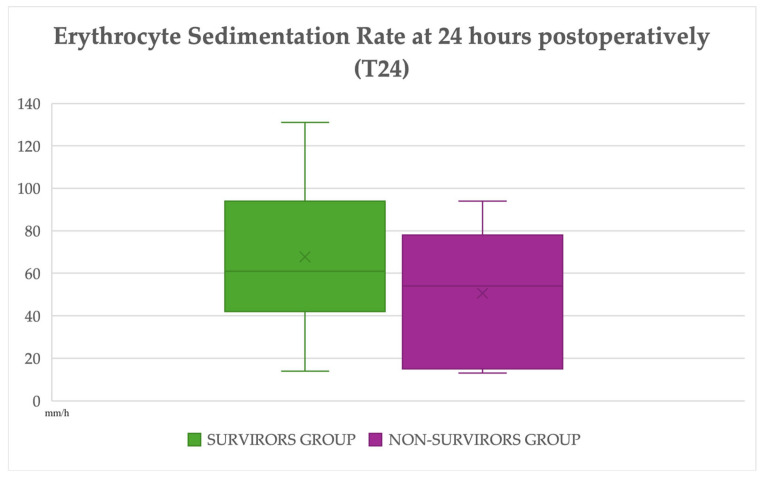 Figure 2
Peer Reviews
No public reviews on file for this paper yet. If you reviewed it on a platform where reviews are public (OpenReview, ICLR, NeurIPS, ICML), you can paste yours below so the community can read it here.
Videos
No videos yet. Explain this paper in a talk, walkthrough, or lecture? Add one.
Taxonomy
TopicsVeterinary Equine Medical Research · Reproductive Physiology in Livestock · Veterinary Pharmacology and Anesthesia