Risks, Benefits, and Molecular Targets of Fenugreek Administration in the Treatment of Hepatocellular Carcinoma
Maanya Vittal, Bruna Menegassi, Manlio Vinciguerra

TL;DR
This review explores fenugreek's potential as a supportive treatment for liver cancer, highlighting its benefits, risks, and biological mechanisms.
Contribution
The paper provides a comprehensive review of fenugreek's therapeutic potential and safety in hepatocellular carcinoma treatment.
Findings
Fenugreek compounds like diosgenin and saponins show antitumor effects through apoptosis and cell cycle regulation.
Fenugreek exhibits hepatoprotective properties via antioxidant and anti-inflammatory mechanisms.
Safety concerns include reproductive toxicity and herb-drug interactions, especially in patients with liver dysfunction.
Abstract
Liver cancer is a serious disease with limited treatment options, and many patients experience side effects from current therapies. Fenugreek is a commonly used medicinal plant that has shown potential benefits for liver health and cancer prevention in laboratory studies. This review explores whether fenugreek could be a useful supportive option in the treatment of liver cancer. The authors aim to summarize current knowledge on how fenugreek and its natural compounds may slow cancer growth, protect liver cells, and interact with key biological processes involved in cancer development. At the same time, possible safety concerns, such as side effects and interactions with cancer drugs, are carefully discussed. By bringing together evidence on benefits, risks, and biological mechanisms, this work highlights both the promise and the limitations of fenugreek. The findings may help…
Genes, proteins, chemicals, diseases, species, mutations and cell lines named across the full text — each resolved to its canonical identifier and authoritative record.
Click any figure to enlarge with its caption.
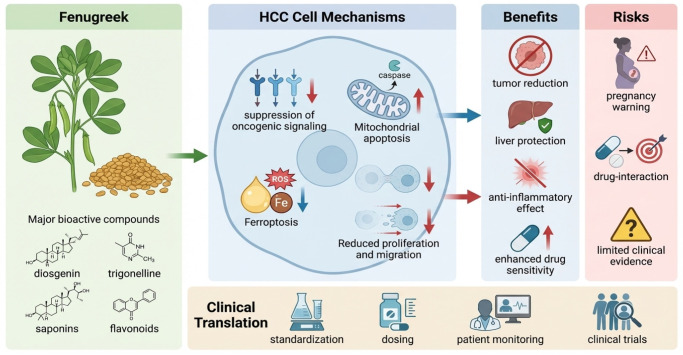 Figure 1
Peer Reviews
No public reviews on file for this paper yet. If you reviewed it on a platform where reviews are public (OpenReview, ICLR, NeurIPS, ICML), you can paste yours below so the community can read it here.
Videos
No videos yet. Explain this paper in a talk, walkthrough, or lecture? Add one.
Taxonomy
TopicsNatural Antidiabetic Agents Studies · Phytochemical Studies and Bioactivities · Potato Plant Research