Comparison of Pelvic Peritonectomy vs. Rectosigmoid Resection During Hudson Procedure for Advanced Ovarian Cancer: 6-Year Experience of an ESGO-Certified Center
Dimitrios Zouzoulas, Panagiotis Tzitzis, Iliana Sofianou, Katerina Tzika, Kimon Chatzistamatiou, Vasilis Theodoulidis, Eleni Timotheadou, Grigoris Grimbizis, Dimitrios Tsolakidis

TL;DR
A study compares two surgical techniques for advanced ovarian cancer and finds similar survival rates but higher complication risks with one method.
Contribution
The study provides a 6-year comparison of pelvic peritonectomy and rectosigmoid resection in advanced ovarian cancer surgeries.
Findings
Rectosigmoid resection was linked to higher surgical complexity and complication rates but no survival benefit.
Pelvic peritonectomy achieved similar survival outcomes with lower morbidity when complete resection was possible.
Residual disease and postoperative complications were key prognostic factors for survival.
Abstract
This retrospective cohort compared pelvic peritonectomy (PP) versus rectosigmoid resection (RR) during the Hudson procedure in patients with advanced ovarian cancer and cul-de-sac involvement. Ninety-three women were treated in an ESGO-certified center between 2017 and 2022 were included and divided into RR (n = 34) and PP (n = 59) groups with comparable baseline characteristics and high complete gross resection rates (>70%). RR was more often performed in primary debulking and was associated with higher peritoneal cancer index (PCI) and surgical complexity score, longer operating time, increased ICU admission, longer hospitalization and higher overall postoperative complication rates, without an increase in major (grade III) events. Progression-free and overall survival did not differ significantly between the two groups. Multivariable Cox regression identified residual disease and…
Genes, proteins, chemicals, diseases, species, mutations and cell lines named across the full text — each resolved to its canonical identifier and authoritative record.
Click any figure to enlarge with its caption.
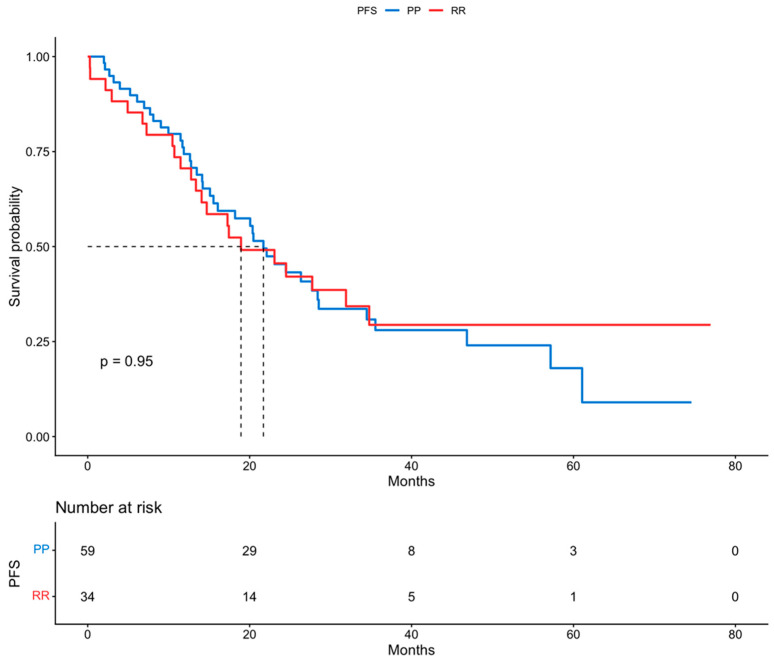 Figure 1
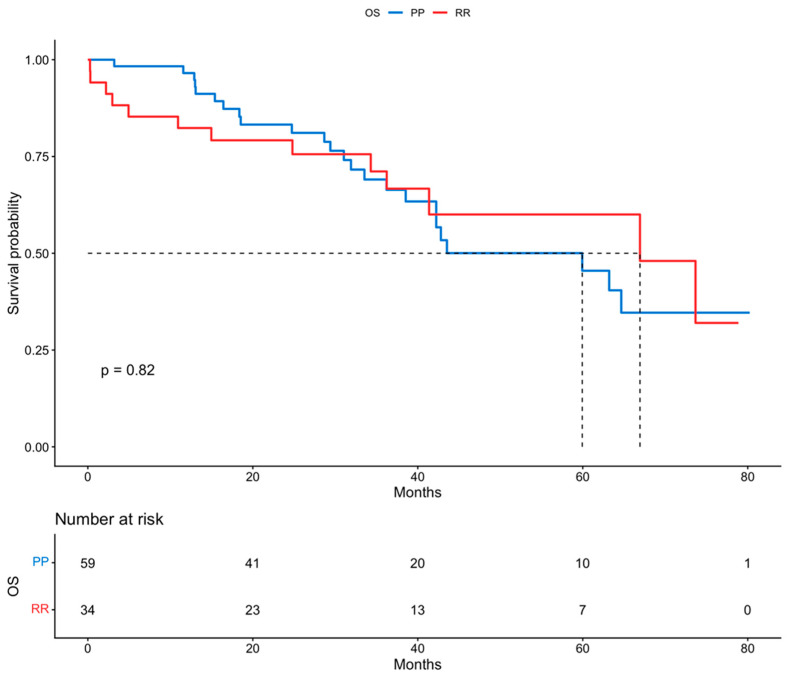 Figure 2
Peer Reviews
No public reviews on file for this paper yet. If you reviewed it on a platform where reviews are public (OpenReview, ICLR, NeurIPS, ICML), you can paste yours below so the community can read it here.
Videos
No videos yet. Explain this paper in a talk, walkthrough, or lecture? Add one.
Taxonomy
TopicsOvarian cancer diagnosis and treatment · Intraperitoneal and Appendiceal Malignancies · Intestinal and Peritoneal Adhesions