Chronopharmacology-Driven Precision Therapies for Time-Optimized Cardiometabolic Disease Management
Shakta Mani Satyam, Sainath Prabhakar, Mohamed El-Tanani, Bhoomendra Bhongade, Adil Farooq Wali, Imran Rashid Rangraze, Ismail Ibrahim Ali Matalka, Yahia El-Tanani, Manfredi Rizzo, Sorina Ispas, Ioannis Ilias, Anna Paczkowska, Viviana Maggio, Karolina Hoffmann

TL;DR
This paper reviews how timing treatments according to the body's daily rhythms can improve outcomes for heart and metabolic diseases.
Contribution
It introduces chronopharmacology as a novel approach to optimize drug timing for better efficacy and fewer side effects in cardiometabolic conditions.
Findings
Aligning drug administration with circadian rhythms improves therapeutic effectiveness and reduces adverse effects.
Core clock genes and tissue-specific rhythms influence drug absorption and action in cardiometabolic diseases.
Artificial intelligence and wearable devices can tailor treatments to individual biological clocks.
Abstract
Cardiometabolic diseases such as high blood pressure, type 2 diabetes, high cholesterol, and obesity are leading causes of illness and death worldwide, affecting millions and straining healthcare systems. Traditional drug treatments often work inconsistently or cause side effects because they ignore the body’s natural daily rhythms, which control how organs function and how medications act. Chronopharmacology is an emerging approach that times treatments to these biological rhythms, making therapies more effective and safer. This review explores how circadian variations in gene expression and tissue function influence drug absorption and therapeutic responses, and how optimizing medication timing can improve clinical outcomes in patients with single or multiple cardiometabolic conditions. It also highlights innovative tools, including artificial intelligence, rhythm-guided biomarkers,…
Genes, proteins, chemicals, diseases, species, mutations and cell lines named across the full text — each resolved to its canonical identifier and authoritative record.
Click any figure to enlarge with its caption.
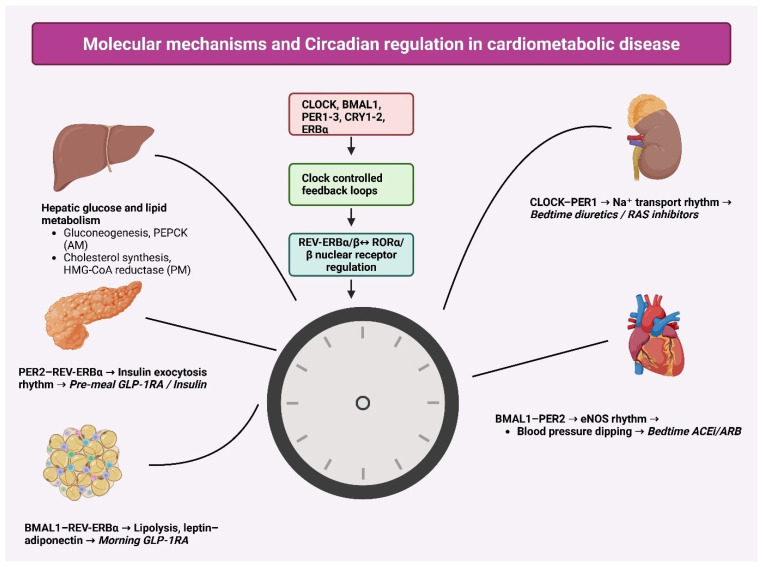 Figure 1
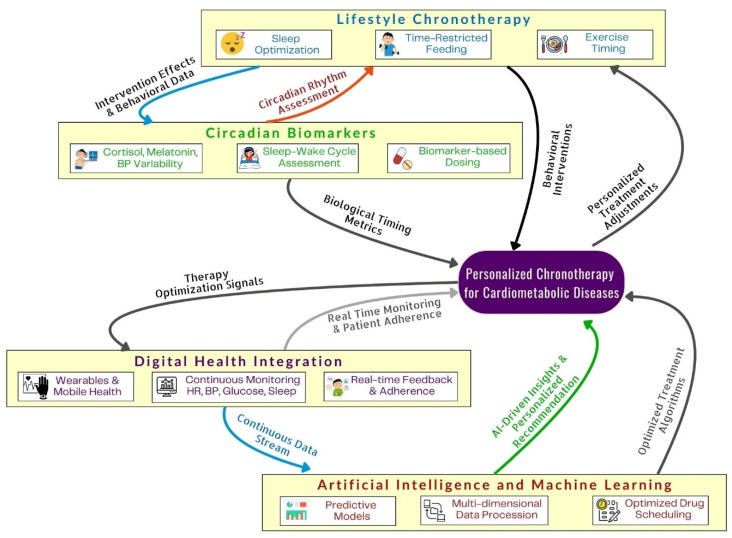 Figure 2
Peer Reviews
No public reviews on file for this paper yet. If you reviewed it on a platform where reviews are public (OpenReview, ICLR, NeurIPS, ICML), you can paste yours below so the community can read it here.
Videos
No videos yet. Explain this paper in a talk, walkthrough, or lecture? Add one.
Taxonomy
TopicsCircadian rhythm and melatonin · Dietary Effects on Health · Digital Mental Health Interventions