Optimization of Sodium Alginate Concentration and Evaluation of Individual Versus Group In Vitro Culture of Porcine Preantral Follicles in a Serum-Free Medium
Alfredo González-Gil, Belén Sánchez-Maldonado, Carlos García-Artiga, Pedro José Aranda, Rosa Ana Picazo

TL;DR
This study finds that a 0.5% alginate gel improves the growth and hormone production of pig ovarian follicles in lab cultures, offering a better method for preserving genetic diversity.
Contribution
The study introduces a 3D alginate-based culture system that optimizes structural and hormonal development of porcine preantral follicles in vitro.
Findings
Follicles cultured in 0.5% alginate gel maintained structure, grew more, and produced higher hormones than those in 0% or 1% gels.
Group-cultured follicles in 0.5% alginate showed better growth and hormone levels compared to individually cultured ones.
Estradiol and testosterone concentrations were highest in the 0.5% alginate group, indicating enhanced steroidogenesis.
Abstract
In vitro culture of porcine ovarian follicles provides an experimental model to investigate the regulation of folliculogenesis and represents a valuable tool for female gamete preservation, which is essential for maintaining swine genetic variability. Traditional two-dimensional culture systems do not offer adequate support, altering the normal structure and physiology of follicles growing in vitro. This study tested a three-dimensional alginate gel designed to form a soft scaffold around follicles. These were cultured for 14 days directly on the growth surface or in two different alginate concentrations and were monitored for their size, structure, and hormone production. Those cultured in a medium-strength alginate gel (0.5%) maintained their normal structure, achieved greater development, and produced higher hormone concentrations than follicles grown without gel (0%) or in a stiffer…
Genes, proteins, chemicals, diseases, species, mutations and cell lines named across the full text — each resolved to its canonical identifier and authoritative record.
Click any figure to enlarge with its caption.
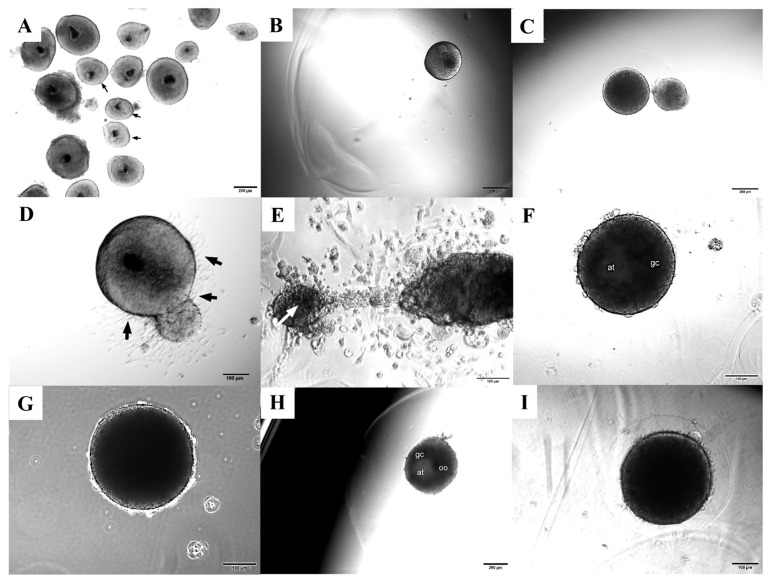 Figure 1
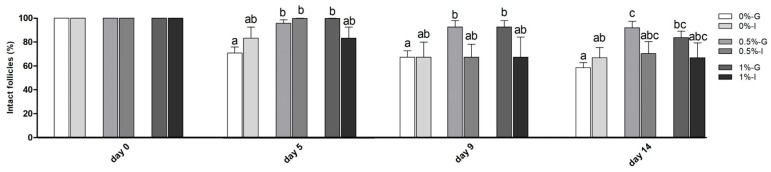 Figure 2
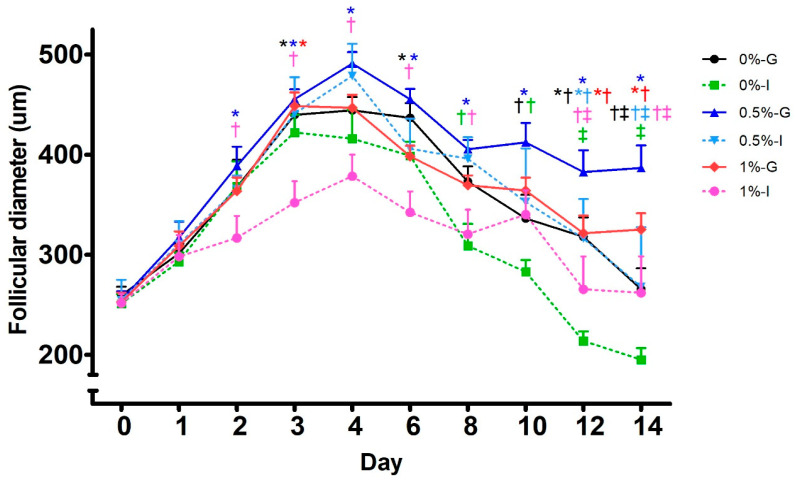 Figure 3
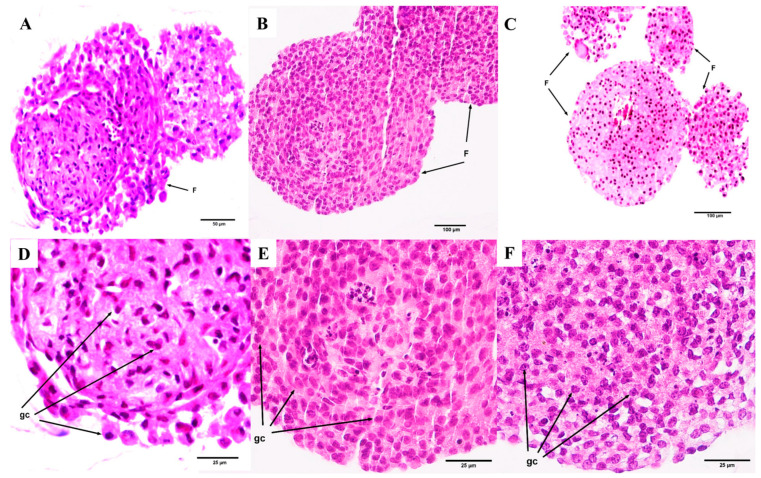 Figure 4
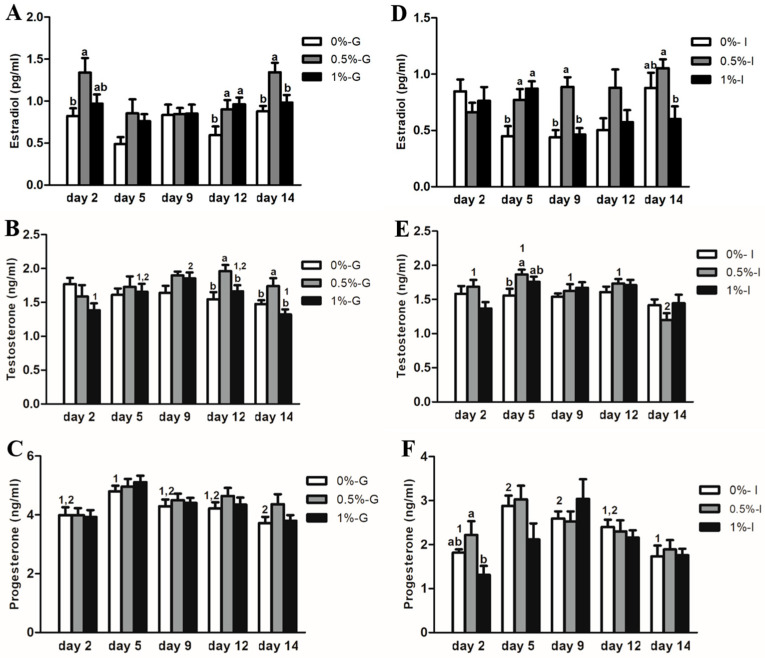 Figure 5
Peer Reviews
No public reviews on file for this paper yet. If you reviewed it on a platform where reviews are public (OpenReview, ICLR, NeurIPS, ICML), you can paste yours below so the community can read it here.
Videos
No videos yet. Explain this paper in a talk, walkthrough, or lecture? Add one.
Taxonomy
TopicsReproductive Biology and Fertility · Ovarian function and disorders · Gynecological conditions and treatments