Evaluating Osteoarthritis Severity in Mice Using μCT-Derived Geometric Indices
Churou Tang, Chutamath Sittplangkoon, Cheng Xiang, Lindsay Schnur, Rong Duan, Xi Lin, Dongmei Li, Zhenqiang Yao

TL;DR
This study introduces new μCT-based geometric indices to accurately assess osteoarthritis severity in mice, offering reliable and quantifiable metrics for disease progression.
Contribution
The study introduces novel μCT-derived geometric indices for evaluating osteoarthritis severity in mice with high reproducibility and diagnostic precision.
Findings
Distal femoral width-to-length ratio increased significantly in OA mice, indicating osteophyte formation.
Proximal tibial height-to-width ratio decreased, reflecting cartilage degeneration and bone collapse.
Indices showed strong reproducibility and were validated histologically and in aged mice with age-related OA.
Abstract
Murine models of osteoarthritis (OA) are essential for investigating disease mechanisms and for the preclinical development of disease-modifying therapies. However, reliable, easily quantifiable, and objective metrics for assessing OA disease severity in murine models are lacking. This study addresses this gap by developing μCT-derived geometric indices in mice with knee-joint OA. We found that the distal femoral width-to-length ratio increased significantly at 4 and 8 weeks following medial meniscectomy (MMS) in 10–12-month-old middle-aged mice, reflecting osteophyte formation at the distal femur. In contrast, the proximal tibial height-to-width ratio decreased significantly, reflecting articular cartilage degeneration, subchondral bone collapse, and osteophyte formation at the proximal tibia. Similar changes in these geometric indices were also observed in 28-month-old aged mice with…
Genes, proteins, chemicals, diseases, species, mutations and cell lines named across the full text — each resolved to its canonical identifier and authoritative record.
Click any figure to enlarge with its caption.
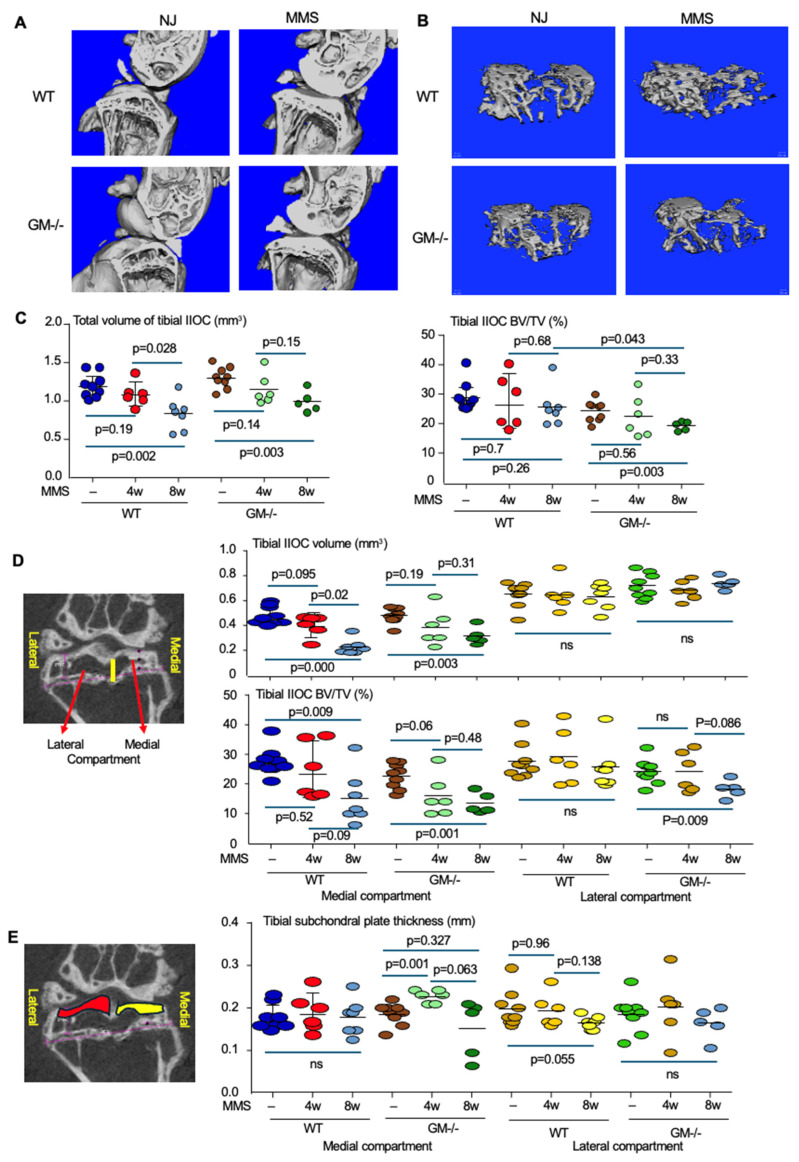 Figure 1
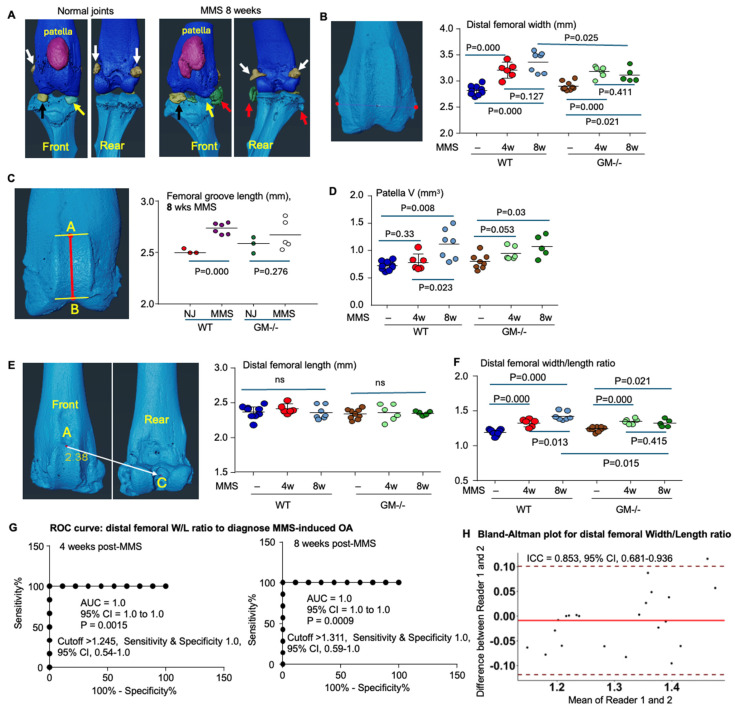 Figure 2
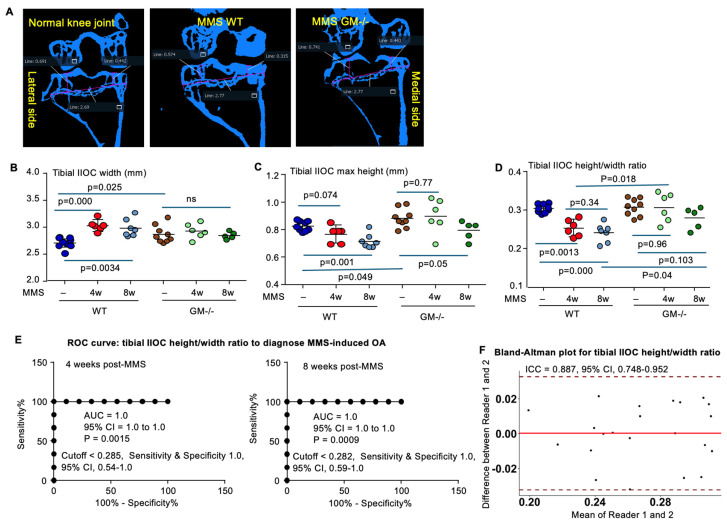 Figure 3
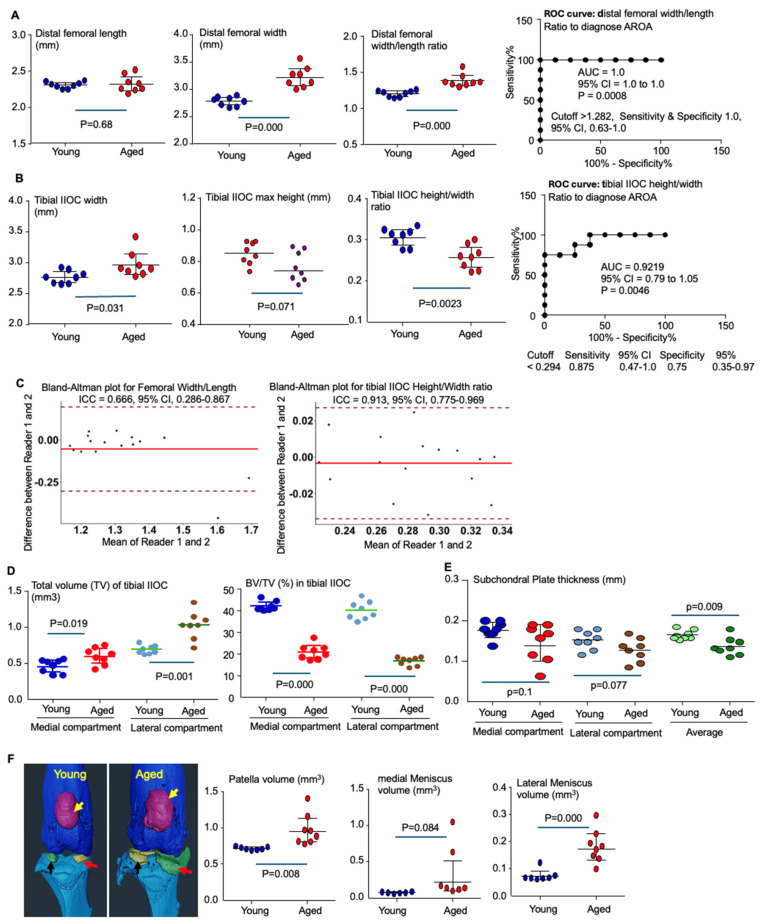 Figure 4
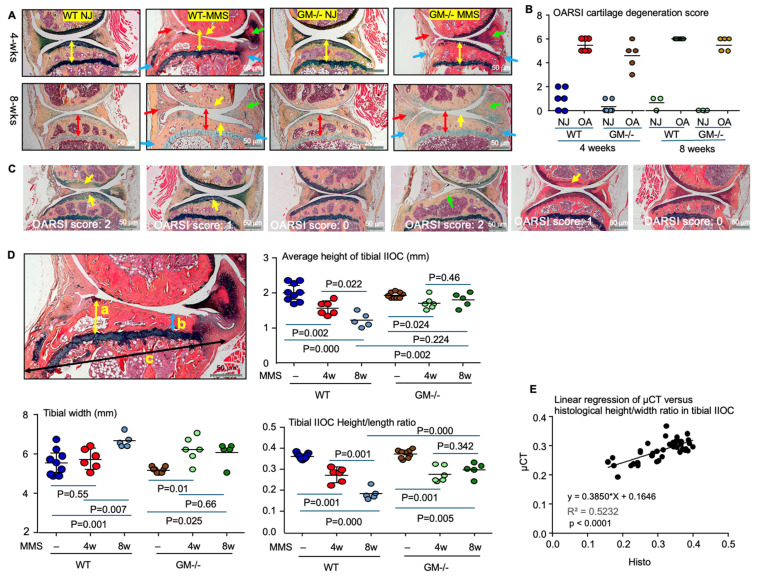 Figure 5
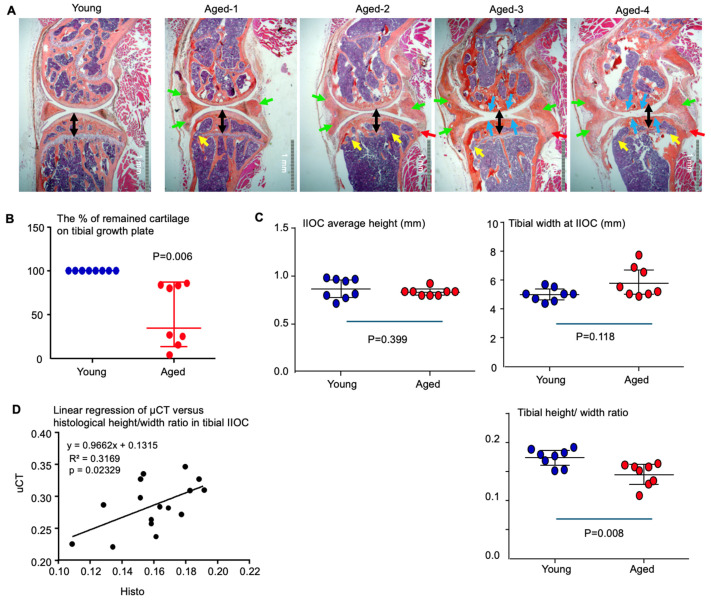 Figure 6
Peer Reviews
No public reviews on file for this paper yet. If you reviewed it on a platform where reviews are public (OpenReview, ICLR, NeurIPS, ICML), you can paste yours below so the community can read it here.
Videos
No videos yet. Explain this paper in a talk, walkthrough, or lecture? Add one.
Taxonomy
TopicsOsteoarthritis Treatment and Mechanisms · Knee injuries and reconstruction techniques · Bone health and osteoporosis research