Differential Uptake and Release of Female Genital Secretions Components and HPV DNA by Veil, Swab, and Vaginal Tampon
Ralph-Sydney Mboumba Bouassa, Jonathan Muwonga Tukisadila, Laurent Belec

TL;DR
This study compares how well different self-sampling devices collect and release proteins, nucleic acids, and HPV DNA from artificial genital fluid.
Contribution
The study introduces a novel comparison of self-sampling devices for molecular recovery efficiency, focusing on HPV DNA and biomolecules.
Findings
The vaginal veil showed the highest recovery rates for proteins (81%) and nucleic acids (91%).
HPV-16 DNA release was highest with the vaginal veil (89%) compared to other devices.
Vaginal tampons and plastic film had poor recovery rates for proteins and nucleic acids.
Abstract
Background/Objectives: Self-collection devices are more widely used than ever for detecting sexually transmitted infections and cervical cancer. Despite this, we still lack a clear understanding of how well these tools actually collect and release the necessary molecular samples. This study compared the in vitro uptake and release performance of commonly used self-sampling devices for total proteins, nucleic acids, and episomal human papillomavirus type 16 (HPV-16) DNA. Methods: An artificial cervicovaginal fluid composed of phosphate-buffered saline supplemented with serum and nucleic acid extracts was serially diluted 2-fold. Each dilution was applied for 5 min to the external surfaces of a vaginal veil (Vaginal Veil Collector V-Veil UP2TM device), a flocked swab (FLOQSwabs®), and a commercial vaginal tampon. Non-woven surgical tissue and plastic film served as controls. Total…
Genes, proteins, chemicals, diseases, species, mutations and cell lines named across the full text — each resolved to its canonical identifier and authoritative record.
Click any figure to enlarge with its caption.
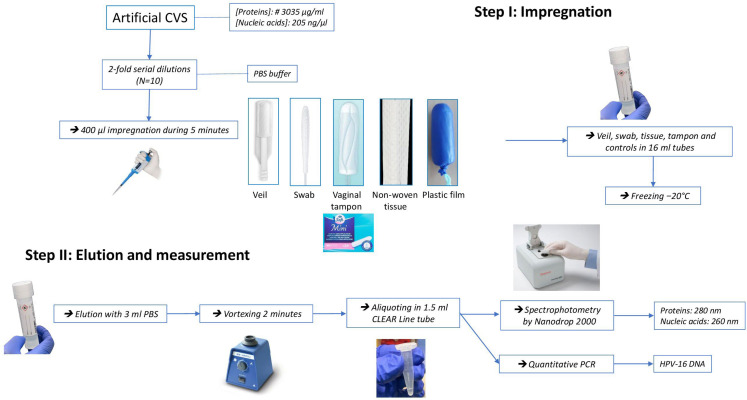 Figure 1
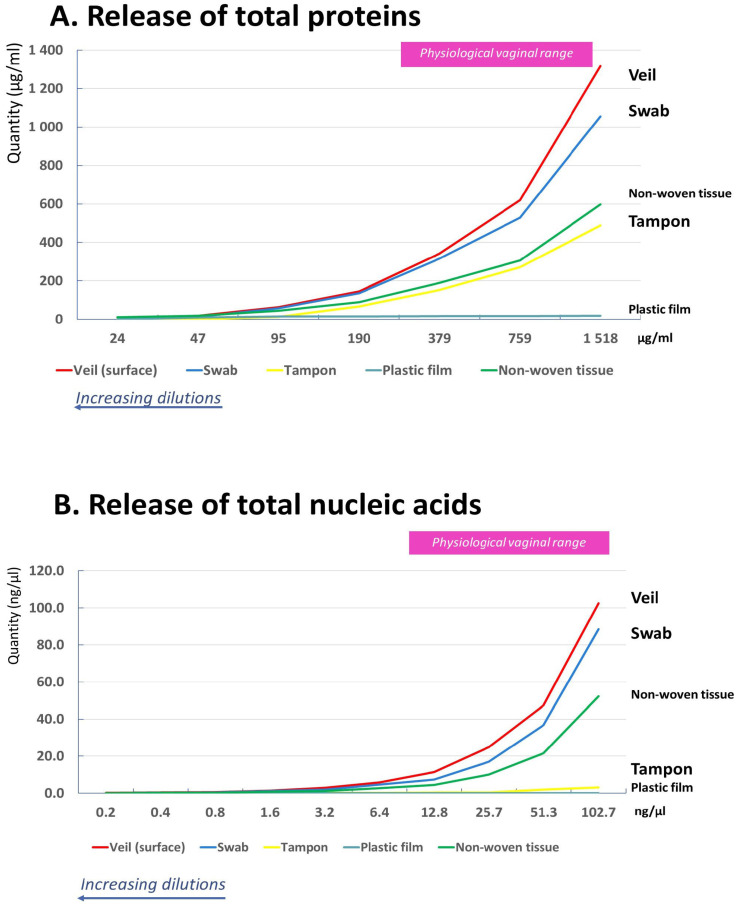 Figure 2
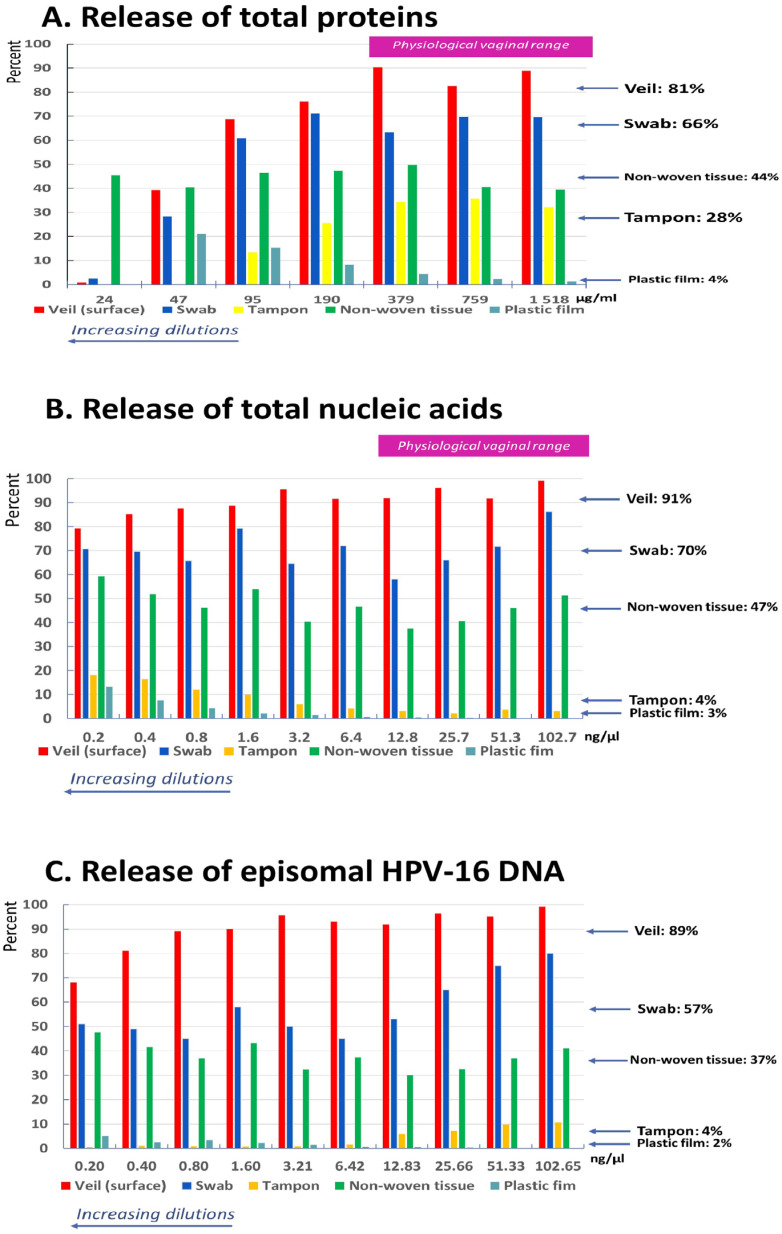 Figure 3
Peer Reviews
No public reviews on file for this paper yet. If you reviewed it on a platform where reviews are public (OpenReview, ICLR, NeurIPS, ICML), you can paste yours below so the community can read it here.
Videos
No videos yet. Explain this paper in a talk, walkthrough, or lecture? Add one.
Taxonomy
TopicsCervical Cancer and HPV Research · Molecular Biology Techniques and Applications · Reproductive tract infections research