Differentiating Borderline from Malignant Ovarian-Adnexal Tumours: A Multimodal Predictive Approach Joining Clinical, Analytic, and MRI Parameters
Lledó Cabedo, Carmen Sebastià, Meritxell Munmany, Adela Saco, Eduardo Gallardo, Olatz Sáenz de Argandoña, Gonzalo Peón, Josep Lluís Carrasco, Carlos Nicolau

TL;DR
This study improves the ability to distinguish borderline ovarian tumors from malignant ones using a combination of clinical, blood, and MRI data, reducing misclassification and overtreatment.
Contribution
A new multimodal predictive model enhances diagnostic accuracy for borderline ovarian tumors in the indeterminate O-RADS MRI 4 category.
Findings
The new model increased overall diagnostic accuracy from 0.856 to 0.955 when used alongside O-RADS MRI.
The positive predictive value for borderline tumors in O-RADS MRI 4 improved from 0.49 to 0.90 with the full model.
The model maintains high accuracy for benign and malignant lesions while improving risk stratification in indeterminate cases.
Abstract
Borderline ovarian-adnexal tumours (BOTs) have a much better prognosis than invasive ovarian cancer but are frequently misclassified as malignant by MRI examination applying the “Ovarian-Adnexal Reporting Data System for Magnetic Resonance Imaging (O-RADS MRI)”, especially in score 4. This sometimes leads to overtreatment and potential loss of fertility. In this retrospective single-centre study, we explored whether combining clinical information, blood tumour markers, and MRI features could improve this distinction in indeterminate cases. Our multimodal, simple, rule-based predictive model—used as a second step after O-RADS MRI—significantly improves the diagnostic performance for BOTs. This approach could optimise patient management and directly address a major limitation of current O-RADS MRI classification. Further validation in larger, multicentre studies is required before routine…
Genes, proteins, chemicals, diseases, species, mutations and cell lines named across the full text — each resolved to its canonical identifier and authoritative record.
Click any figure to enlarge with its caption.
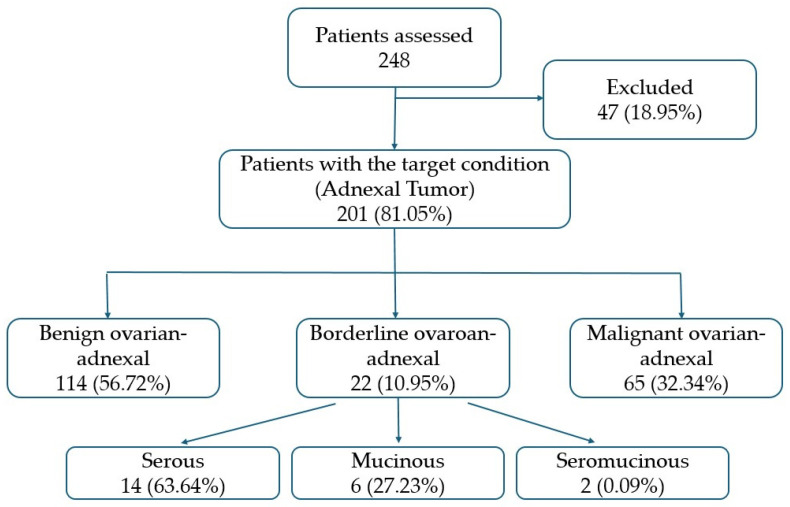 Figure 1
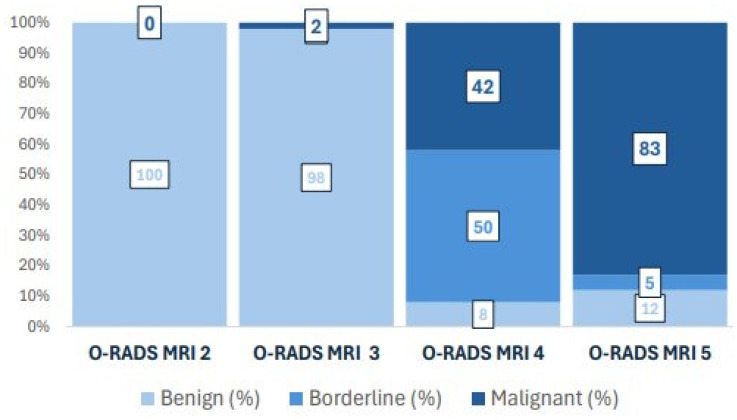 Figure 2
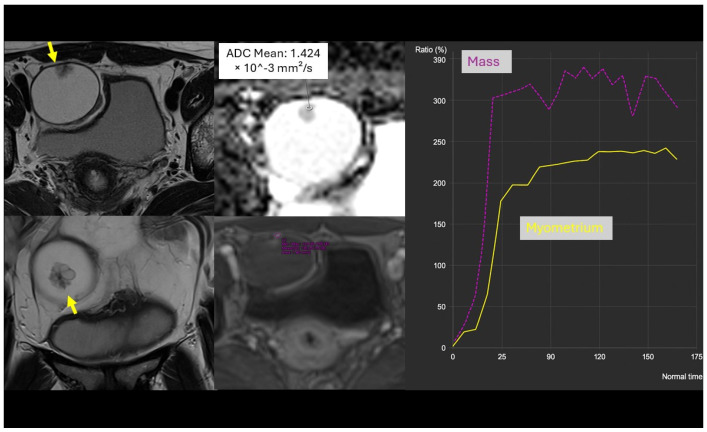 Figure 3
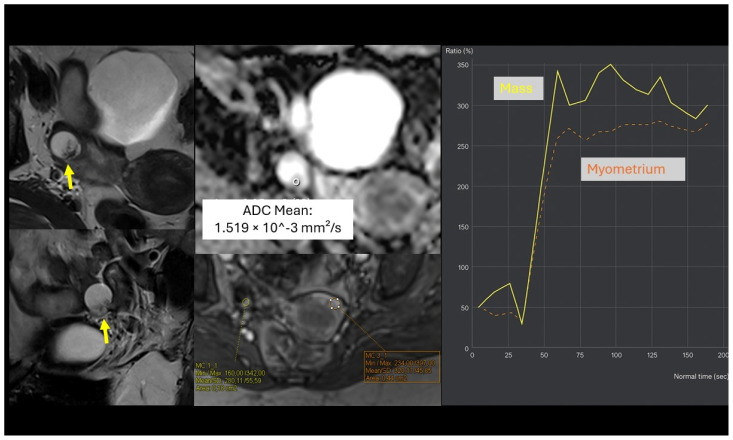 Figure 4
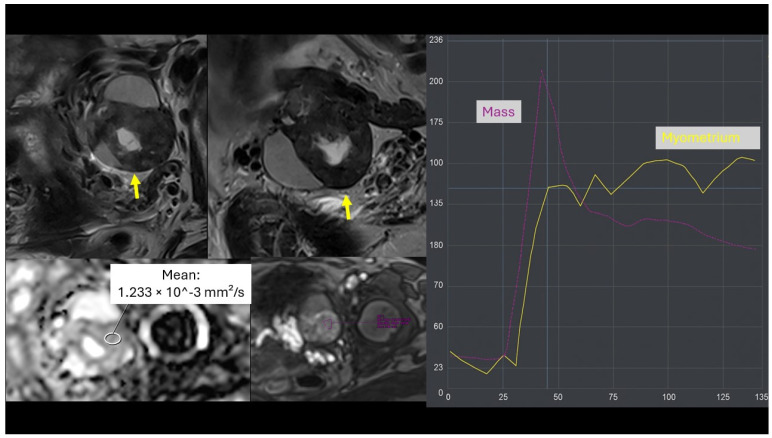 Figure 5
Peer Reviews
No public reviews on file for this paper yet. If you reviewed it on a platform where reviews are public (OpenReview, ICLR, NeurIPS, ICML), you can paste yours below so the community can read it here.
Videos
No videos yet. Explain this paper in a talk, walkthrough, or lecture? Add one.
Taxonomy
TopicsOvarian cancer diagnosis and treatment · Endometrial and Cervical Cancer Treatments · Testicular diseases and treatments