Concealed Placental Abruption Complicating Hypertensive Disorders of Pregnancy: Exploring the Role of Point-of-Care Ultrasound
Michele Orsi, Dereje Merga, Firanbon Negera, Wasihun Shifata, Ashenafi Atomsa, Flavio Bobbio, Admasu Taye

TL;DR
This paper discusses how point-of-care ultrasound can help detect hidden placental abruption in women with pregnancy-related hypertension, improving delivery decisions in low-resource areas.
Contribution
The study highlights the potential of point-of-care ultrasound in managing concealed placental abruption in hypertensive pregnancies.
Findings
Point-of-care ultrasound identified placental abruption in two cases of severe hypertensive disorders.
Cesarean section was promptly performed, confirming placental abruption in both cases.
One case resulted in stillbirth and postpartum hemorrhage, while the other had a healthy outcome.
Abstract
Placental abruption (PA) without vaginal bleeding is known to be associated with severe outcomes when compared to symptomatic cases; the presence of hypertensive disorders of pregnancy (HDP) is an additional negative prognostic factor. According to guidelines, severe HDP are indications for prompt delivery after maternal–fetal stabilization. Considering gestational age, parity and clinical obstetric examination, the induction of labor should be prioritized to avoid additional risks associated with cesarean section. However, since only a minority of cases of PA may be detected by ultrasonography (US), findings consistent with this suspicion should contribute to the establishment of an appropriate mode of delivery. We present two cases affected by severe HDP, eclampsia and HELLP syndrome, admitted to St. Luke Catholic Hospital, Wolisso, Ethiopia. In both cases, obstetric point-of-care…
Genes, proteins, chemicals, diseases, species, mutations and cell lines named across the full text — each resolved to its canonical identifier and authoritative record.
Click any figure to enlarge with its caption.
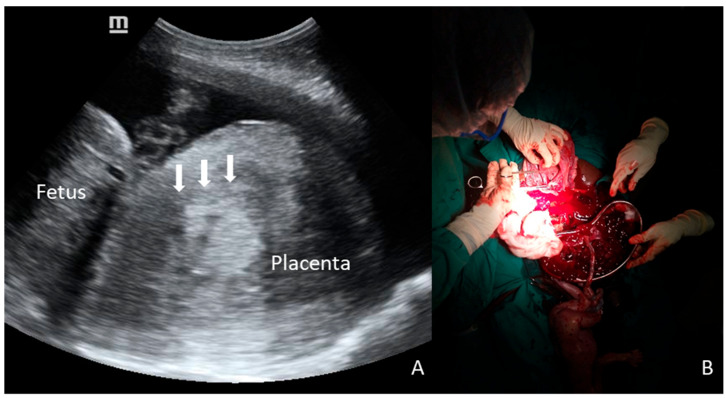 Figure 1
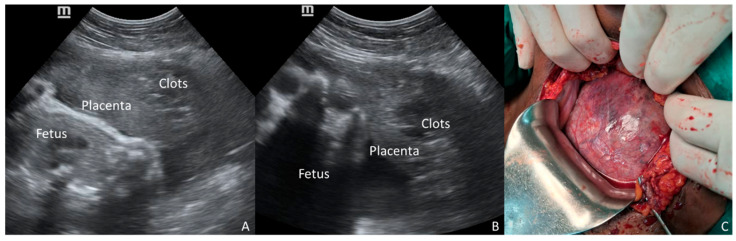 Figure 2
Peer Reviews
No public reviews on file for this paper yet. If you reviewed it on a platform where reviews are public (OpenReview, ICLR, NeurIPS, ICML), you can paste yours below so the community can read it here.
Videos
No videos yet. Explain this paper in a talk, walkthrough, or lecture? Add one.
Taxonomy
TopicsMaternal and fetal healthcare · Pregnancy and preeclampsia studies · Maternal and Perinatal Health Interventions