Genetic Structures of Crassostrea ariakensis Generations Based on Partial Mitochondrial cox1 and rrnL Indicated a High Breeding Potential After Four-Years Successive Selections
Ming Yan, Peizhen Ma, Zhihong Liu, Zhuanzhuan Li, Xianglun Li, Tao Yu, Weijun Wang, Chengwu Wang, Xiujun Sun, Liqing Zhou, Biao Wu

TL;DR
Selective breeding of Crassostrea ariakensis over four generations reduced genetic diversity but still left enough variation for future breeding.
Contribution
The study shows that selective breeding in oysters leads to reduced genetic diversity but not complete homogenization.
Findings
Genetic diversity indices like haplotype diversity and nucleotide diversity decreased from F0 to F4.
Despite selective breeding, F4 maintained relatively high genetic diversity and showed no complete homogenization.
Intra-population variation remained higher than inter-population variation across generations.
Abstract
The genetic diversities of five successive generations, including the base population (F0) and four selective breeding populations (F1 to F4) of Crassostrea ariakensis, were analyzed based on both mitochondrial cox1 and rrnL gene sequence fragments. The cox1 gene sequences exhibited higher sequence variability compared to the rrnL. Based on the partial cox1 sequences, the genetic diversity indices, such as the haplotype diversity, average number of nucleotide differences, and nucleotide diversity, as well as the intra-population genetic distances, showed a decline across generations from F0 to F4, indicating a reduction in genetic variation due to selective breeding. Although the generations became more genetically conserved and very low genetic differentiation occurred as the selective breeding lasted, the F4 population still maintained relatively high levels of genetic diversity.…
Genes, proteins, chemicals, diseases, species, mutations and cell lines named across the full text — each resolved to its canonical identifier and authoritative record.
Click any figure to enlarge with its caption.
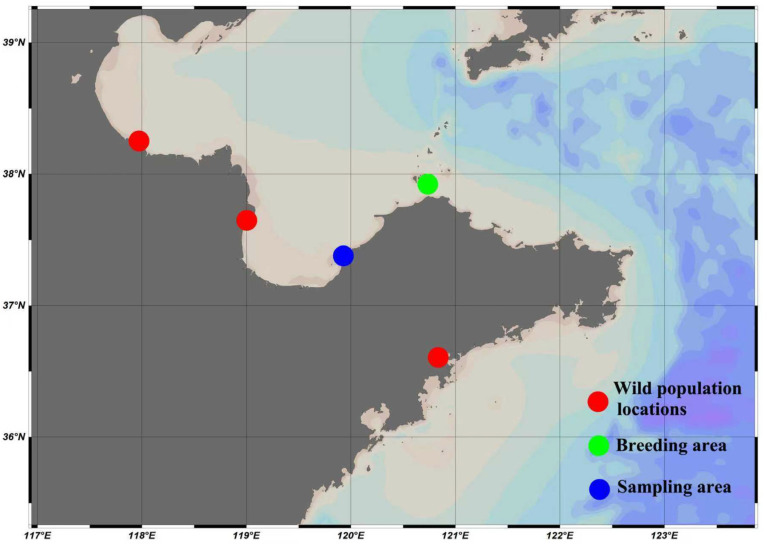 Figure 1
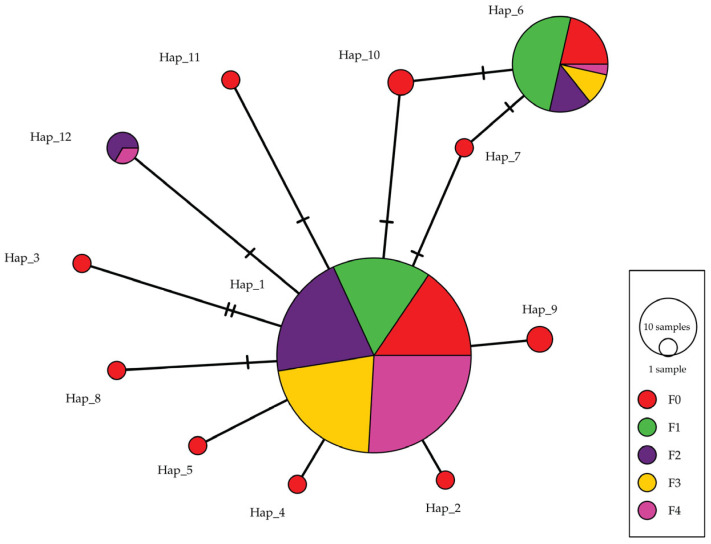 Figure 2
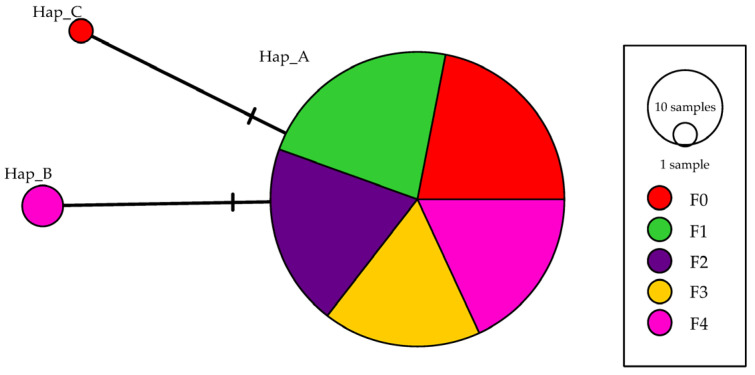 Figure 3
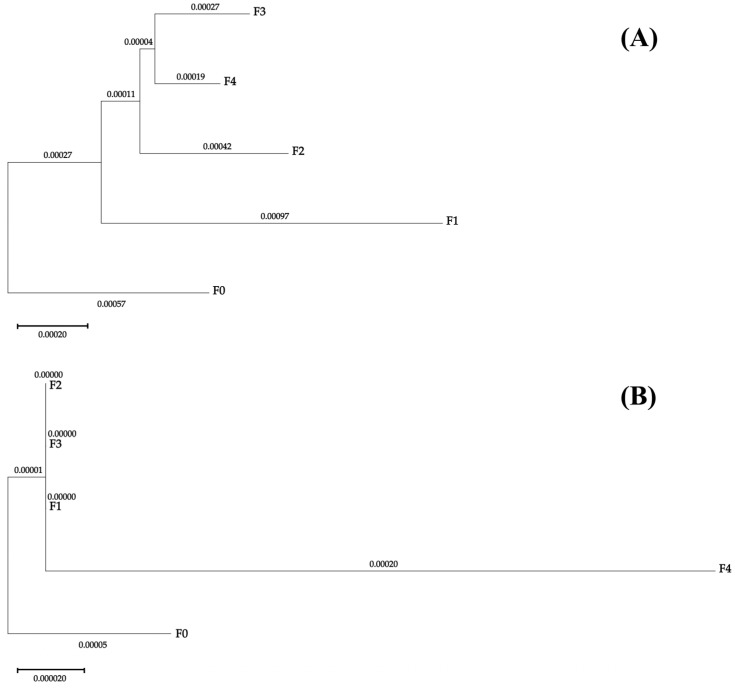 Figure 4
Peer Reviews
No public reviews on file for this paper yet. If you reviewed it on a platform where reviews are public (OpenReview, ICLR, NeurIPS, ICML), you can paste yours below so the community can read it here.
Videos
No videos yet. Explain this paper in a talk, walkthrough, or lecture? Add one.
Taxonomy
TopicsMarine Bivalve and Aquaculture Studies · Echinoderm biology and ecology · Marine Biology and Environmental Chemistry