Proanthocyanidins from Camellia kwangsiensis with Potent Antioxidant and α-Glucosidase Inhibitory Activity
Na Li, Qin Ni, Min Chen, Hong-Tao Zhu, Man Zhang, Takashi Tanaka, Ying-Jun Zhang

TL;DR
This study identifies potent antioxidant and α-glucosidase inhibitory compounds in Camellia kwangsiensis, a caffeine-free wild tea plant, suggesting its potential for functional tea development.
Contribution
The discovery of a new proanthocyanidin, kwangsienin A, and the characterization of its bioactivities in C. kwangsiensis.
Findings
Nineteen phenolic compounds, including a new proanthocyanidin, were isolated and identified from C. kwangsiensis.
Proanthocyanidins showed strong antioxidant and α-glucosidase inhibitory activity comparable to positive controls.
C. kwangsiensis is naturally caffeine-free, making it suitable for decaffeinated functional tea products.
Abstract
This study aimed to systematically investigate the chemical constituents and bioactivities of the traditional wild tea plant Camellia kwangsiensis Chang. An HPLC method was first established to simultaneously quantify five major components. Subsequently, extensive isolation was performed using chromatographic techniques, and the structures of isolated compounds were elucidated by spectroscopic methods. Their biological potential was evaluated through antioxidant (DPPH and ABTS+ radical scavenging), α-glucosidase inhibitory, and anti-inflammatory (inhibition of nitric oxide production) assays. The LC-MS/MS analyses confirmed the absence of caffeine, theophylline, and theobromine. A total of 19 phenolic compounds were first isolated and identified, including one new proanthocyanidin, namely kwangsienin A (1), and 18 known phenolic components with six proanthocyanidins (2–7), one catechin…
Genes, proteins, chemicals, diseases, species, mutations and cell lines named across the full text — each resolved to its canonical identifier and authoritative record.
Click any figure to enlarge with its caption.
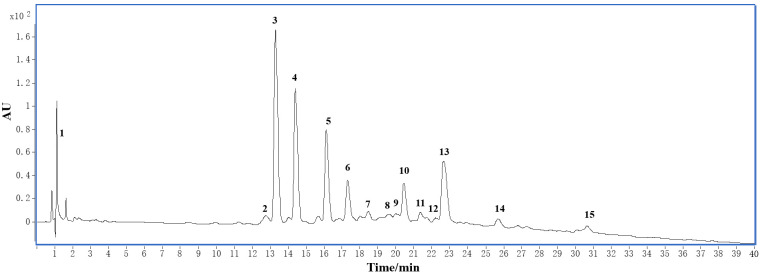 Figure 1
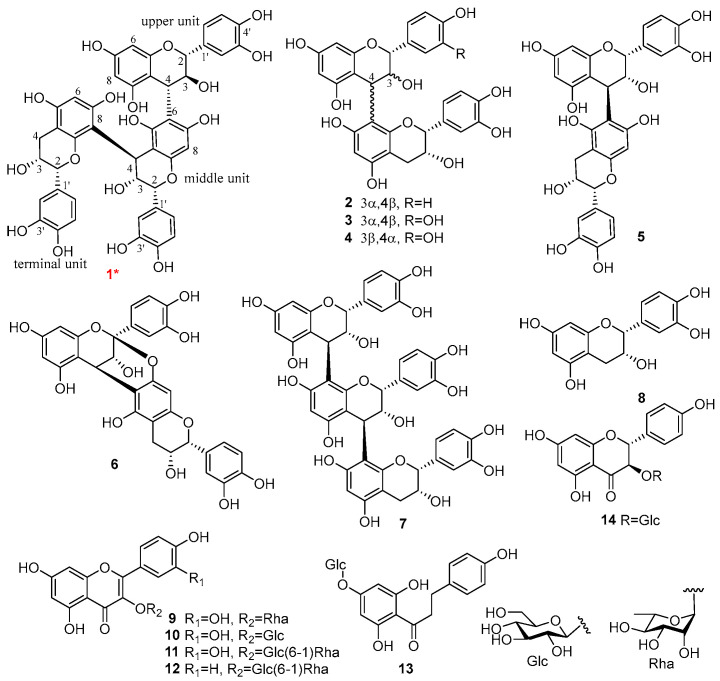 Figure 2
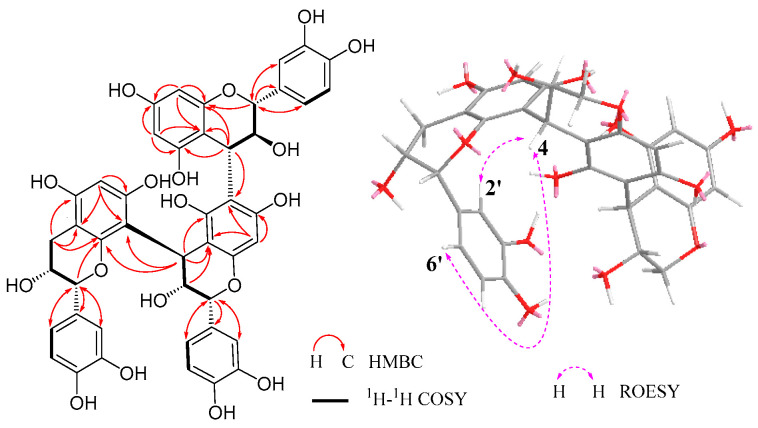 Figure 3
Peer Reviews
No public reviews on file for this paper yet. If you reviewed it on a platform where reviews are public (OpenReview, ICLR, NeurIPS, ICML), you can paste yours below so the community can read it here.
Videos
No videos yet. Explain this paper in a talk, walkthrough, or lecture? Add one.
Taxonomy
TopicsTea Polyphenols and Effects · Phytochemicals and Antioxidant Activities · Coffee research and impacts