Association of Arterial PaCO2 with the Survival of Mechanically Ventilated Patients with Acute Respiratory Failure: A Multicenter Retrospective Cohort Study
Lei Chang, Ling Jia, Yue Xu, Yali Qian, Shaodong Zhao, Yanqun Sun, Xuhua Ge, Hongjun Miao

TL;DR
This study finds that mechanically ventilated patients with acute respiratory failure have better survival rates when their blood carbon dioxide levels are within an optimal range.
Contribution
The study identifies a U-shaped relationship between PaCO2 levels and mortality in ARF patients, highlighting an optimal PaCO2 range for improved survival.
Findings
Both low (<36.4 mmHg) and high (>57.9 mmHg) PaCO2 levels are associated with increased mortality risk in ARF patients.
Patients with PaCO2 levels in the intermediate range (36.4–57.9 mmHg) had the highest survival rate (65.2%).
Adjusting for complications like sepsis and chronic kidney disease showed increased mortality hazards in low and high PaCO2 groups.
Abstract
Background/Objectives: Acute respiratory failure (ARF) is associated with a high mortality. This study aimed to explore the association of arterial partial pressure of carbon dioxide (PaCO2) in relation to survival outcomes in mechanically ventilated patients with ARF. Methods: This multicenter retrospective cohort study integrated the data from the eICU Collaborative Research Database (eICU-CRD; n = 10,946), the Medical Information Mart for Intensive Care IV (MIMIC-IV; n = 6683), and clinical records from two university-affiliated intensive care units in China (n = 410). The patients were categorized into low, normal, and high PaCO2 groups using a restricted cubic spline model to explore the relationship between PaCO2 and mortality. The 28-day survival distributions among the three groups were compared using Kaplan–Meier curves, with statistical significance assessed via the log-rank…
Genes, proteins, chemicals, diseases, species, mutations and cell lines named across the full text — each resolved to its canonical identifier and authoritative record.
Click any figure to enlarge with its caption.
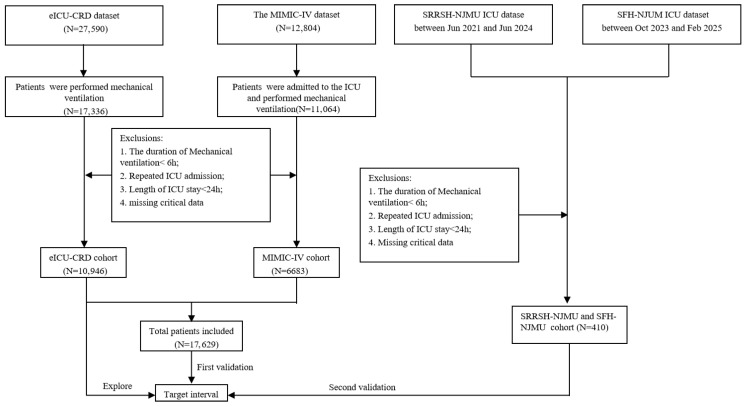 Figure 1
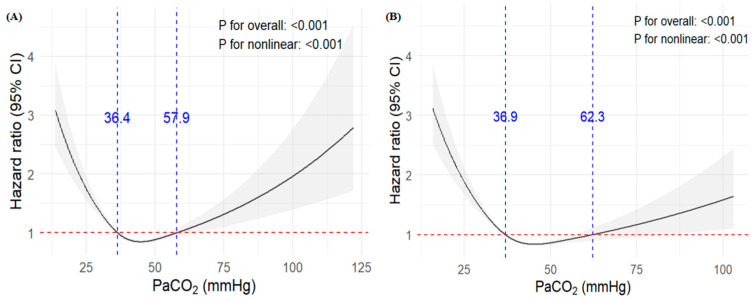 Figure 2
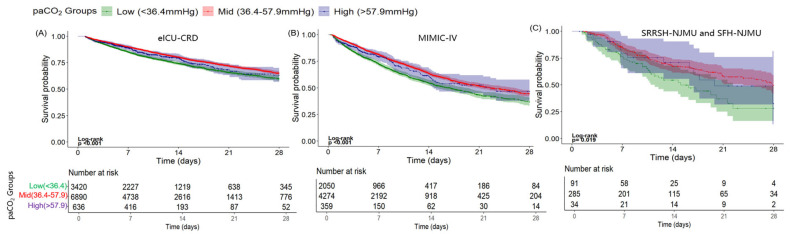 Figure 3
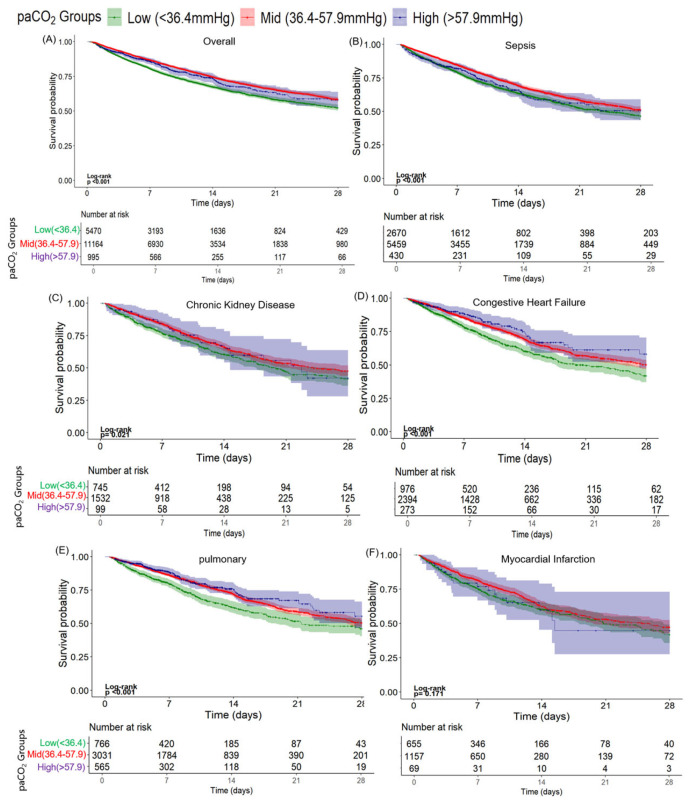 Figure 4
Peer Reviews
No public reviews on file for this paper yet. If you reviewed it on a platform where reviews are public (OpenReview, ICLR, NeurIPS, ICML), you can paste yours below so the community can read it here.
Videos
No videos yet. Explain this paper in a talk, walkthrough, or lecture? Add one.
Taxonomy
TopicsRespiratory Support and Mechanisms · Sepsis Diagnosis and Treatment · Nosocomial Infections in ICU