Repurposing Oxfendazole for Onchocerciasis: Population Pharmacokinetics of a Tablet Formulation in Healthy African Adults
Frauke Assmus, Ayorinde Adehin, Richard M. Hoglund, Gloria Nyaulingo, Hussein Mbarak, Said Jongo, Eveline Ackermann, Elisabeth Reus, Jennifer Keiser, Fabiana Barreira Da Silva Rocha, Sabine Specht, Ivan Scandale, Joel Tarning

TL;DR
This study examines how a new tablet form of oxfendazole behaves in the body of healthy African adults, aiming to find the best dose for treating onchocerciasis.
Contribution
The first population pharmacokinetic analysis of oxfendazole tablet in African adults, supporting dosing for future trials.
Findings
Oxfendazole absorption follows first-order kinetics with first-pass metabolism.
A 400 mg once-daily or 50 mg twice-daily dose for 5 days achieves target exposure with low safety risk.
Population pharmacokinetic model supports future clinical trial dose selection.
Abstract
Global efforts to eliminate onchocerciasis are hampered by the lack of a macrofilaricidal drug capable of killing adult parasites. Oxfendazole, a veterinary anthelminthic, exhibits macrofilaricidal activity and holds promise to shorten treatment durations. Phase 1 studies in healthy Caucasian adults demonstrated favorable pharmacokinetics and safety using a veterinary oral liquid formulation. More recently, a Phase 1 bioavailability trial (NCT04920292) evaluated a field‐applicable tablet formulation in healthy African adults. This study presents a secondary analysis to (i) characterize the population pharmacokinetics of oxfendazole and its major metabolites in healthy African adults receiving the tablet formulation and (ii) propose a dosing regimen for Phase 2 evaluation in patients with onchocerciasis. Thirty healthy African adults were enrolled, and plasma concentration–time profiles…
Genes, proteins, chemicals, diseases, species, mutations and cell lines named across the full text — each resolved to its canonical identifier and authoritative record.
Click any figure to enlarge with its caption.
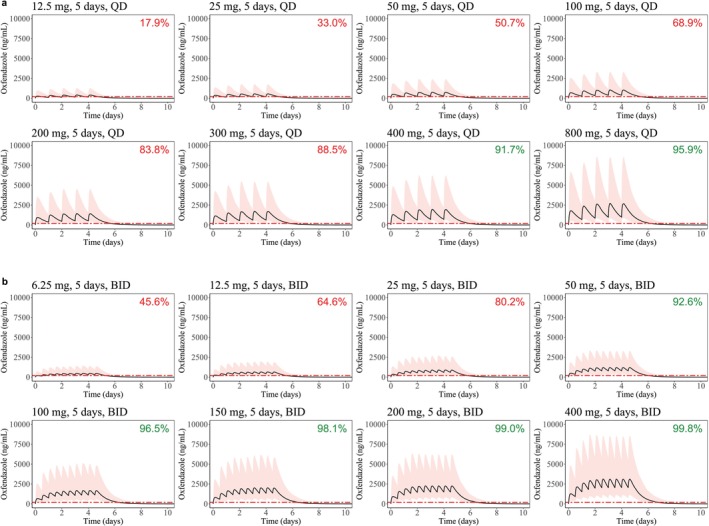 Figure 1
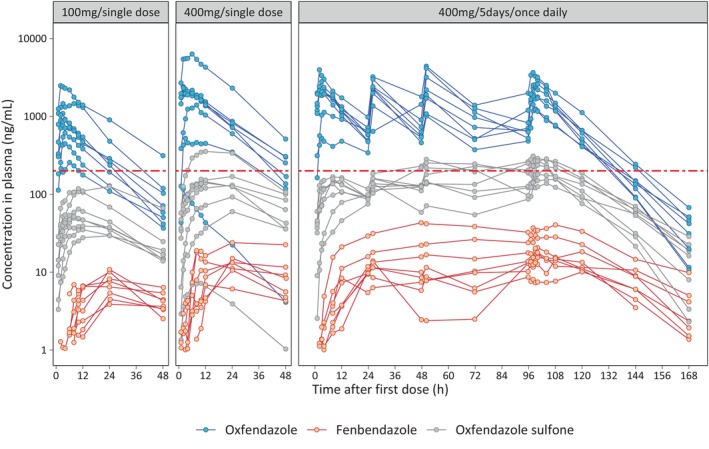 Figure 2
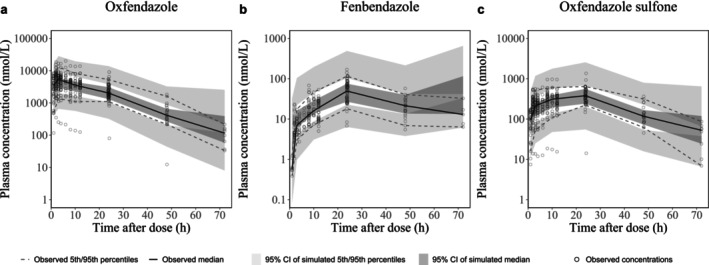 Figure 3
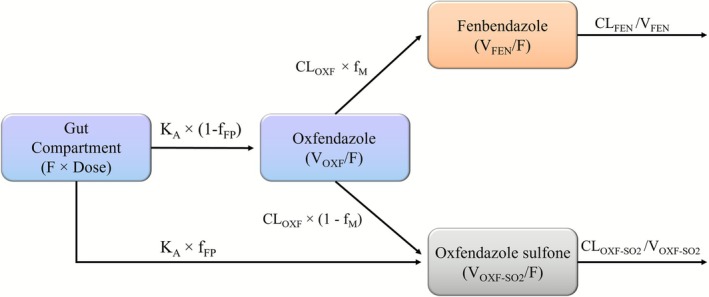 Figure 4
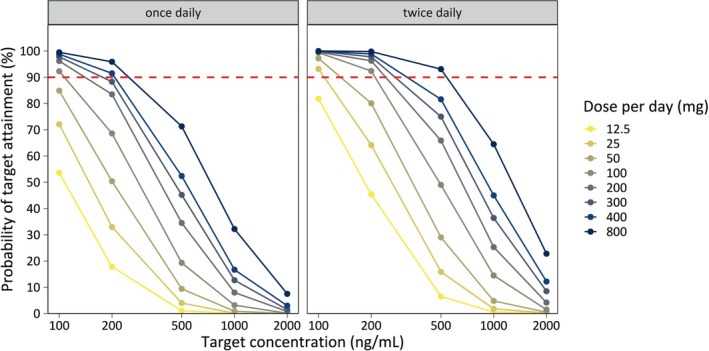 Figure 5
Peer Reviews
No public reviews on file for this paper yet. If you reviewed it on a platform where reviews are public (OpenReview, ICLR, NeurIPS, ICML), you can paste yours below so the community can read it here.
Videos
No videos yet. Explain this paper in a talk, walkthrough, or lecture? Add one.
Taxonomy
TopicsParasitic Diseases Research and Treatment · Helminth infection and control · Parasites and Host Interactions