External validation of the CRASS score for predicting good neurological outcome in out-of-hospital cardiac arrest: analysis from cardiac-origin and non-cardiac origin cohorts
Chih-Wei Sung, Ching-Yu Chen, Cheng-Yi Fan, Yi-Chien Kuo, Chun-Hsiang Huang, Sih-Shiang Huang, Chi-Hsin Chen, Chien-Tai Huang, Yi-Ju Ho, Chun-Ju Lien, Wei-Tien Chang, Edward Pei-Chuan Huang

TL;DR
This study validates a scoring system for predicting neurological outcomes in cardiac arrest patients, showing it works better for heart-related cases than non-heart-related ones.
Contribution
The study externally validates the CRASS score in Asian OHCA patients, highlighting its differential performance in cardiac versus noncardiac cohorts.
Findings
CRASS score had an AUROC of 0.770 in cardiac-origin OHCA patients.
CRASS score predicted poor outcomes better in noncardiac-origin cases with an AUROC of 0.729.
Optimal cut-off values differed between cardiac and noncardiac groups, guiding treatment decisions.
Abstract
This study aimed to externally validate the CaRdiac Arrest Survival Score (CRASS) for predicting good neurological outcomes in Asian patients with out-of-hospital cardiac arrest (OHCA), focusing on cardiac-origin and noncardiac-origin cohorts, respectively. This multicenter retrospective cohort study, conducted from January 2016 to December 2023 across three hospitals in Taiwan, included patients with OHCA with resuscitation attempts, and excluded those with trauma-related arrests, pediatric cases, or missing data. The CRASS score was calculated for each patient according to the clinical variables at presentation. The outcome involves a good neurological outcome (Cerebral Performance Category (CPC) 1 or 2) at hospital discharge. Predictive performance was evaluated using the area under the receiver operating characteristic curve (AUROC), calibration plots, and other performance…
Genes, proteins, chemicals, diseases, species, mutations and cell lines named across the full text — each resolved to its canonical identifier and authoritative record.
Click any figure to enlarge with its caption.
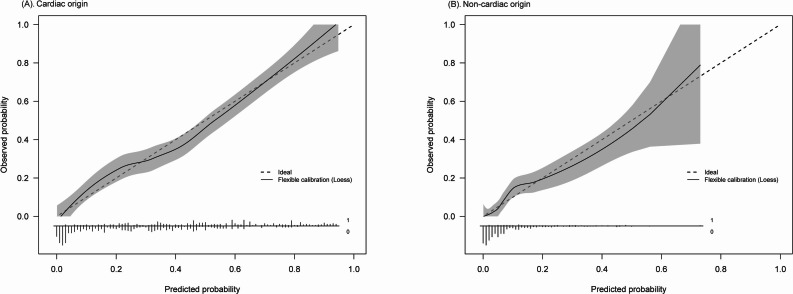 Figure 1
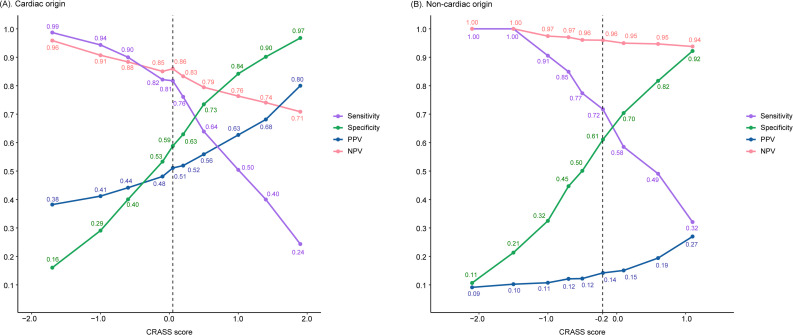 Figure 2
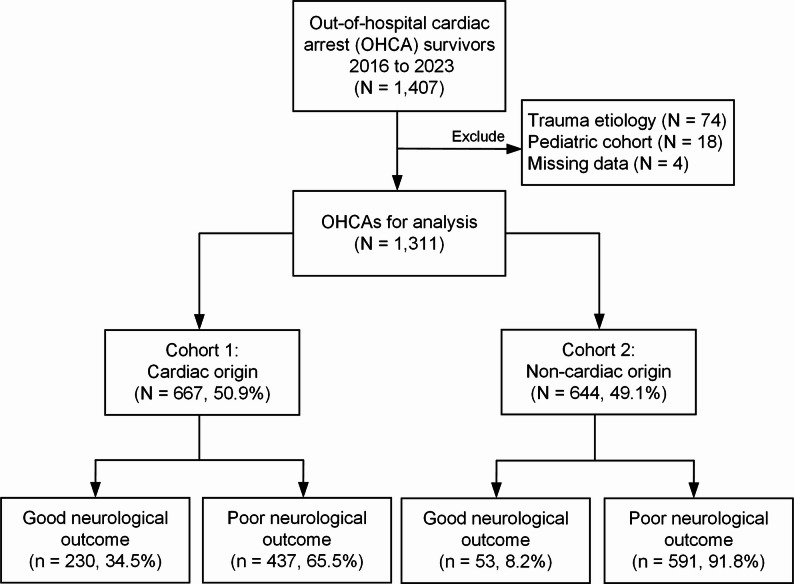 Figure 3
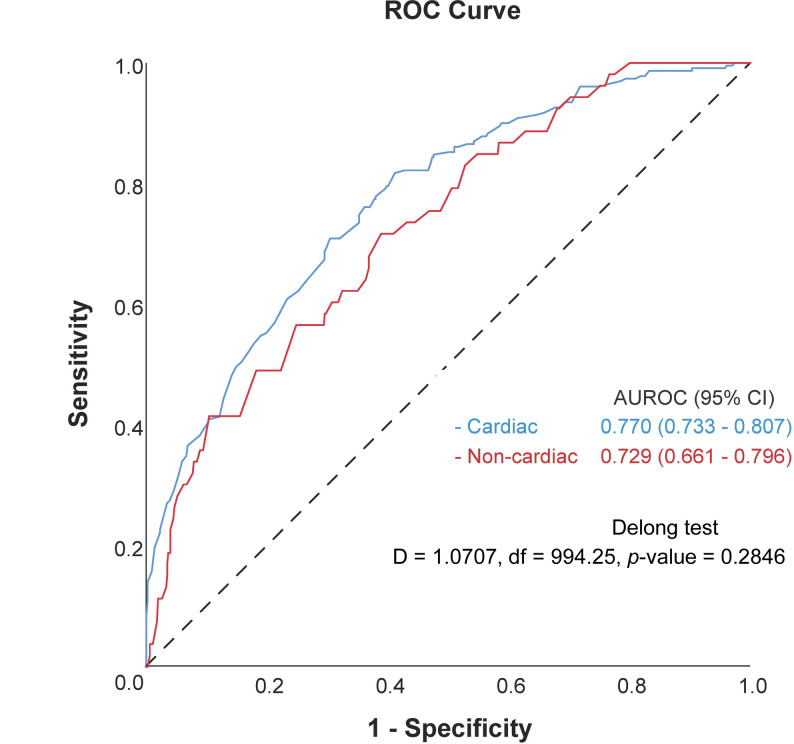 Figure 4
Peer Reviews
No public reviews on file for this paper yet. If you reviewed it on a platform where reviews are public (OpenReview, ICLR, NeurIPS, ICML), you can paste yours below so the community can read it here.
Videos
No videos yet. Explain this paper in a talk, walkthrough, or lecture? Add one.
Taxonomy
TopicsCardiac Arrest and Resuscitation · Sepsis Diagnosis and Treatment · Trauma and Emergency Care Studies