Impact of symptom duration on the short- and long-term efficacy of bimekizumab in axial spondyloarthritis: results up to 2 years
Sofia Ramiro, Fabian Proft, Raj Sengupta, Astrid van Tubergen, Anna Moltó, Lianne S. Gensler, Mitsumasa Kishimoto, Vanessa Taieb, Sarah Kavanagh, Shawna Evans, Victoria Navarro-Compán

TL;DR
This study shows that bimekizumab is effective for up to two years in treating axial spondyloarthritis, with early treatment potentially offering better long-term outcomes.
Contribution
The study reveals that symptom duration affects long-term treatment outcomes with bimekizumab in axial spondyloarthritis.
Findings
Bimekizumab improved disease activity and quality of life at 16 weeks regardless of symptom duration.
Shorter symptom duration subgroups showed better 104-week outcomes compared to longer duration subgroups.
Treatment effects were sustained over two years in all subgroups.
Abstract
Bimekizumab, a monoclonal IgG1 antibody that selectively inhibits IL-17F in addition to IL-17A, showed efficacy to 2 years in patients with axial spondyloarthritis (axSpA). In this post hoc analysis, we compare the impact of shorter versus longer symptom duration on the efficacy of bimekizumab to Week 104. Efficacy outcomes by symptom duration (≤ 2 [ASAS early axSpA definition] versus > 2 years; ≤ 5 versus > 5 years) were assessed across patients from BE MOBILE 1 and 2 (non-radiographic [NCT03928704]/radiographic axSpA [NCT03928743]) and the combined open-label extension (NCT04436640). (Relative) odds ratios and (relative) differences were calculated to compare 16-week bimekizumab versus placebo treatment effect and 104-week outcomes, and infer the significance of differences, between symptom duration subgroups. Analyses were neither powered for these comparisons nor multiplicity…
Genes, proteins, chemicals, diseases, species, mutations and cell lines named across the full text — each resolved to its canonical identifier and authoritative record.
Click any figure to enlarge with its caption.
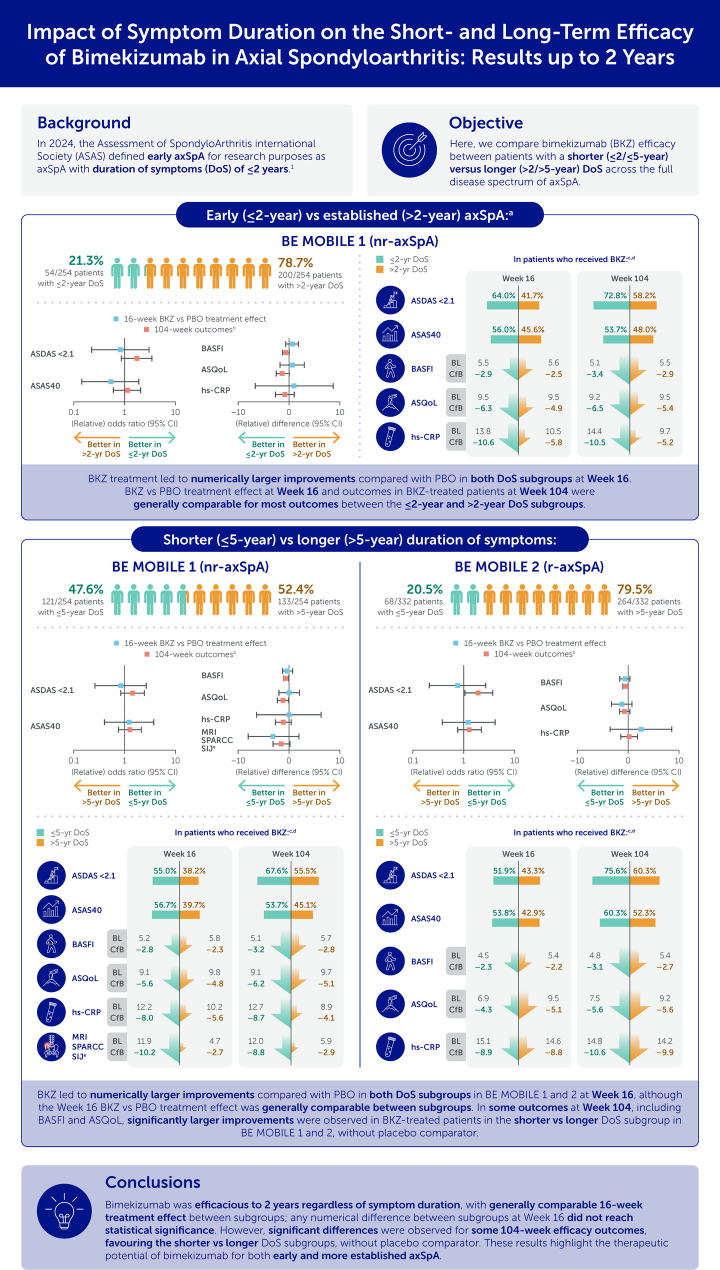 Figure 1
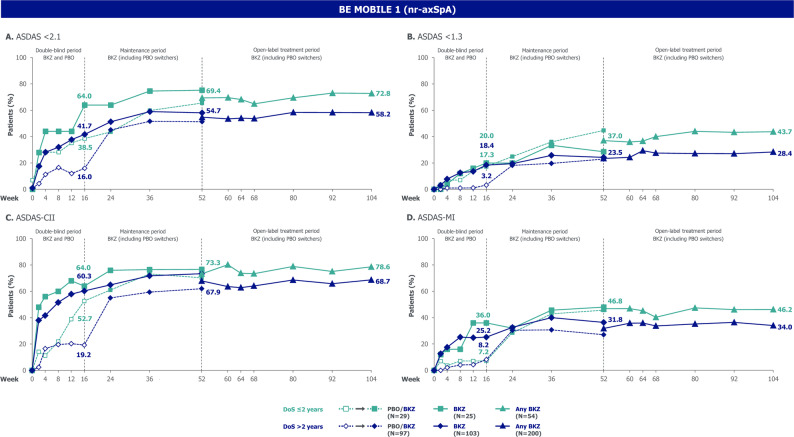 Figure 2
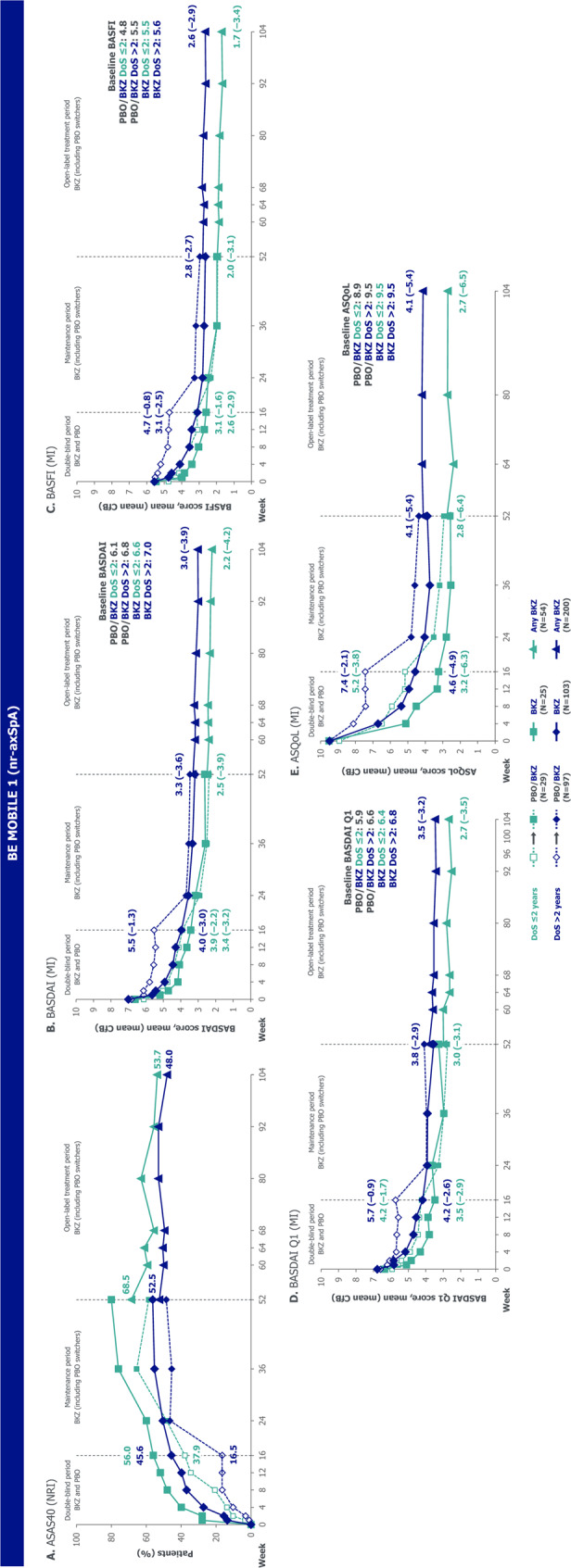 Figure 3
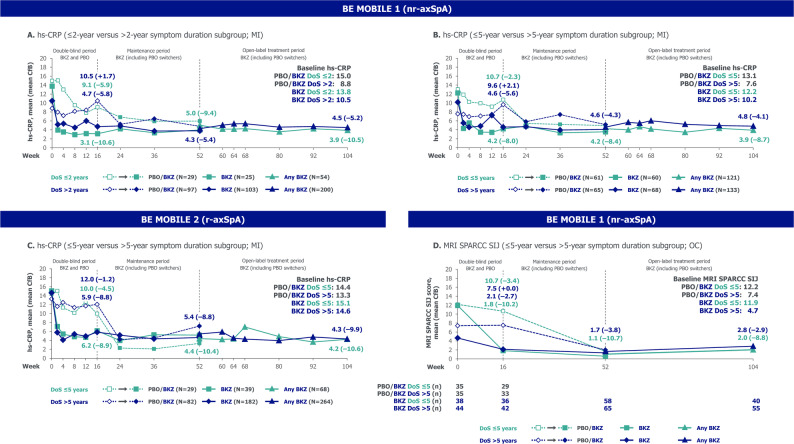 Figure 4
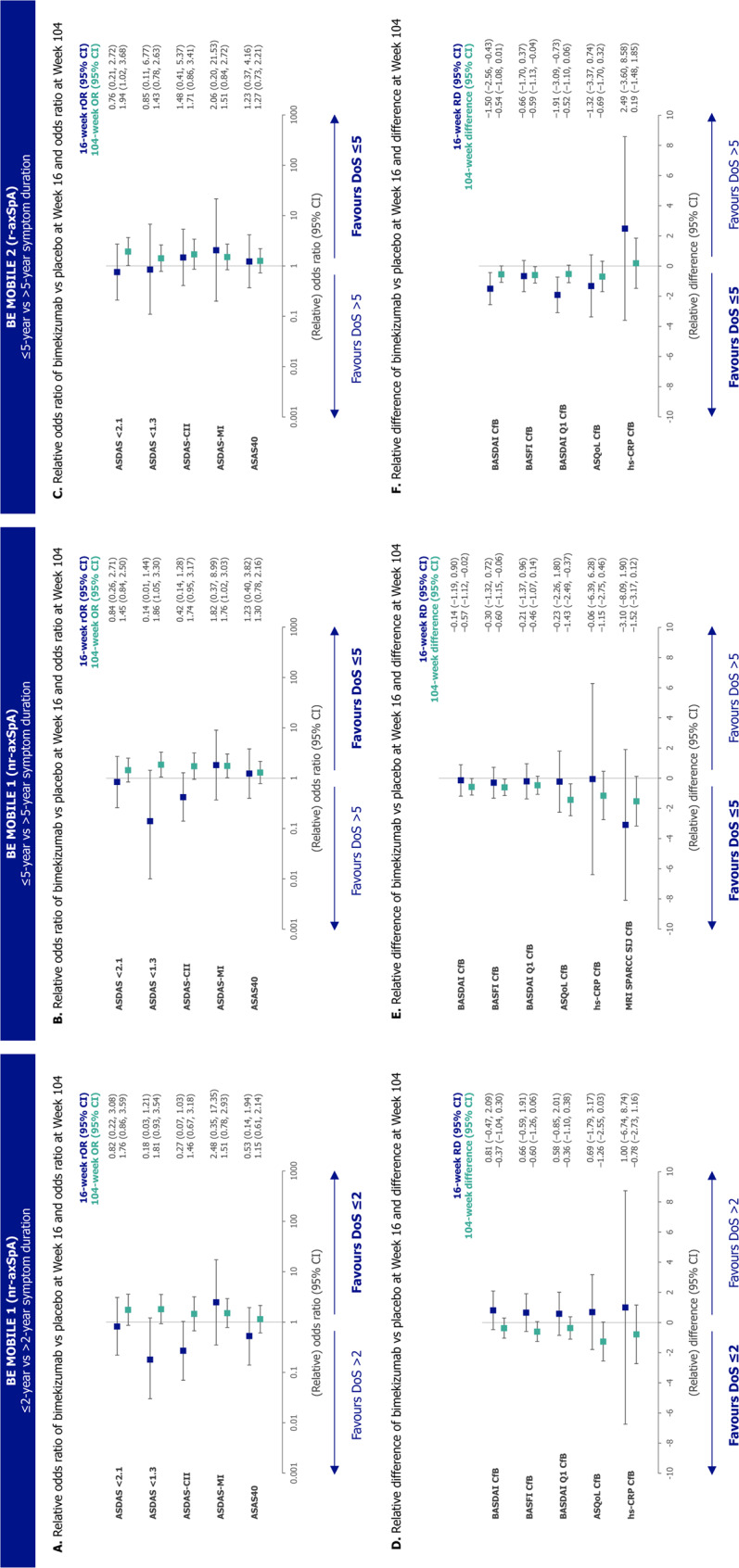 Figure 5
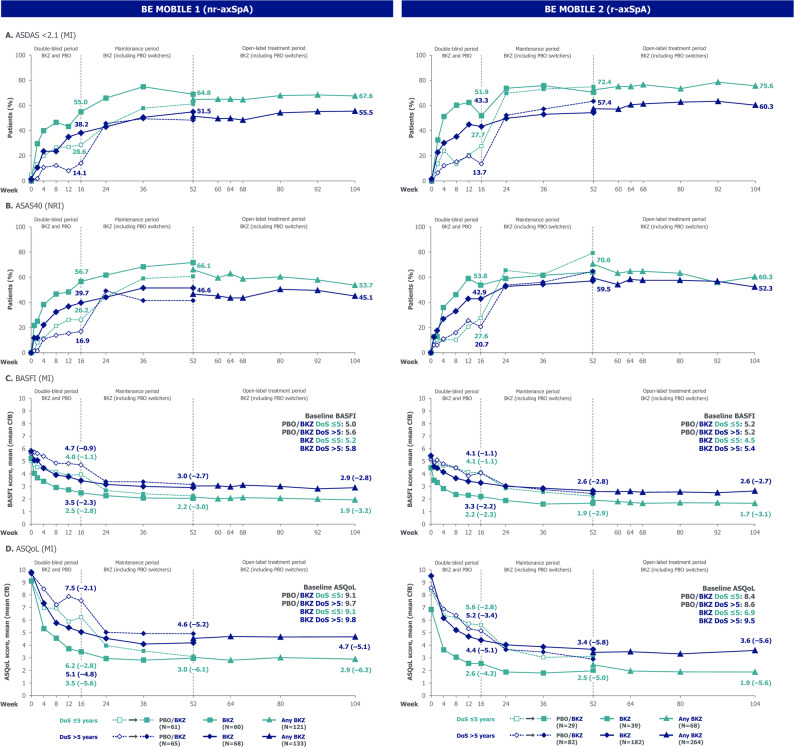 Figure 6
Peer Reviews
No public reviews on file for this paper yet. If you reviewed it on a platform where reviews are public (OpenReview, ICLR, NeurIPS, ICML), you can paste yours below so the community can read it here.
Videos
No videos yet. Explain this paper in a talk, walkthrough, or lecture? Add one.
Taxonomy
TopicsSpondyloarthritis Studies and Treatments · Rheumatoid Arthritis Research and Therapies · Fibromyalgia and Chronic Fatigue Syndrome Research