Parenting styles and Internet addiction in Chinese primary school students: a moderated sequential mediation model of self-control, rejection sensitivity, and achievement motivation
Wang Liu, Jie Huang, Yi-Ke Mo, Jia-Xin Guo, Xi Yang, Qi Wu

TL;DR
This study explores how different parenting styles in China affect children's internet addiction through factors like self-control and rejection sensitivity, with achievement motivation playing a moderating role.
Contribution
The paper introduces a moderated sequential mediation model linking parenting styles to internet addiction in Chinese primary school children.
Findings
Authoritative parenting reduces internet addiction, while authoritarian parenting increases it.
Self-control and rejection sensitivity mediate the relationship between parenting styles and internet addiction.
Achievement motivation moderates the effects of self-control and rejection sensitivity on internet addiction.
Abstract
Internet addiction has reached an alarming level in Chinese children, yet the mechanisms linking parenting styles to Internet addiction remain unclear in the Chinese context characterized by intense academic competition and parental authority. This study examined how Baumrind’s parenting styles—conceptualized as a culturally meaningful framework in Chinese contexts where high parental demands coexist with varying levels of warmth—influence children’s Internet addiction through sequential mediation of self-control and rejection sensitivity, with achievement motivation—particularly salient during primary school years when motivational orientations develop—as a moderator. Baumrind’s parenting style framework provides a culturally meaningful lens for examining parenting patterns in Chinese families, particularly in contexts characterized by high parental demands. This cross-sectional…
Genes, proteins, chemicals, diseases, species, mutations and cell lines named across the full text — each resolved to its canonical identifier and authoritative record.
Click any figure to enlarge with its caption.
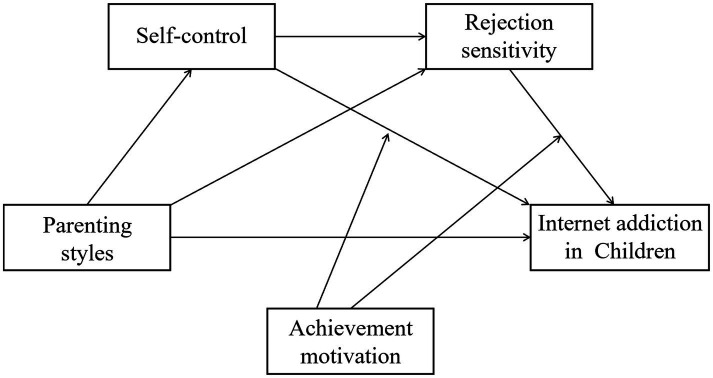 Figure 1
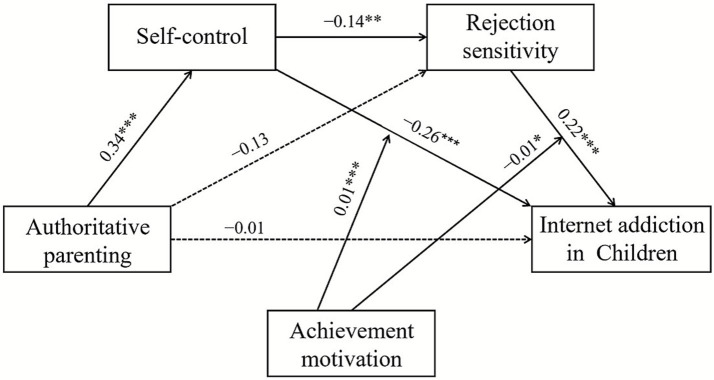 Figure 2
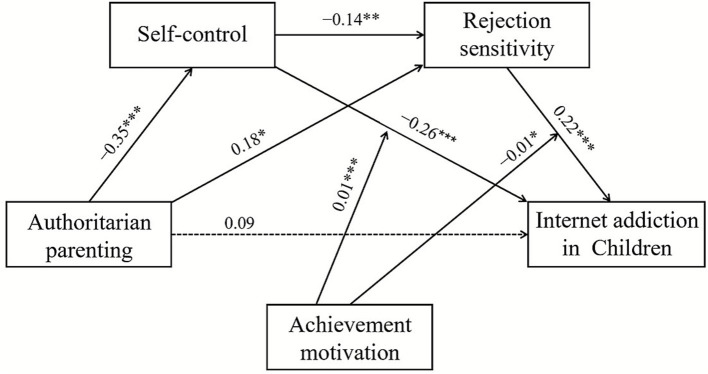 Figure 3
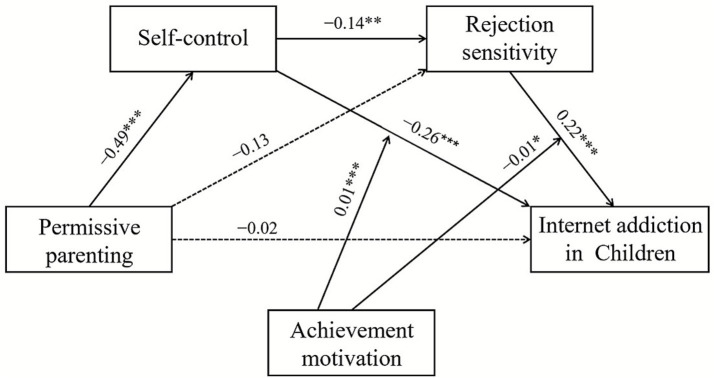 Figure 4
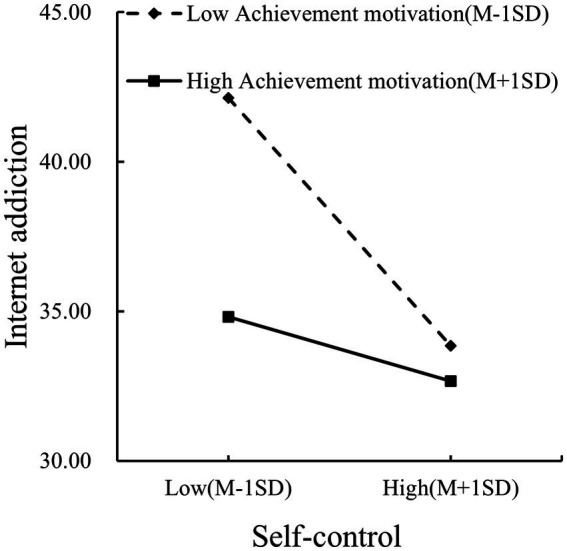 Figure 5
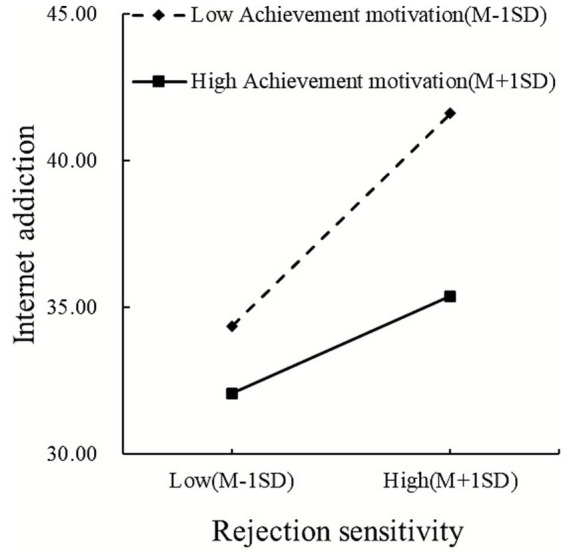 Figure 6
Peer Reviews
No public reviews on file for this paper yet. If you reviewed it on a platform where reviews are public (OpenReview, ICLR, NeurIPS, ICML), you can paste yours below so the community can read it here.
Videos
No videos yet. Explain this paper in a talk, walkthrough, or lecture? Add one.
Taxonomy
TopicsImpact of Technology on Adolescents · Child and Adolescent Psychosocial and Emotional Development · Child Development and Digital Technology