The risk prediction models for sarcopenia in older adults: a systematic review and critical appraisal
Taiping Lin, Hualong Liao, Lin Su, Ping Xu, Xiangping Tu, Lunzhi Dai, Jufeng Luo, Qiao Xiang, Ning Ge, Jirong Yue

TL;DR
This review evaluates existing models for predicting sarcopenia in older adults and finds most have high bias and limited clinical use.
Contribution
The first systematic review and critical appraisal of sarcopenia risk prediction models, highlighting methodological flaws and design limitations.
Findings
Twenty-six sarcopenia prediction models were identified, mostly with high risk of bias.
Most models are diagnostic, not prognostic, limiting their ability to predict future sarcopenia risk.
Common predictors include age, BMI, calf circumference, and gender.
Abstract
Reliable sarcopenia risk prediction models are essential for identifying older adults who are currently non-sarcopenic but at risk of developing sarcopenia in the future, thereby enabling early and personalized prevention strategies. However, the prediction models for sarcopenia have not yet been systematically evaluated. This systematic review aimed to conduct a comprehensive overview and critical appraisal of current sarcopenia risk prediction models. We conducted a systematic search across MEDLINE, Embase, Cochrane Library, and SCI-EXPANDED. Eligible primary studies on sarcopenia prediction models were identified based on the CHARMS checklist (CHecklist for critical Appraisal and data extraction for systematic Reviews of prediction Modelling Studies). The Prediction model Risk Of Bias Assessment Tool (PROBAST) was applied to evaluate risk of bias and clinical applicability.…
Genes, proteins, chemicals, diseases, species, mutations and cell lines named across the full text — each resolved to its canonical identifier and authoritative record.
Click any figure to enlarge with its caption.
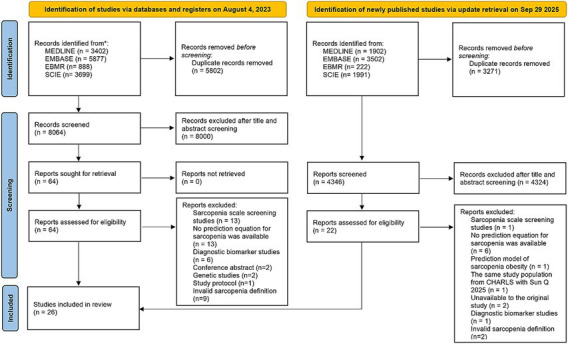 Figure 1
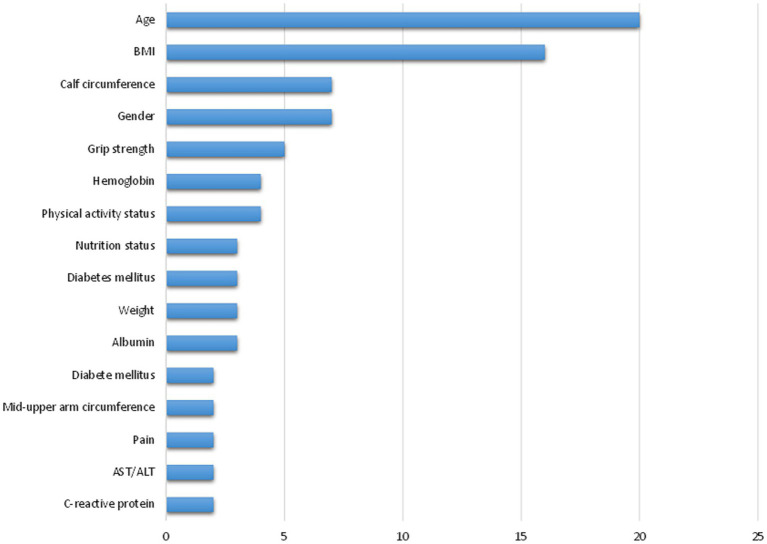 Figure 2
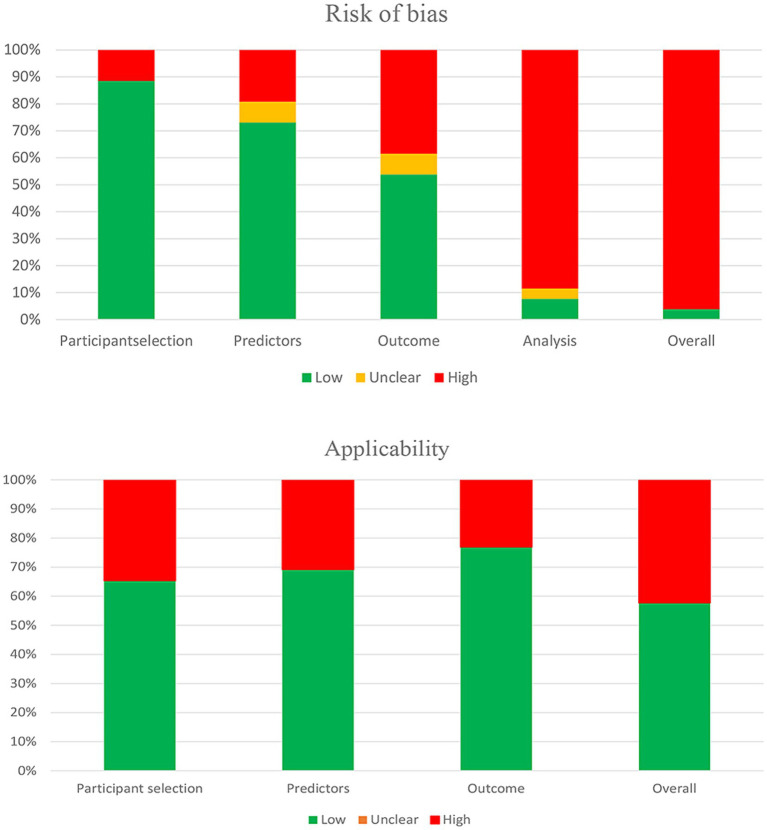 Figure 3
 Figure 4
Peer Reviews
No public reviews on file for this paper yet. If you reviewed it on a platform where reviews are public (OpenReview, ICLR, NeurIPS, ICML), you can paste yours below so the community can read it here.
Videos
No videos yet. Explain this paper in a talk, walkthrough, or lecture? Add one.
Taxonomy
TopicsNutrition and Health in Aging · Body Composition Measurement Techniques · Frailty in Older Adults