BRD4-mediated transcriptional activation of PDLIM4 enhances p21 stability and chemosensitivity in lung adenocarcinoma independent of p53
Qingwei Wang, Liangsheng Guo, Shuai Wang, Chengdan Guan, Junhao Pan, Shaoping Zhu, Lei Zheng, Xuehua Wu, Yonghui Gu, Tao Shu, Lianxiang Luo, Tianwen Lai, Xiao Gao

TL;DR
This study shows how BRD4 activates PDLIM4 to stabilize p21 and improve chemotherapy response in lung cancer, regardless of p53 status.
Contribution
The study identifies a novel p53-independent pathway involving BRD4, PDLIM4, and p21 that enhances chemosensitivity in lung adenocarcinoma.
Findings
PDLIM4 is highly expressed in LUAD and induces G2/M phase cell cycle arrest.
BRD4 activates PDLIM4 via its BD1 domain, which stabilizes p21 and inhibits cell proliferation.
Activation of the BRD4/PDLIM4/p21 pathway increases doxorubicin chemosensitivity in LUAD models.
Abstract
Understanding p53-independent regulatory mechanisms is crucial for predicting outcomes in lung adenocarcinoma (LUAD) and developing improved therapeutic strategies. We found that PDLIM4 is highly expressed in LUAD tumor tissues, where it induces G2/M phase cell cycle arrest and suppresses cell proliferation, suggesting its potential role in improving patient prognosis. Our study identified BRD4, a bromodomain and extraterminal (BET) family protein, as a key transcriptional regulator of PDLIM4, acting through its BD1 domain. Further analysis revealed that wild-type PDLIM4 stabilizes p21 by blocking its RNA degradation, leading to p21 protein accumulation and subsequent inhibition of cell proliferation. In contrast, the S116 mutation in PDLIM4 abrogates this regulatory effect. Notably, activation of the BRD4/PDLIM4/p21 pathway enhanced chemosensitivity to doxorubicin in both LUAD cells…
Genes, proteins, chemicals, diseases, species, mutations and cell lines named across the full text — each resolved to its canonical identifier and authoritative record.
Click any figure to enlarge with its caption.
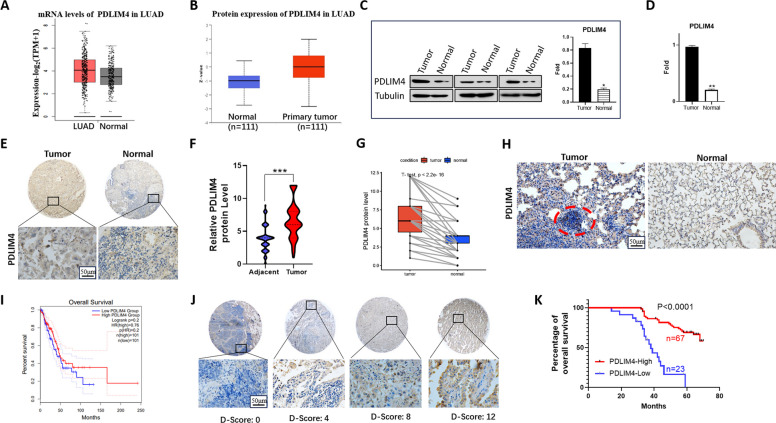 Figure 1
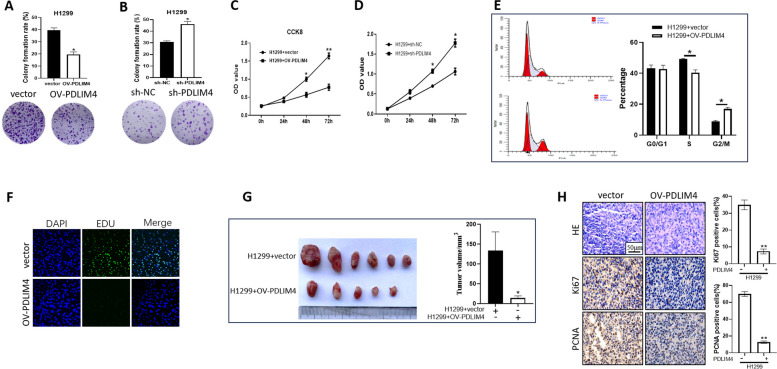 Figure 2
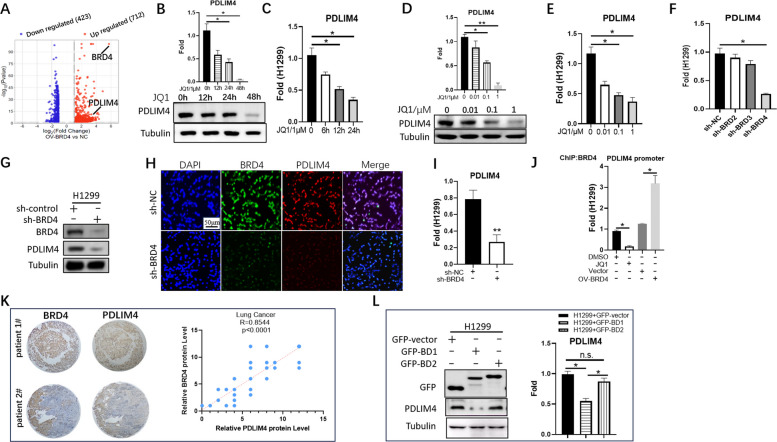 Figure 3
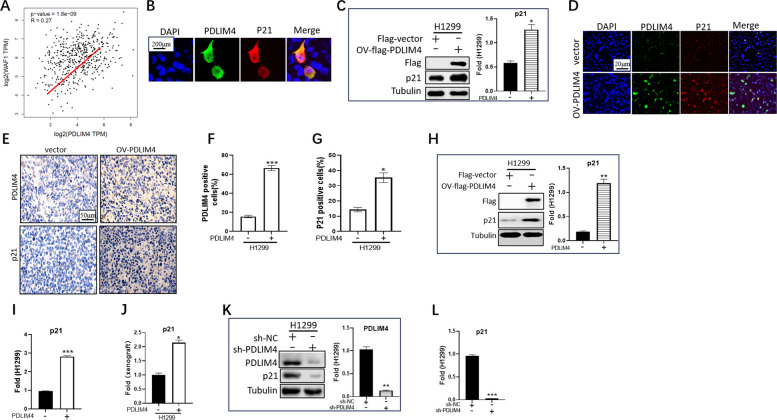 Figure 4
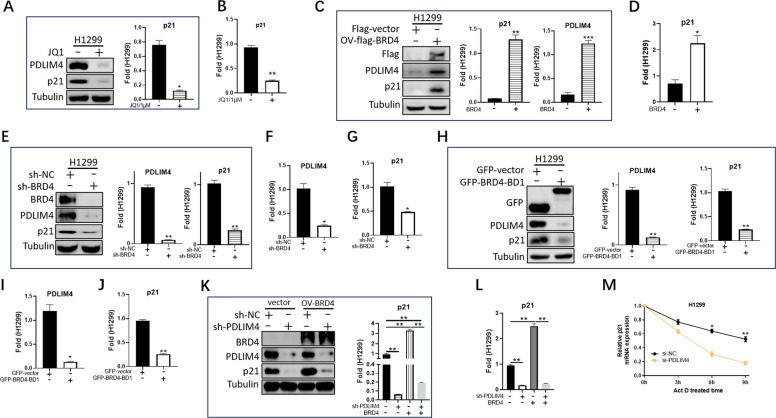 Figure 5
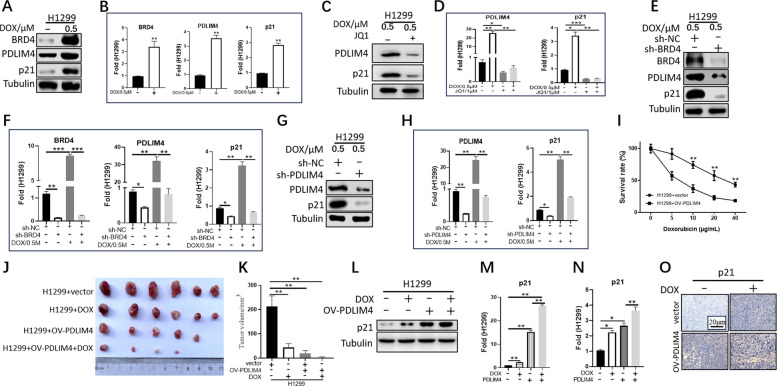 Figure 6
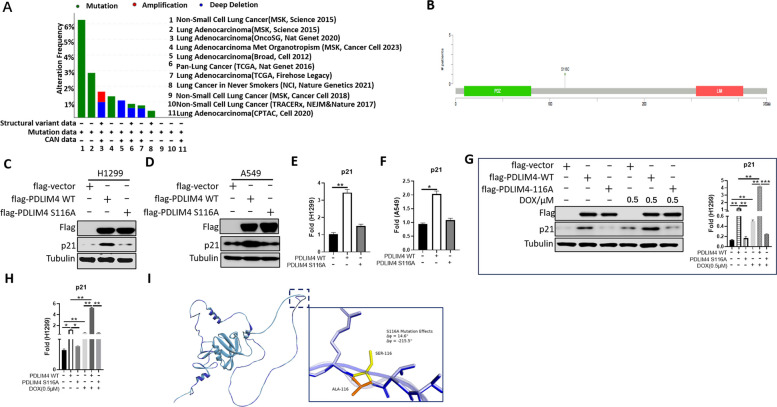 Figure 7
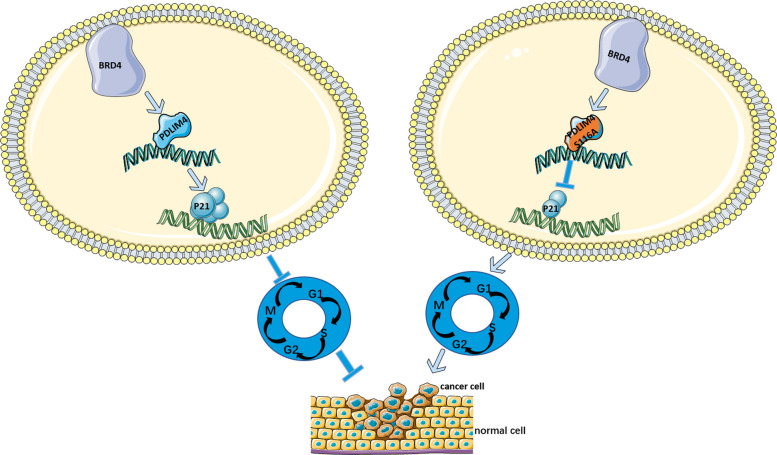 Figure 8
Peer Reviews
No public reviews on file for this paper yet. If you reviewed it on a platform where reviews are public (OpenReview, ICLR, NeurIPS, ICML), you can paste yours below so the community can read it here.
Videos
No videos yet. Explain this paper in a talk, walkthrough, or lecture? Add one.
Taxonomy
TopicsProtein Degradation and Inhibitors · Chromatin Remodeling and Cancer · Lung Cancer Research Studies