Association between serum potassium levels and peritonitis in peritoneal dialysis patients: a longitudinal study
Weixin Tang, Shaojie Zhang, Wanyu Yang, Lichun Hong, Lin Jiang, Xinyue Su, Junli Jin, Qijing Zhang, Xun Tang, Tingting Guo, Zirui Chen, Qi Ye, Yujing Zhou, Xiang Lv, Yu Zhang, Jun Zhang

TL;DR
This study finds that rapid drops and sustained low potassium levels in peritoneal dialysis patients are linked to a higher risk of peritonitis, suggesting the need for careful potassium management.
Contribution
The study provides new longitudinal evidence linking serum potassium trends to peritonitis risk in PD patients, beyond prior cross-sectional findings.
Findings
Rapid declines and prolonged low serum potassium levels are associated with increased peritonitis risk in PD patients.
Median time to peritonitis was estimated at 4.09 years using Kaplan-Meier survival analysis.
Peritonitis incidence showed a significant linear downward trend from 2011 to 2023.
Abstract
Abnormal serum potassium levels are common among peritoneal dialysis (PD) patients. Many studies have shown hypokalemia as a risk factor for peritonitis, but most were cross-sectional and observational. We intended to analyze the longitudinal association between serum potassium levels and peritonitis in those undergoing PD. We included 1,288 patients undergoing regular PD at our institution. The endpoint event was peritonitis. Patients were divided into peritonitis and non-peritonitis groups. The relationship between baseline data and the emergence of peritonitis was analyzed through Cox regression analysis. Mixed-effects model was used to analyze the correlation between longitudinal serum potassium and other lab characteristics with peritonitis. Kaplan-Meier survival analysis estimated the median time to peritonitis.Independent samples t-test was used in subgroup analysis to explore…
Genes, proteins, chemicals, diseases, species, mutations and cell lines named across the full text — each resolved to its canonical identifier and authoritative record.
Click any figure to enlarge with its caption.
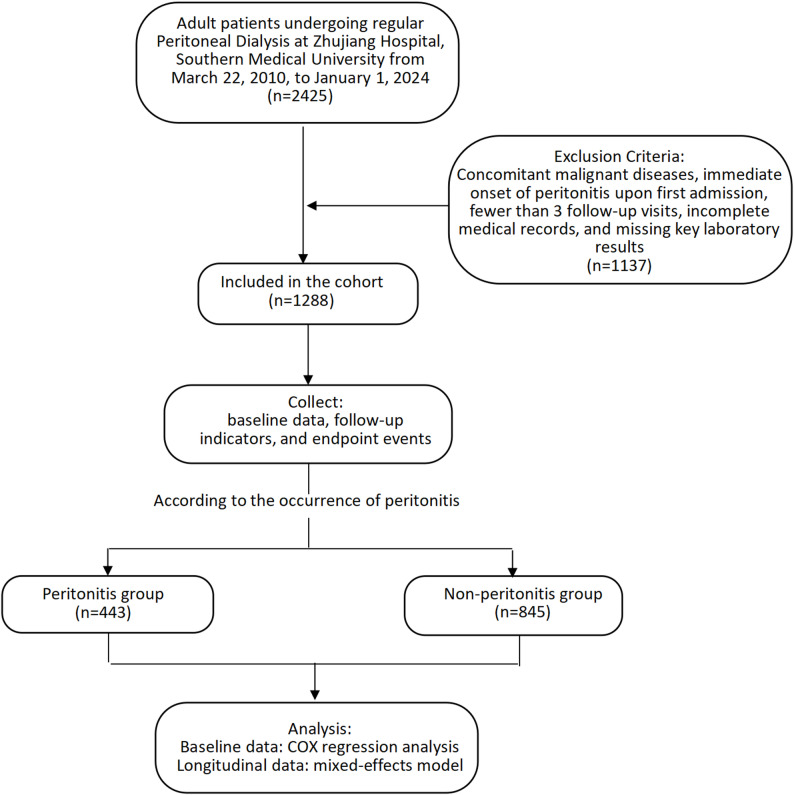 Figure 1
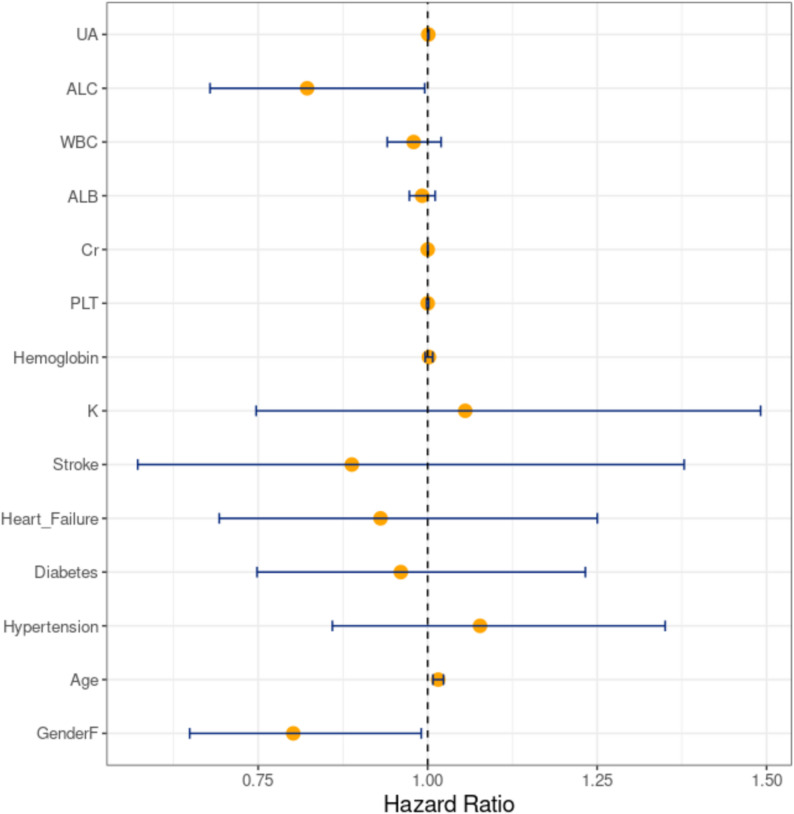 Figure 2
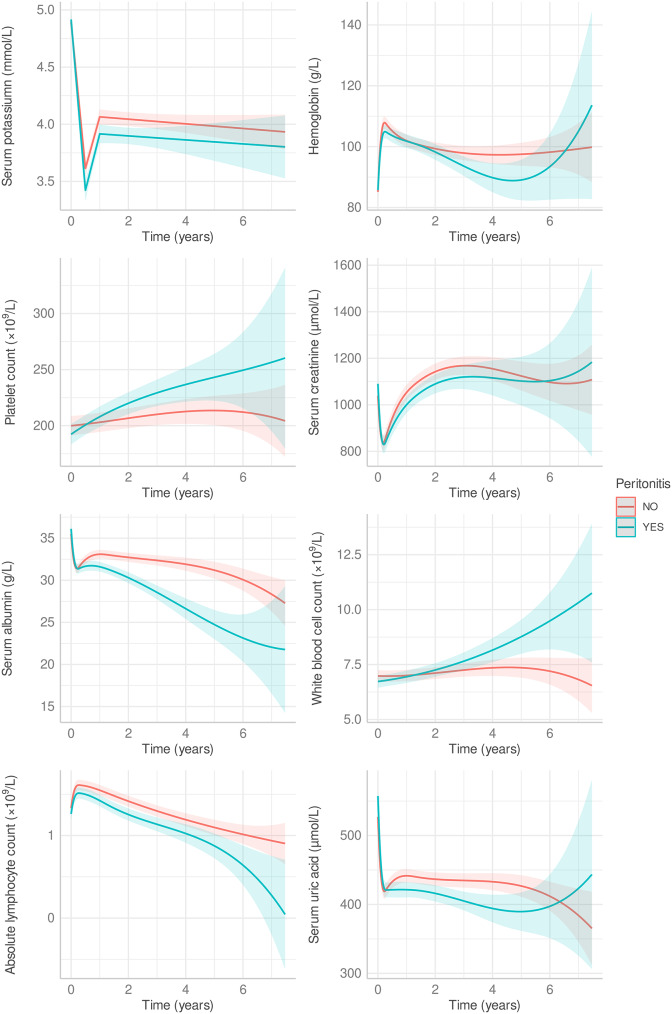 Figure 3
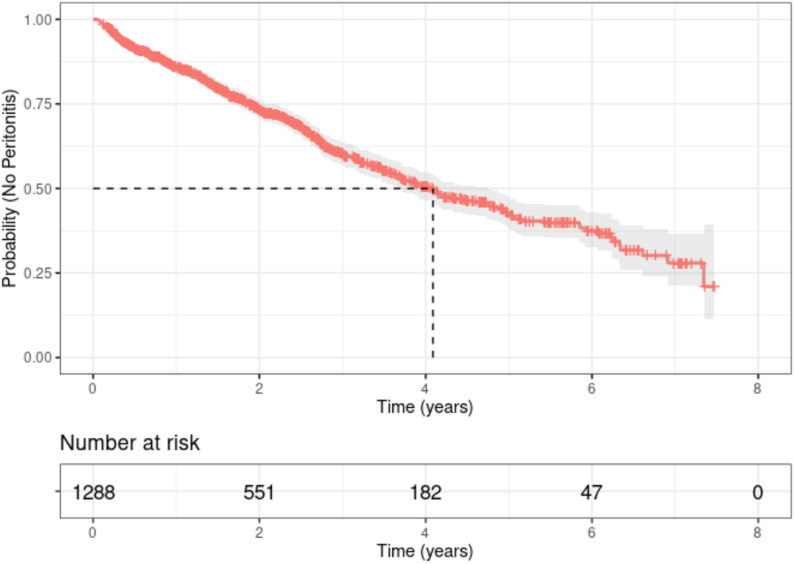 Figure 5
 Figure 6
 Figure 7
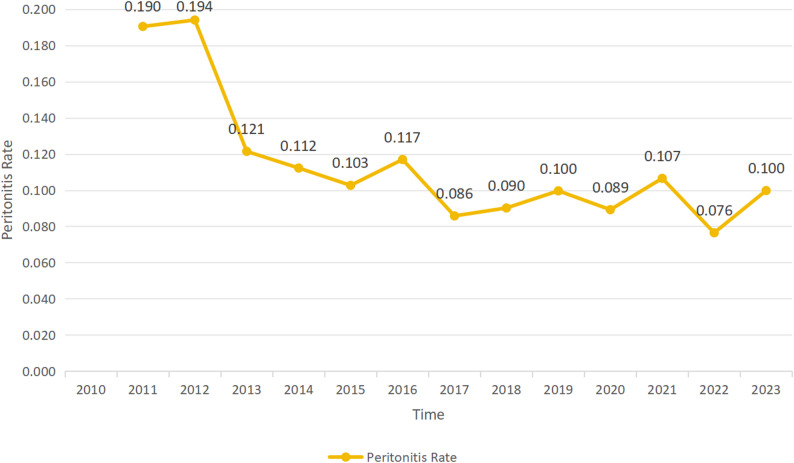 Figure 8
Peer Reviews
No public reviews on file for this paper yet. If you reviewed it on a platform where reviews are public (OpenReview, ICLR, NeurIPS, ICML), you can paste yours below so the community can read it here.
Videos
No videos yet. Explain this paper in a talk, walkthrough, or lecture? Add one.
Taxonomy
TopicsPotassium and Related Disorders · Dialysis and Renal Disease Management · Magnesium in Health and Disease