Does living with children or financial adequacy mitigate the impact of IADL limitations on older adults’ well-being? Findings from the Longitudinal Indonesian Family Life Survey
Farma Mangunsong, Tawanchai Jirapramukpitak, Sureeporn Punpuing, Sutthida Chuanwan, Dyah Anantalia Widyastari

TL;DR
This study finds that living with children or having more financial resources helps older adults cope better with daily living challenges, but living with family alone doesn't reduce the negative impact of these challenges on well-being.
Contribution
The study provides new evidence on how financial resources and living arrangements affect the well-being of older adults with IADL limitations in Indonesia.
Findings
IADL limitations are independently associated with poorer well-being in older adults.
Higher household assets are significantly linked to better well-being.
Living with children does not mitigate the negative effects of IADL limitations.
Abstract
Instrumental activities of daily living (IADL) limitations reduce the well-being of older adults. However, it remains unclear whether co-residence with children or other family members provides sufficient support to mitigate this impact. This study examined the longitudinal effect of IADL limitations on well-being and assessed whether the presence of children or other sociodemographic characteristics moderated the relationship. 821 participants from waves 4 and 5 of the Indonesian Family Life Survey were analyzed. IADL limitations were measured by the presence of difficulties in shopping, preparing meals, and taking medicine. Well-being was assessed by a composite index combining happiness, self-rated health, and depressive symptoms. Living arrangements were classified based on household composition. An asset index was built by applying tetrachoric principal component analysis (PCA).…
Genes, proteins, chemicals, diseases, species, mutations and cell lines named across the full text — each resolved to its canonical identifier and authoritative record.
Click any figure to enlarge with its caption.
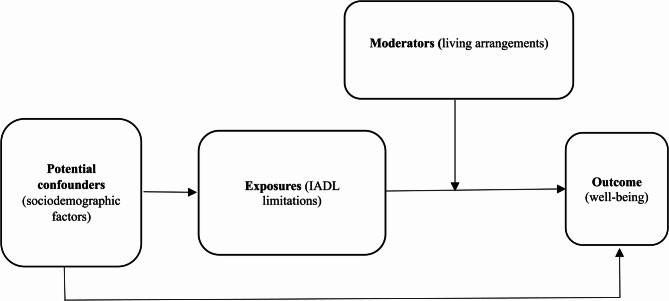 Figure 1
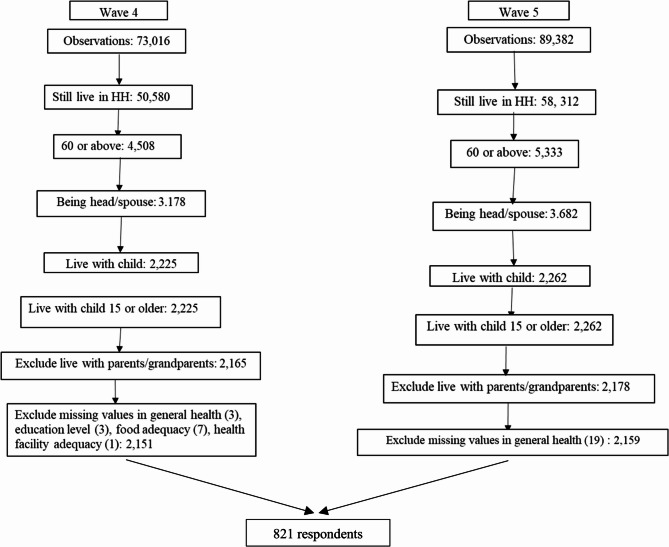 Figure 2
 Figure 3
Peer Reviews
No public reviews on file for this paper yet. If you reviewed it on a platform where reviews are public (OpenReview, ICLR, NeurIPS, ICML), you can paste yours below so the community can read it here.
Videos
No videos yet. Explain this paper in a talk, walkthrough, or lecture? Add one.
Taxonomy
TopicsIntergenerational Family Dynamics and Caregiving · Health disparities and outcomes · Geriatric Care and Nursing Homes