Understanding psychiatrist readiness for AI: a study of access, self-efficacy, trust, and design expectations
Yue He, Francis Xiatian Zhang, Xiaxia Wu, Meng Fang, Sisi Zheng, Hong Zhu

TL;DR
This study explores how ready Chinese psychiatrists are to use AI in their work, focusing on access, confidence, trust, and design preferences.
Contribution
The study provides new insights into Chinese psychiatrists' readiness for AI, highlighting subgroup differences and design preferences.
Findings
Psychiatrists showed moderate self-efficacy in using AI, with higher confidence among younger and trained clinicians.
Most psychiatrists prefer AI tools that reduce administrative burdens rather than those used in communication or therapy.
Limited formal training and subgroup differences suggest a need for targeted capacity-building initiatives.
Abstract
Artificial intelligence (AI) is receiving growing attention in psychiatric practice, yet psychiatrists vary considerably in how they perceive its benefits, risks, and clinical usefulness. Successful implementation depends not only on technological performance but also on clinicians’ readiness, including their access to AI, confidence in using it, trust in its reliability, and expectations for its design. Evidence on these dimensions remains limited in China. This study examined Chinese psychiatrists’ readiness for AI across four dimensions—access, self-efficacy, trust, and design expectations—and explored variation across demographic and professional subgroups. A cross-sectional online survey was distributed through the WeChat platform from March 20 to 22, 2025. Eligible participants were licensed psychiatrists engaged in clinical practice. A total of 134 valid responses were obtained…
Genes, proteins, chemicals, diseases, species, mutations and cell lines named across the full text — each resolved to its canonical identifier and authoritative record.
Click any figure to enlarge with its caption.
 Figure 1
 Figure 2
 Figure 3
 Figure 4
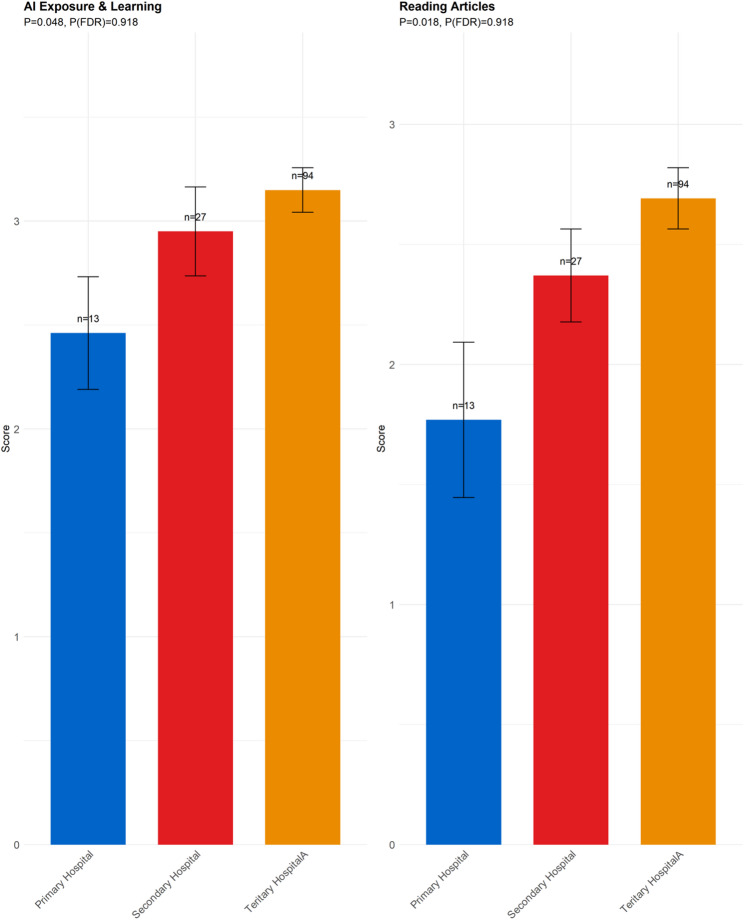 Figure 5
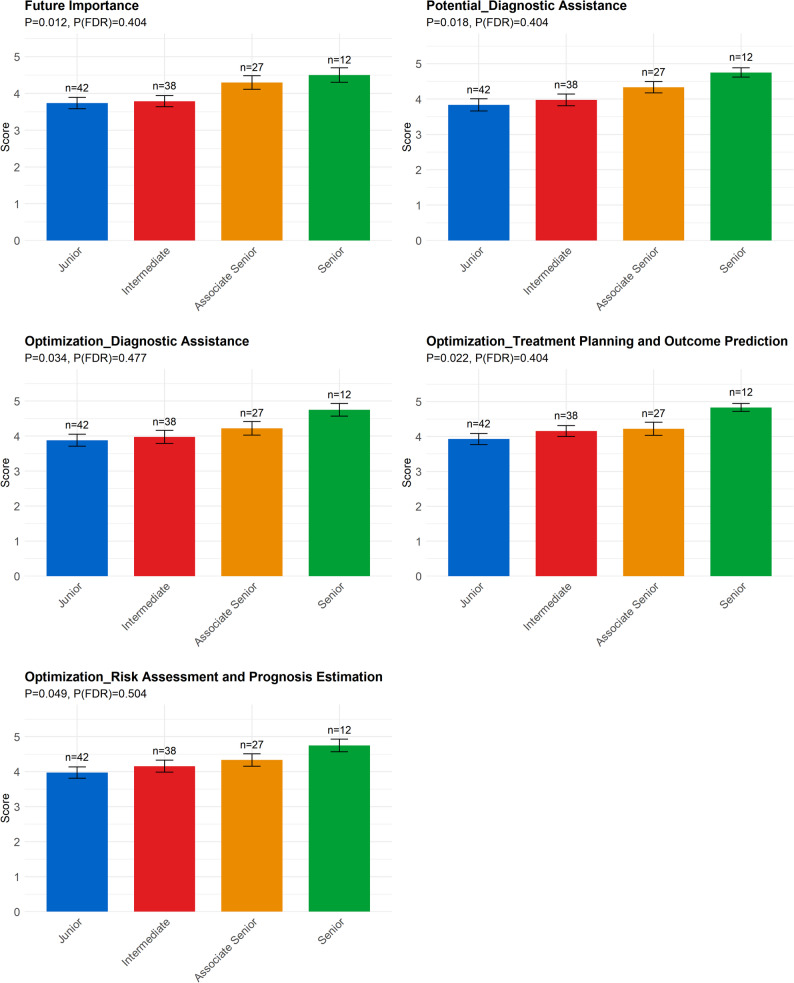 Figure 6
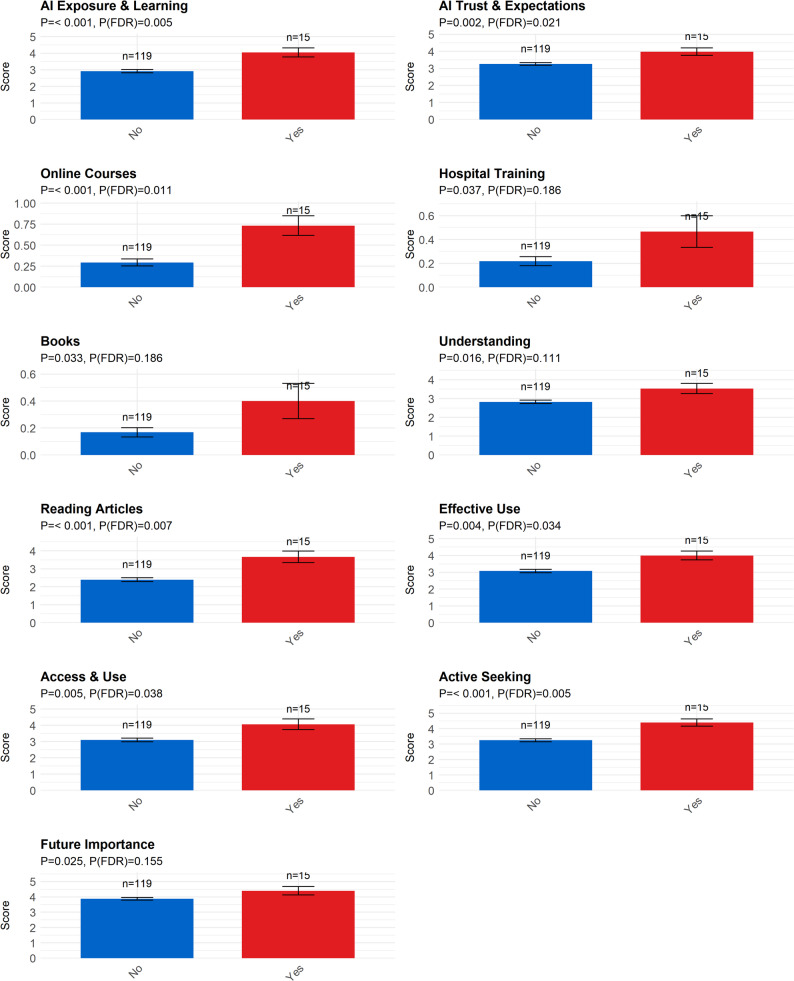 Figure 7
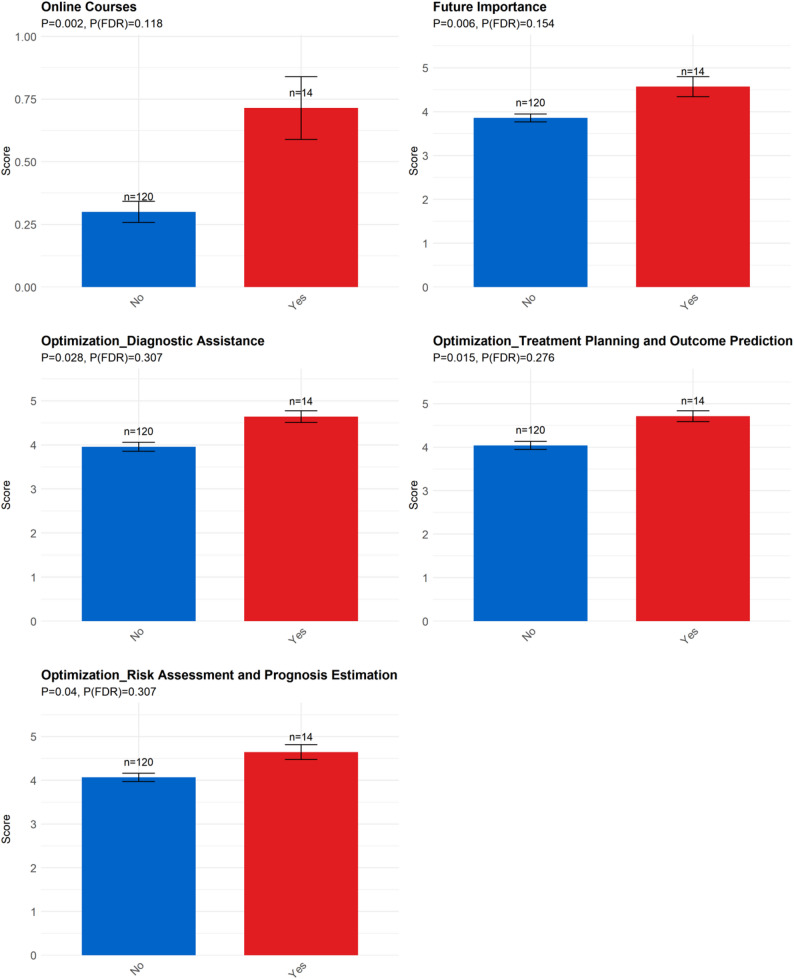 Figure 8
Peer Reviews
No public reviews on file for this paper yet. If you reviewed it on a platform where reviews are public (OpenReview, ICLR, NeurIPS, ICML), you can paste yours below so the community can read it here.
Videos
No videos yet. Explain this paper in a talk, walkthrough, or lecture? Add one.
Taxonomy
TopicsArtificial Intelligence in Healthcare and Education · Digital Mental Health Interventions · Electronic Health Records Systems