Tobacco advertising, cross-over effects, and US adolescent progression from never to current tobacco use
Dennis R. Trinidad, John P. Pierce, Brian Dang, David R. Strong, Matthew D. Stone, Sara B. McMenamin, Thet Nwe Myo Khin, Karen Messer

TL;DR
Adolescents exposed to tobacco ads are more likely to become daily tobacco users, especially e-cigarettes, even if they didn't use tobacco before.
Contribution
This study identifies cross-over effects of tobacco advertising, linking receptivity to one product with future use of another, particularly e-cigarettes.
Findings
Adolescents receptive to tobacco ads were 46% more likely to become current tobacco users and 41% more likely to become daily users.
Cross-over effects showed that receptivity to one product predicted use of a different product, especially for e-cigarettes.
E-cigarette use at follow-up was dominated by JUUL devices and fruit/candy flavors, with 29% of users recently vaping these flavors.
Abstract
Adolescent receptivity to tobacco advertising has been linked to increased tobacco initiation in longitudinal studies. However, not all ever users progress to daily use. We examined whether receptivity to tobacco advertising among adolescents was associated with product-specific use, including daily use, as an adult, and whether receptivity to one product had a cross-over effect and predicted use of a different product at follow-up. In the US Population Assessment of Tobacco and Health (PATH) Study, 74.6% of adolescent never-tobacco-users at baseline (2013-14) reported receptivity to tobacco advertising (for cigarettes, e-cigarettes, cigars, smokeless tobacco) and were surveyed on current tobacco use (every day, some days in past 30 days) an median of 7 years later (n = 7506). Multivariable logistic regression analyses included 8 common covariates. At follow-up, 20.1% were current…
Genes, proteins, chemicals, diseases, species, mutations and cell lines named across the full text — each resolved to its canonical identifier and authoritative record.
Click any figure to enlarge with its caption.
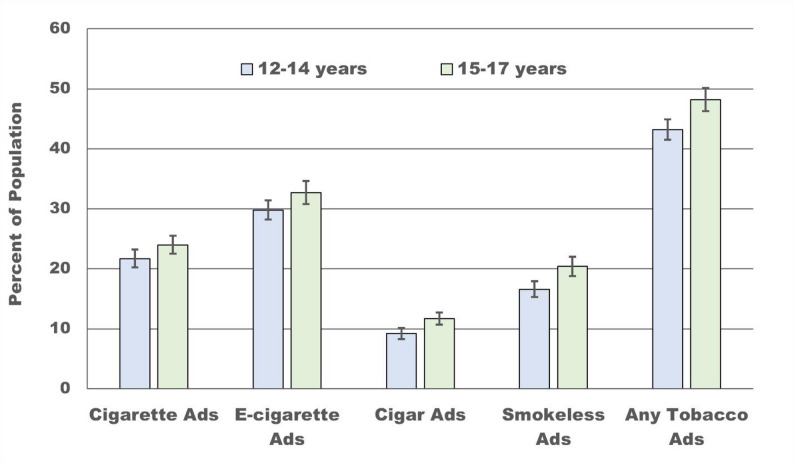 Figure 1
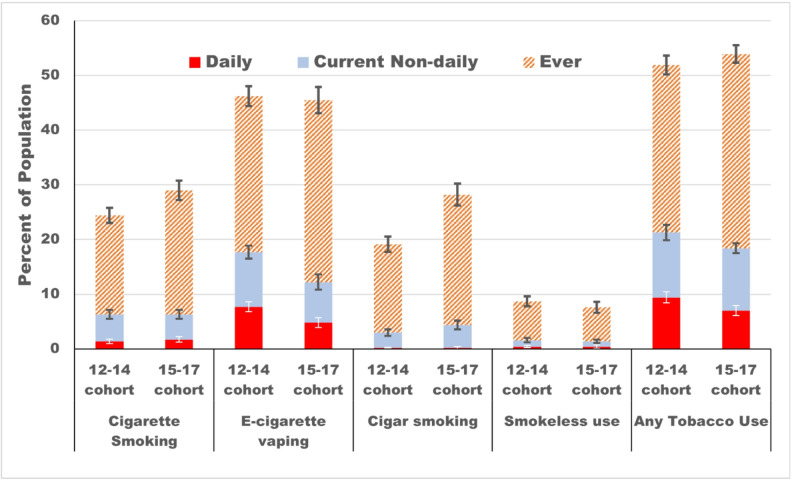 Figure 2
Peer Reviews
No public reviews on file for this paper yet. If you reviewed it on a platform where reviews are public (OpenReview, ICLR, NeurIPS, ICML), you can paste yours below so the community can read it here.
Videos
No videos yet. Explain this paper in a talk, walkthrough, or lecture? Add one.
Taxonomy
TopicsSmoking Behavior and Cessation · Behavioral Health and Interventions · Global Public Health Policies and Epidemiology