Burden of hereditary angioedema: results from a multinational survey of caregivers for adult and pediatric patients
Maureen Watt, Inmaculada Martinez-Saguer, Angela Simon, Ryan Murphy, Marie De La Cruz, Ricardo Zwiener, Mauricio Sarrazola, Anete S. Grumach

TL;DR
This study shows how caring for people with hereditary angioedema affects caregivers' lives, including work, sleep, and emotional health.
Contribution
The study is the first to document the psychosocial and humanistic burden on caregivers of both adult and pediatric HAE patients across multiple countries.
Findings
Caregivers of pediatric patients reported significant impacts on work, sleep, and household responsibilities.
Emotional stress, including anxiety and sleep problems, was common among caregivers of both adult and pediatric HAE patients.
Caregivers often faced a lack of understanding from schools, employers, and friends regarding their caregiving duties.
Abstract
Hereditary angioedema (HAE), a rare autosomal dominant disorder characterized by recurrent, potentially life-threatening attacks of cutaneous or submucosal swelling, affects patients’ everyday activities and psychological well-being. Although caregivers are instrumental in helping patients cope with HAE, its impact on the caregivers’ quality of life is poorly documented. Using web-based surveys (July 2022‒February 2023), this international study (Argentina, Brazil, Colombia, Croatia, Denmark, Germany, Hungary, Ireland, Norway, Poland, Portugal, Romania, and Sweden) assessed the humanistic and psychosocial burden of caregivers (≥ 18 years old) of pediatric (< 18 years) and adult (≥ 18 years) patients with diagnosed HAE. In total, 120 caregivers completed the surveys: 54 caregivers of pediatric patients (CoPs; mean age 40.6 years; 79.6% female) and 66 caregivers of adult patients (CoAs;…
Genes, proteins, chemicals, diseases, species, mutations and cell lines named across the full text — each resolved to its canonical identifier and authoritative record.
Click any figure to enlarge with its caption.
 Figure 1
 Figure 2
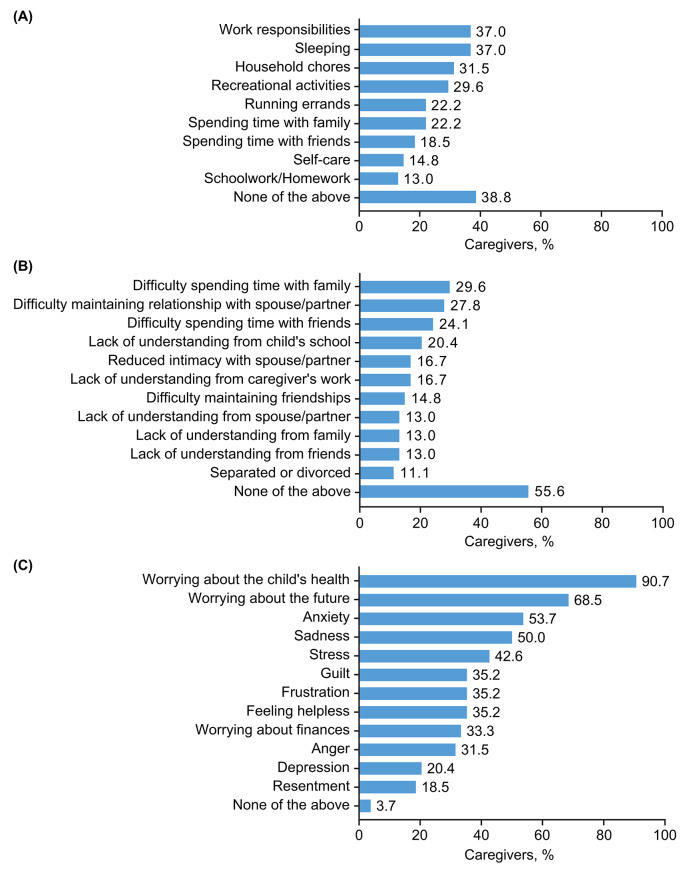 Figure 3
 Figure 4
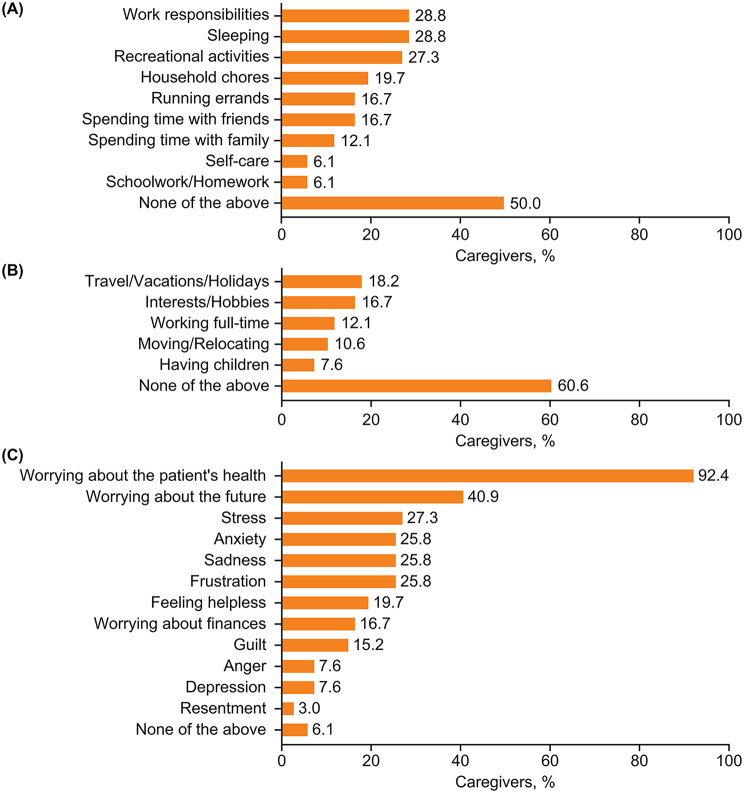 Figure 5
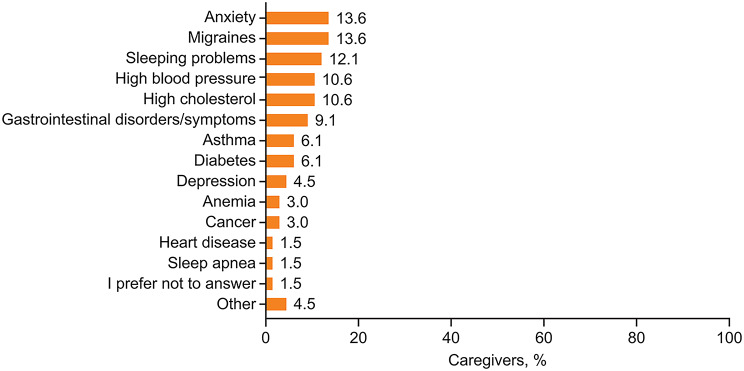 Figure 6
Peer Reviews
No public reviews on file for this paper yet. If you reviewed it on a platform where reviews are public (OpenReview, ICLR, NeurIPS, ICML), you can paste yours below so the community can read it here.
Videos
No videos yet. Explain this paper in a talk, walkthrough, or lecture? Add one.
Taxonomy
TopicsCoagulation, Bradykinin, Polyphosphates, and Angioedema · Urticaria and Related Conditions · Hemophilia Treatment and Research