Determinants of clinical outcome after transarterial embolization for nonvariceal gastrointestinal bleeding: a retrospective cohort study
Dávid Ádám Korda, Nguyen Tin Dat, András Bibok, Dénes Balázs Horváthy, Ádám Zoltán Farkas, Szabolcs Takács, István Hritz, Attila Szijártó, Bánk Gábor Fenyves, Pál Ákos Deák

TL;DR
This study examines factors affecting outcomes after a procedure called transarterial embolization for gastrointestinal bleeding, finding that shock severity is a key predictor of failure and death.
Contribution
The study identifies vasopressor use as a strong predictor of treatment failure and mortality in nonvariceal gastrointestinal bleeding patients undergoing TAE.
Findings
Technical success was 100%, with 82% clinical success in treating nonvariceal GIB.
Vasopressor or inotropic therapy and antithrombotic use were linked to treatment failure.
Higher comorbidity scores and vasopressor use were associated with 30-day mortality.
Abstract
Transarterial embolization (TAE) is an established therapeutic option for non-variceal gastrointestinal bleeding (GIB), but standardized criteria for patient selection and predictors of treatment outcomes remain limited. This study aimed to evaluate clinical outcomes after TAE and identify factors associated with treatment failure and 30-day mortality. We retrospectively reviewed all TAE procedures performed for nonvariceal GIB at Semmelweis University between May 2022 and July 2025. Clinical, laboratory, and procedural parameters were collected, including bleeding location, comorbidity burden, antithrombotic therapy, transfusion requirements, vasopressor or inotropic support, and embolization technique. Predictors of clinical failure (rebleeding within 30 days) and 30-day mortality were assessed using multivariable logistic regression. A total of 111 embolizations were performed in…
Genes, proteins, chemicals, diseases, species, mutations and cell lines named across the full text — each resolved to its canonical identifier and authoritative record.
Click any figure to enlarge with its caption.
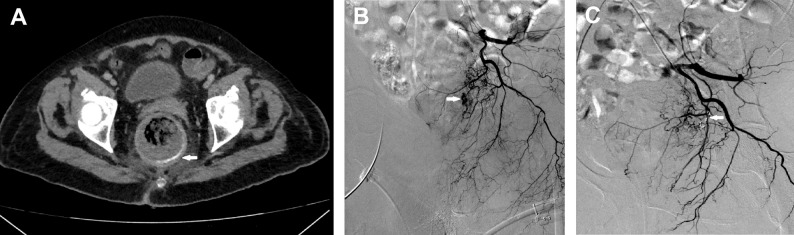 Figure 1
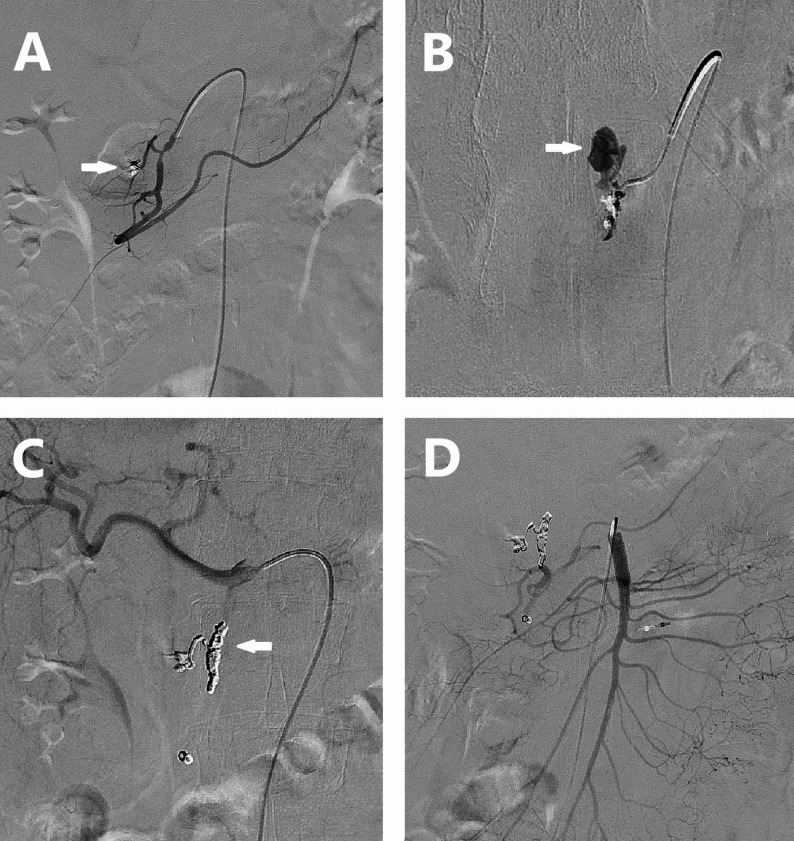 Figure 2
Peer Reviews
No public reviews on file for this paper yet. If you reviewed it on a platform where reviews are public (OpenReview, ICLR, NeurIPS, ICML), you can paste yours below so the community can read it here.
Videos
No videos yet. Explain this paper in a talk, walkthrough, or lecture? Add one.
Taxonomy
TopicsGastrointestinal Bleeding Diagnosis and Treatment · Vascular Anomalies and Treatments · Abdominal vascular conditions and treatments