Lower average cortical bone thickness predicts cemented fixation in short-stem reverse shoulder arthroplasty
Felix Hochberger, Thilo Lehmeyer, Weinan Zeng, Maximilian Rudert, Kilian List

TL;DR
This study found that lower average cortical bone thickness is a key factor in deciding to use cemented fixation during a specific type of shoulder surgery.
Contribution
The study identifies lower average cortical bone thickness as the strongest predictor for cemented fixation in short-stem reverse shoulder arthroplasty.
Findings
Cemented fixation was more common in older patients and females with lower cortical bone thickness.
Lower average cortical bone thickness (CBTavg) was the strongest independent predictor for cemented fixation.
Preoperative CBTavg measurements could improve surgical decision-making for fixation strategy.
Abstract
This study aimed to identify radiographic and demographic predictors influencing the intraoperative decision for cemented versus cementless humeral fixation in patients ≤ 80 years undergoing short-stem reverse shoulder arthroplasty (RSA). A retrospective analysis was conducted on RSA cases between 02/2019 and 10/2024. Patients ≤ 80 years were stratified into Group A (cementless fixation; n = 209) or Group B (cemented fixation; n = 58) based on intraoperative assessment of trial stem stability and bone quality. Preoperative variables included age, sex, body mass index (BMI), American Society of Anesthesiologists score (ASA), diagnosis, and radiographic parameters such as cortical bone thickness gauge (CBTg), average cortical thickness (CBTavg), acromiohumeral distance (AHD), and Hamada and Walch classifications. Multivariate logistic regression including age, sex, CBTavg, CBTg, and…
Genes, proteins, chemicals, diseases, species, mutations and cell lines named across the full text — each resolved to its canonical identifier and authoritative record.
Click any figure to enlarge with its caption.
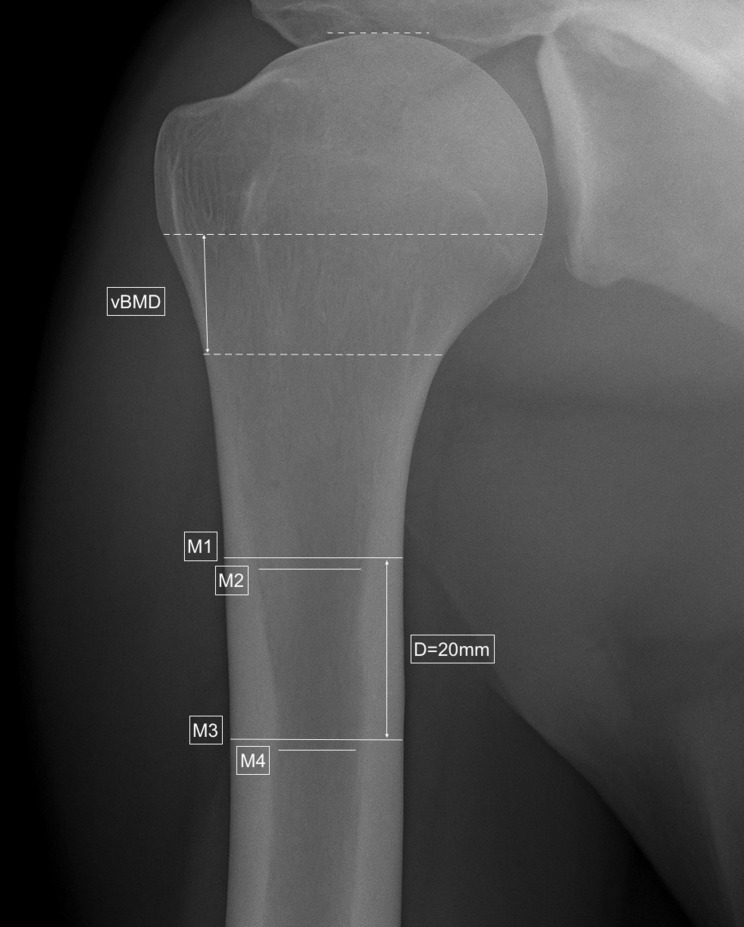 Figure 1
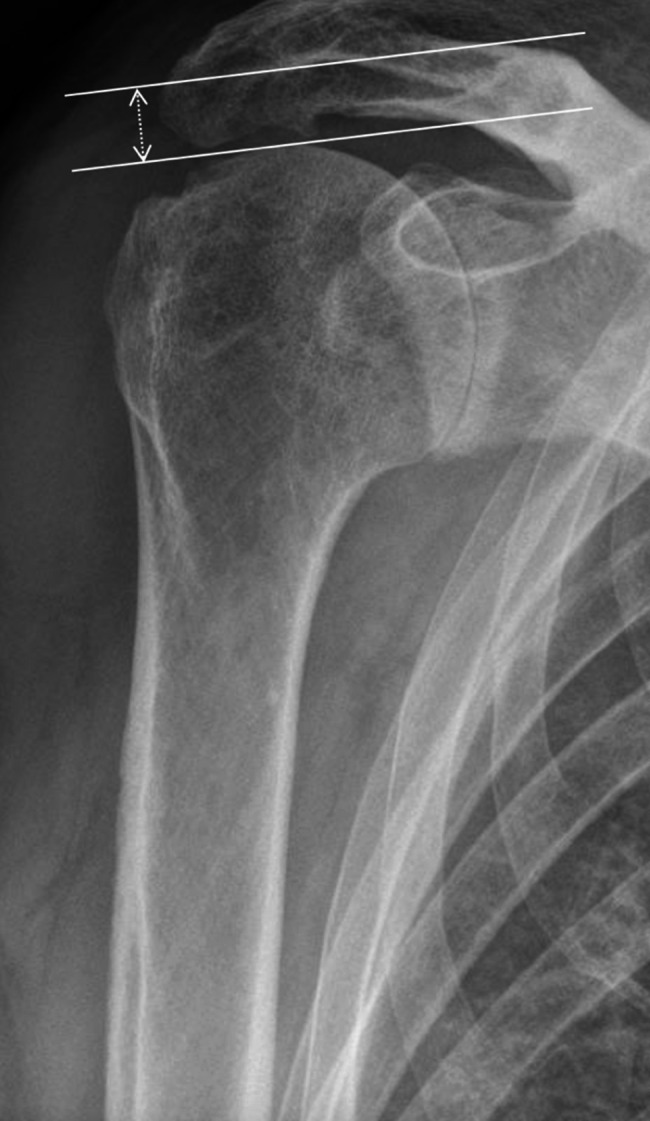 Figure 2
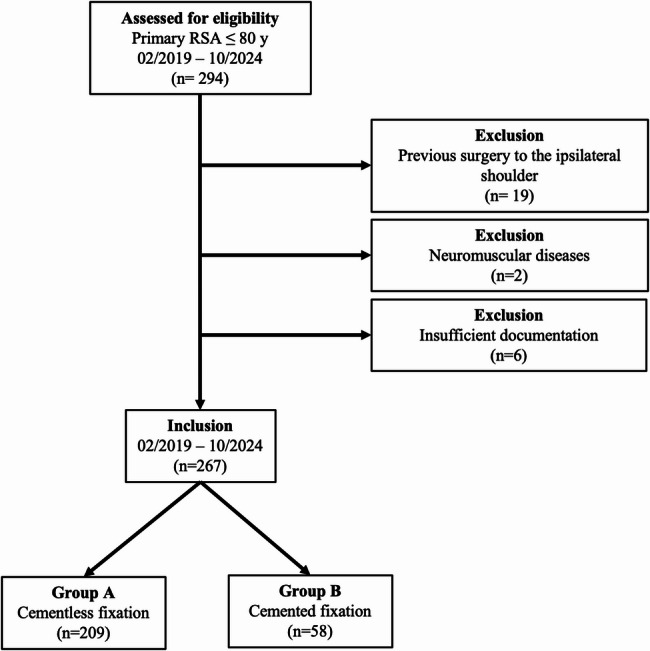 Figure 3
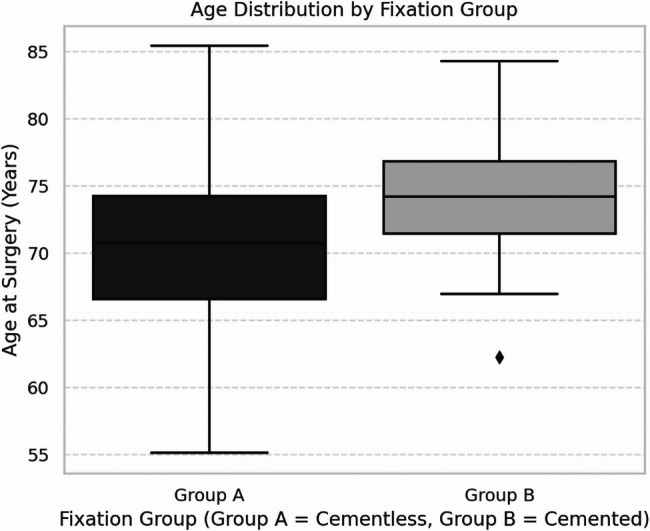 Figure 4
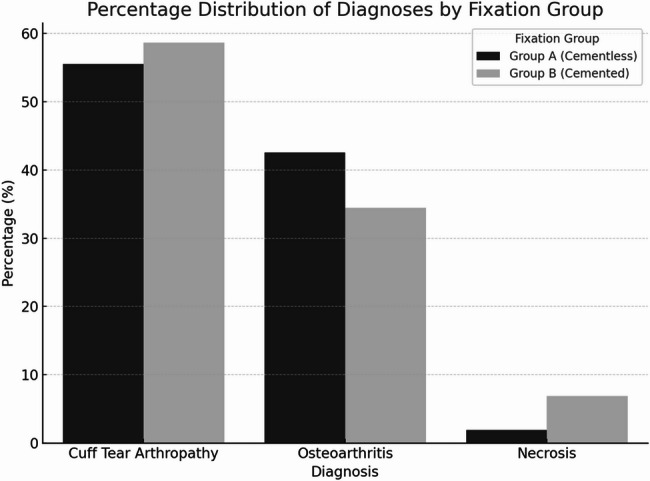 Figure 5
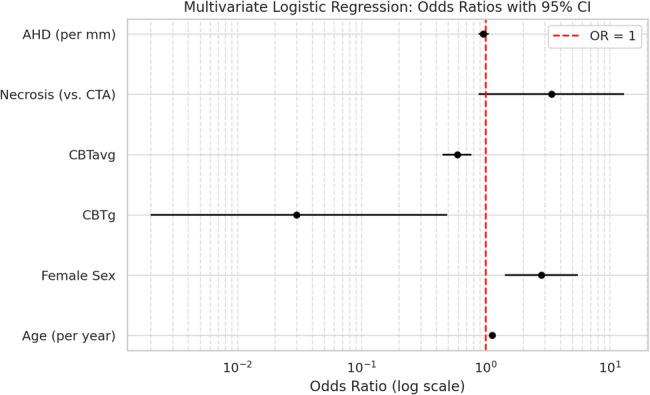 Figure 6
Peer Reviews
No public reviews on file for this paper yet. If you reviewed it on a platform where reviews are public (OpenReview, ICLR, NeurIPS, ICML), you can paste yours below so the community can read it here.
Videos
No videos yet. Explain this paper in a talk, walkthrough, or lecture? Add one.
Taxonomy
TopicsShoulder Injury and Treatment · Total Knee Arthroplasty Outcomes · Elbow and Forearm Trauma Treatment