The Jigsaw teaching method compared to traditional teaching on anatomy and physiology knowledge in higher education – a randomised controlled trial
Janette Moland Stokstad, Eirik Solberg Nedrehagen, Karl Ove Hufthammer

TL;DR
This study compared the Jigsaw teaching method and traditional teaching in higher education and found both equally effective for learning anatomy and physiology, though students preferred traditional teaching.
Contribution
The study provides empirical evidence on the effectiveness of the Jigsaw method versus traditional teaching in anatomy and physiology education.
Findings
Both Jigsaw and traditional teaching significantly improved student knowledge of anatomy and physiology.
No significant differences in knowledge acquisition or retention were found between the two teaching methods.
Students preferred traditional teaching despite similar learning outcomes with the Jigsaw method.
Abstract
Traditional teaching (TT) is lecturer-centred, while student-centred teaching, including Jigsaw (JS), fosters student interaction. However, the results of research on the effectiveness of JS on learning outcomes is inconsistent. This randomised controlled trial compared the effect of JS and TT on higher-education students’ knowledge of the anatomy and physiology of the sensory apparatus and on their perceptions of the two teaching methods. Forty-eight undergraduate social nursing students were randomised to either a TT or JS-based learning activity. One JS student dropped out before completing the activity and was excluded, resulting in 47 participants (23 TT, 24 JS). Improvement in knowledge was assessed by recording the number of correct answers (points) on a 25-question multiple-choice test at three time points: before the activity (baseline), immediately after the activity…
Genes, proteins, chemicals, diseases, species, mutations and cell lines named across the full text — each resolved to its canonical identifier and authoritative record.
Click any figure to enlarge with its caption.
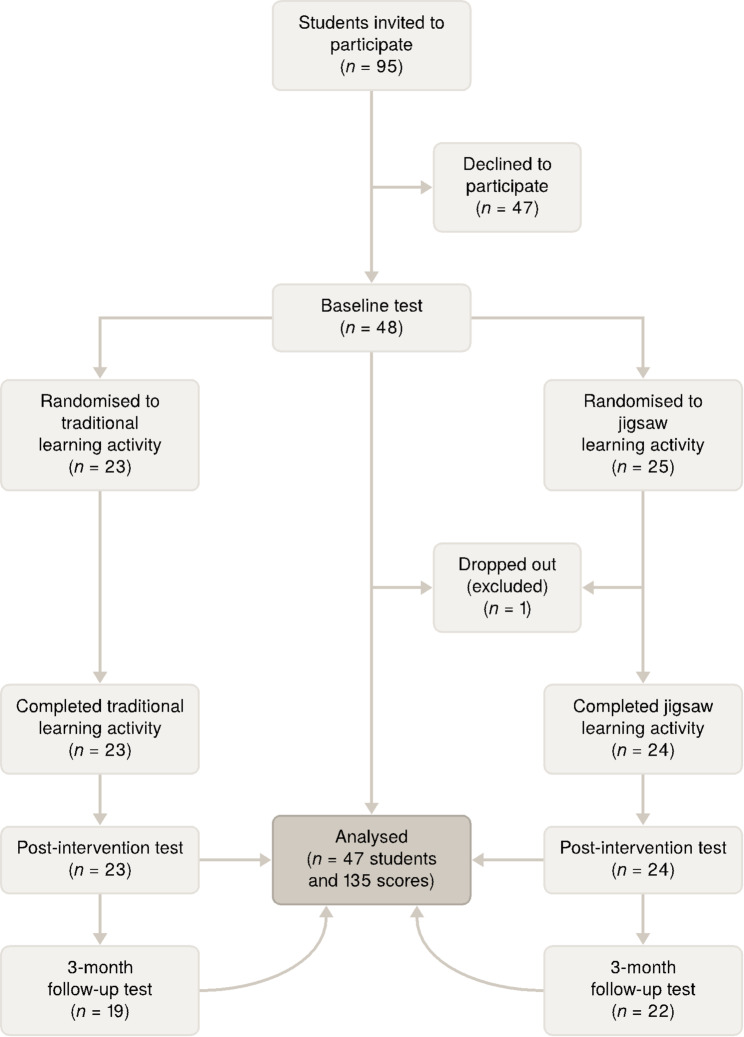 Figure 1
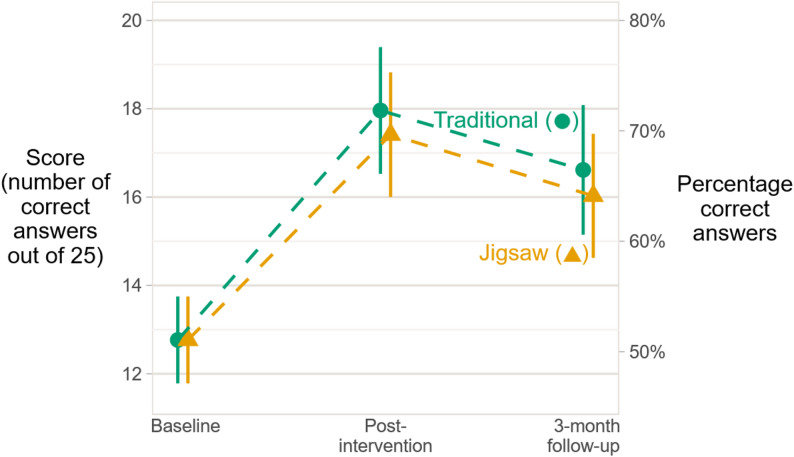 Figure 2
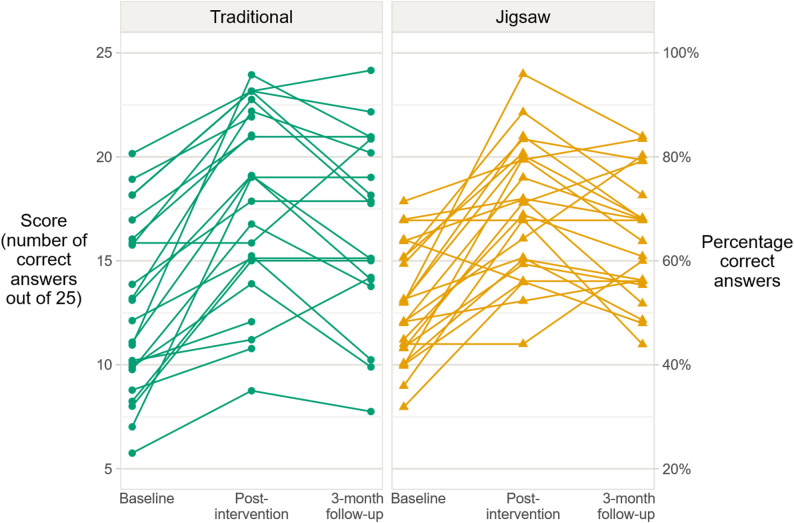 Figure 3
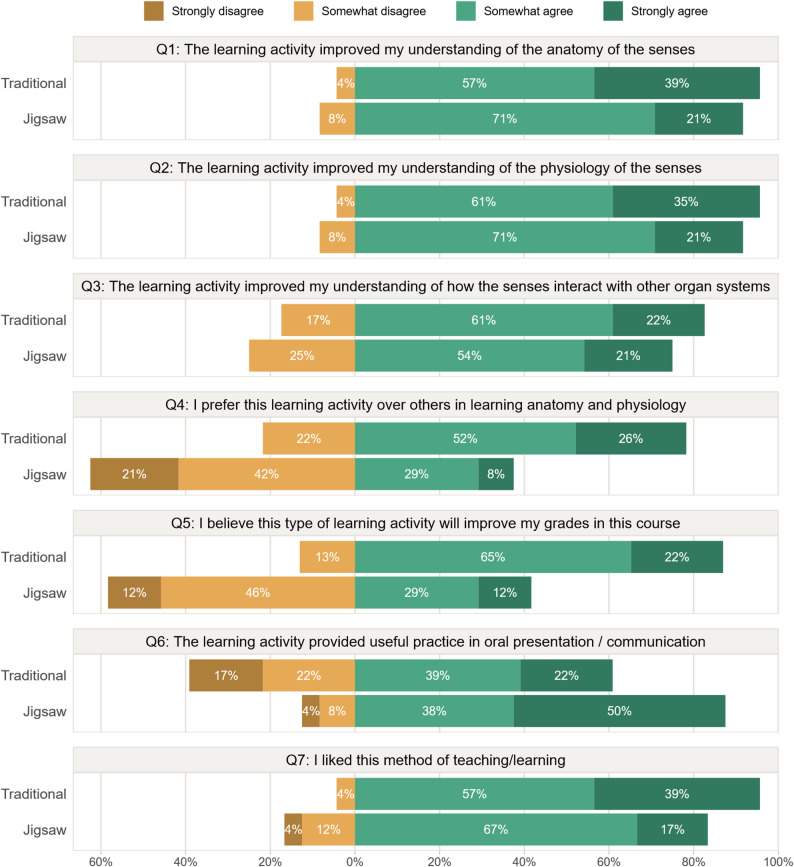 Figure 4
Peer Reviews
No public reviews on file for this paper yet. If you reviewed it on a platform where reviews are public (OpenReview, ICLR, NeurIPS, ICML), you can paste yours below so the community can read it here.
Videos
No videos yet. Explain this paper in a talk, walkthrough, or lecture? Add one.
Taxonomy
TopicsAnatomy and Medical Technology · Science Education and Pedagogy · Problem and Project Based Learning