RBM10 modulation of circRNA biogenesis contributes to its tumor suppressor role in lung adenocarcinoma
Ana Utrilla-Maestre, Ana M. Matia-González, Paola Peinado, Maria Angeles Becerra-Rodriguez, Maria S. Benitez-Cantos, Marta Cuadros, Pedro P. Medina

TL;DR
This study shows how the protein RBM10 helps control the production of circular RNAs, which act as tumor suppressors in lung adenocarcinoma.
Contribution
The paper reveals a new mechanism by which RBM10 regulates circRNA biogenesis, linking it to tumor suppression in lung cancer.
Findings
RBM10 binds to intronic regions of circHIPK3 and circSMARCA5, promoting their circularization through position-dependent exon skipping.
Loss of RBM10 leads to reduced levels of circHIPK3 and circSMARCA5, which correlates with increased tumorigenicity in lung adenocarcinoma.
circHIPK3 is downregulated in RBM10-mutant tumors and may serve as a biomarker and therapeutic target in LUAD.
Abstract
Circular RNAs (circRNAs) are emerging regulators in cancer biology, yet the mechanisms underlying their biogenesis remain incompletely defined. RBM10, a splicing regulator frequently mutated in lung adenocarcinoma (LUAD), modulates RNA processing, but its involvement in circRNA regulation has not yet been addressed. Transcriptomic profiling of RBM10-restored LUAD cells, followed by RT-qPCR validation, identified circHIPK3 and circSMARCA5 as consistently RBM10-dependent circRNAs. Subcellular fractionation confirmed nuclear confinement of RBM10 and cytoplasmic enrichment of circRNAs, supporting a nuclear role for RBM10 in circRNA biogenesis. PAR-CLIP and RNA pulldown assays demonstrated direct RBM10 binding to intronic flanking regions of these circRNAs. Using a splicing reporter assay, we found that RBM10 binding to the 3' flanking region promotes exon skipping and circularization more…
Genes, proteins, chemicals, diseases, species, mutations and cell lines named across the full text — each resolved to its canonical identifier and authoritative record.
Click any figure to enlarge with its caption.
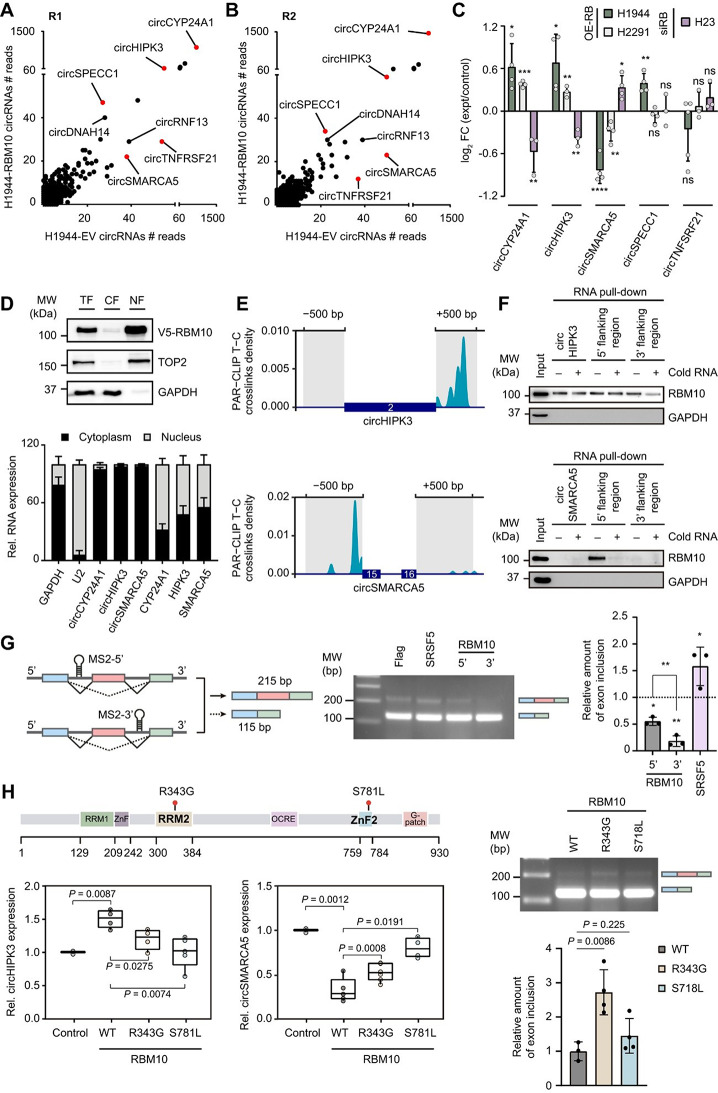 Figure 1
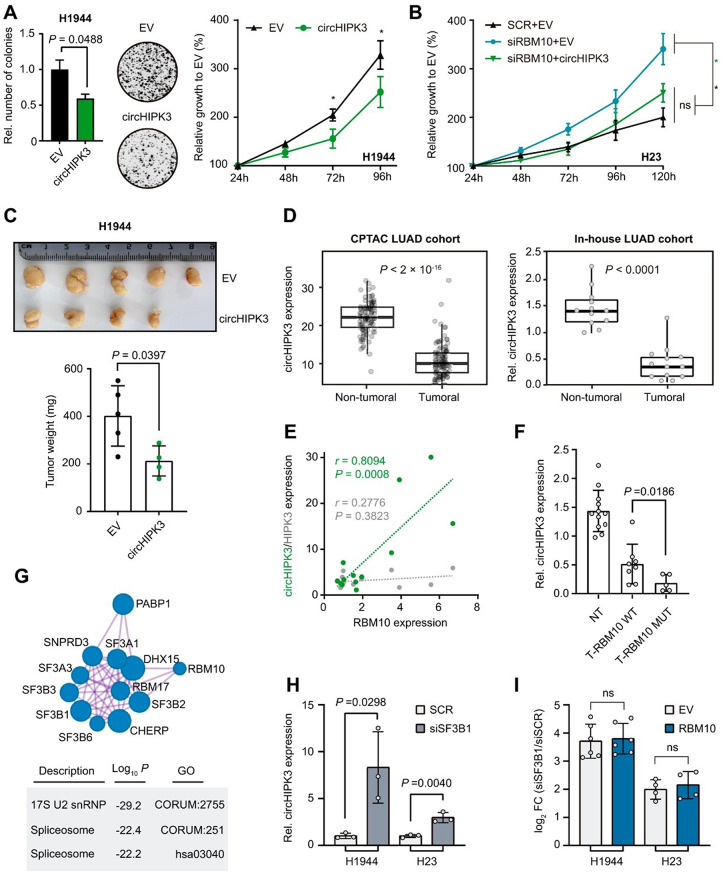 Figure 2
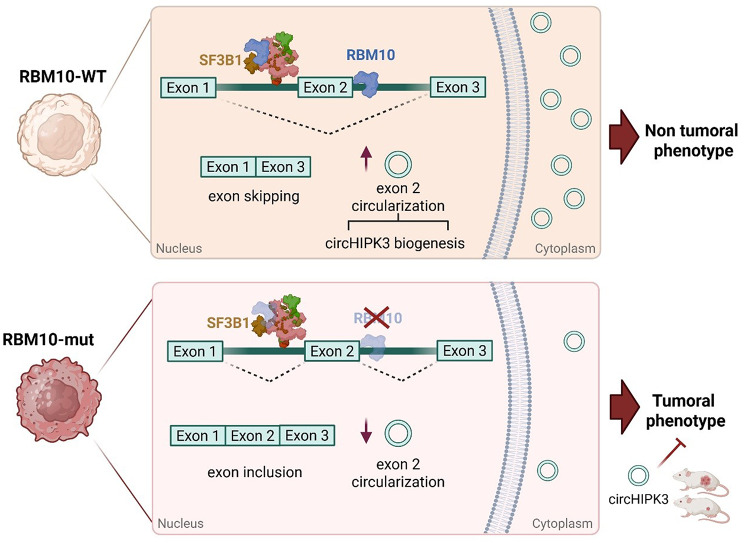 Figure 3
Peer Reviews
No public reviews on file for this paper yet. If you reviewed it on a platform where reviews are public (OpenReview, ICLR, NeurIPS, ICML), you can paste yours below so the community can read it here.
Videos
No videos yet. Explain this paper in a talk, walkthrough, or lecture? Add one.
Taxonomy
TopicsCircular RNAs in diseases · Cancer-related molecular mechanisms research · MicroRNA in disease regulation