MRI-based atrophy subtypes in a young memory clinic cohort: associations with clinical and biomarker profiles
Alessandro Zilioli, Rosaleena Mohanty, Anna Rosenberg, Anna Matton, Tobias Granberg, Göran Hagman, Marco Spallazzi, Daniel Ferreira, Miia Kivipelto, Eric Westman

TL;DR
This study identifies MRI-based brain atrophy patterns in memory clinic patients and links them to clinical and biomarker profiles, supporting their use in diagnosing and targeting Alzheimer's disease.
Contribution
The study demonstrates distinct MRI atrophy subtypes in a young memory clinic cohort and their associations with biomarkers and cerebrovascular burden, relevant for precision medicine.
Findings
Limbic and typical atrophy subtypes were more common in males, APOE ε4 carriers, and Aβ-positive patients with higher p-tau181 and NFL levels.
Cortical predominant atrophy was more frequent in females, while minimal atrophy was linked to milder cognitive impairment and higher depressive symptoms.
Findings were consistent in Aβ-positive patients and those eligible for anti-Aβ therapy, supporting the subtypes' diagnostic and therapeutic relevance.
Abstract
Brain atrophy subtypes are increasingly recognized in Alzheimer’s disease (AD) dementia. However, their relevance across the real-world memory clinic spectrum, from subjective cognitive impairment (SCI) and mild cognitive impairment (MCI) to AD and non-AD dementias, remains unclear. This cross-sectional study aimed to identify MRI-based atrophy subtypes in a relatively young memory clinic and examine associations with demographic, cerebrospinal fluid (CSF) biomarkers, and cerebrovascular burden to inform precision medicine approaches. We included all consecutive patients (SCI to dementia), evaluated at the Karolinska University-Hospital Memory Clinic (Stockholm, Sweden) between 2018 and 2023 with available clinical and 3T MRI data. Subtypes were defined using FreeSurfer-derived volumetric measures and a validated algorithm combining categorical classification (typical, limbic…
Genes, proteins, chemicals, diseases, species, mutations and cell lines named across the full text — each resolved to its canonical identifier and authoritative record.
Click any figure to enlarge with its caption.
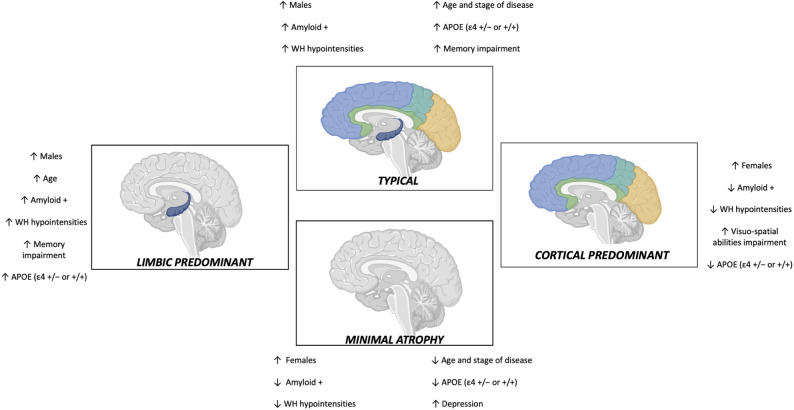 Figure 1
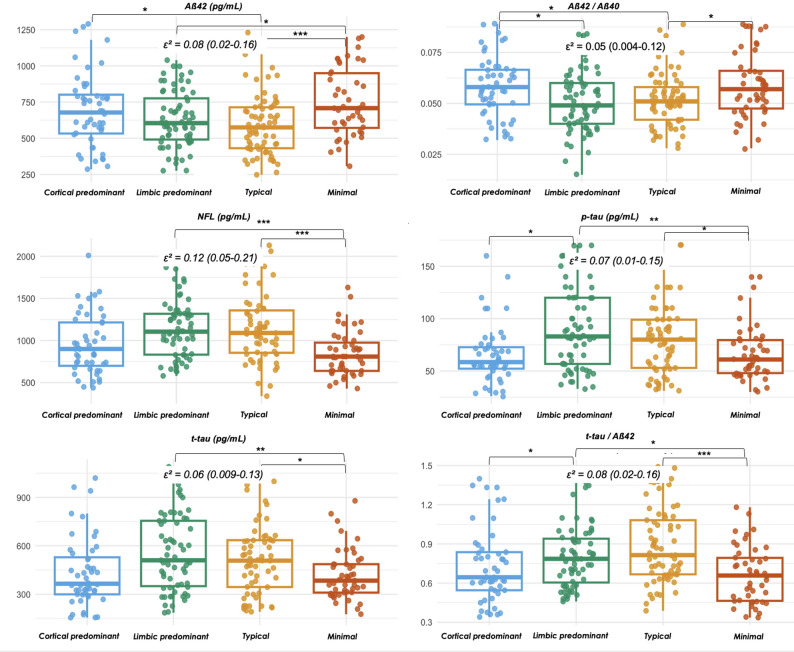 Figure 2
 Figure 3
 Figure 4
Peer Reviews
No public reviews on file for this paper yet. If you reviewed it on a platform where reviews are public (OpenReview, ICLR, NeurIPS, ICML), you can paste yours below so the community can read it here.
Videos
No videos yet. Explain this paper in a talk, walkthrough, or lecture? Add one.
Taxonomy
TopicsDementia and Cognitive Impairment Research · Alzheimer's disease research and treatments · Neurological Disease Mechanisms and Treatments