Cerebrospinal fluid dopamine 3-O-sulfate as a novel biomarker for predicting motor complications in Parkinson’s disease: insights from the PPMI cohort
Jieshan Chi, Rui Yang, Piao Zhang, Siming Rong, Mengfei Cai, Yuhu Zhang

TL;DR
This study identifies a new biomarker in spinal fluid that can predict motor complications from Parkinson's disease treatment, helping personalize therapy.
Contribution
CSF dopamine 3-O-sulfate (DA3S) is shown as a novel, independent predictor of levodopa-induced motor complications in Parkinson’s disease.
Findings
DA3S levels are strongly correlated with levodopa exposure and predict motor complications.
A model combining DA3S, LEDD, and disease duration achieved 80.6% accuracy in predicting complications.
DA3S is a pharmacodynamic marker of central levodopa metabolism and aids in risk stratification.
Abstract
Long-term levodopa treatment for Parkinson’s disease (PD) is often complicated by motor fluctuations and dyskinesia. Predictive biomarkers for these debilitating side effects are currently lacking, hindering personalized treatment. This study aimed to characterize the cerebrospinal fluid (CSF) metabolome across the PD continuum, distinguish disease-related from medication-related changes, and identify predictive biomarkers for levodopa-induced motor complications. We analyzed targeted CSF metabolomic data from the Parkinson’s Progression Markers Initiative (PPMI) cohort, which included healthy controls, prodromal, and PD participants. Statistical analyses revealed differentially abundant metabolites. The association of the metabolite dopamine 3-O-sulfate (DA3S) with motor complications was assessed using logistic regression and decision tree models. DA3S was the most significantly…
Genes, proteins, chemicals, diseases, species, mutations and cell lines named across the full text — each resolved to its canonical identifier and authoritative record.
Click any figure to enlarge with its caption.
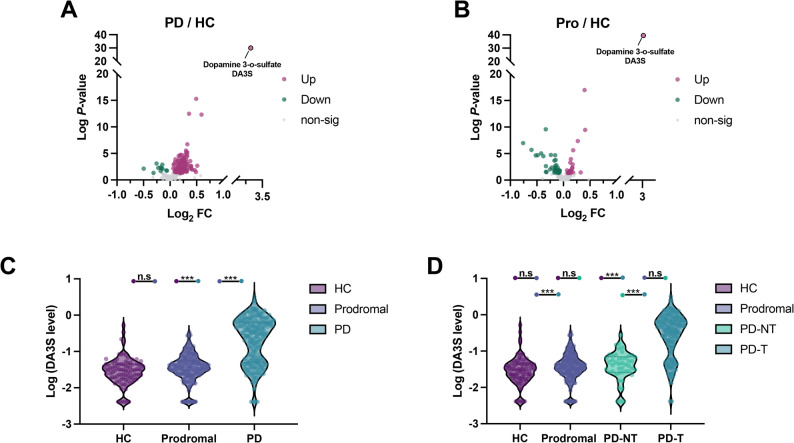 Figure 1
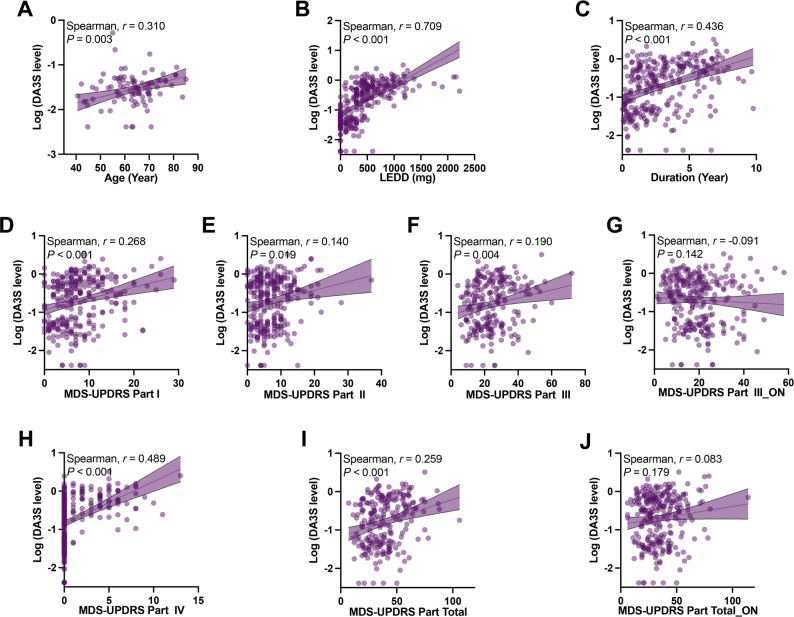 Figure 2
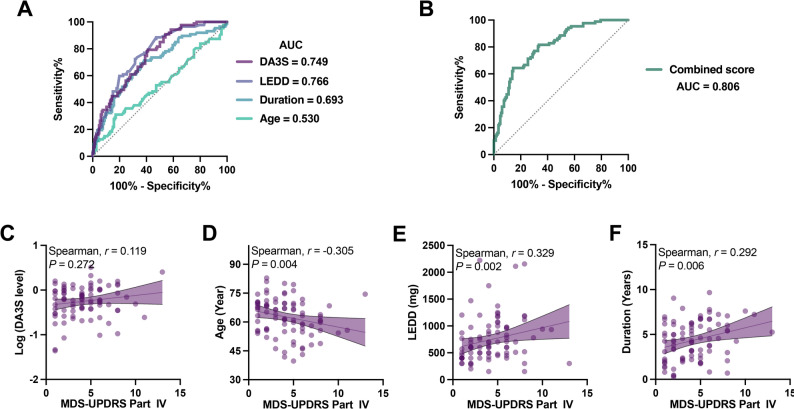 Figure 3
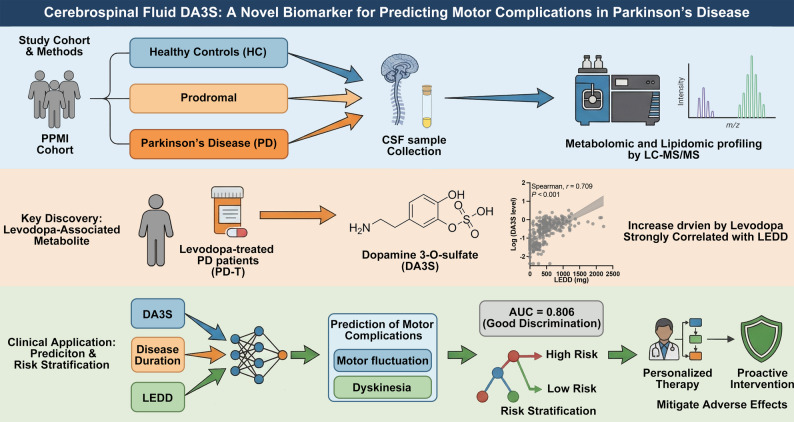 Figure 4
Peer Reviews
No public reviews on file for this paper yet. If you reviewed it on a platform where reviews are public (OpenReview, ICLR, NeurIPS, ICML), you can paste yours below so the community can read it here.
Videos
No videos yet. Explain this paper in a talk, walkthrough, or lecture? Add one.
Taxonomy
TopicsParkinson's Disease Mechanisms and Treatments · Neurological disorders and treatments · Balance, Gait, and Falls Prevention