Is hereditary angioedema associated with deficits in emotion regulation? A quantitative study in adult patients
Christelle Duprez, Véronique Christophe, Isabelle Citerne, Michel Raguet, Louise Richez, Sébastien Sanges, David Launay

TL;DR
This study explores whether patients with hereditary angioedema struggle with emotion regulation and finds a link between alexithymia and lower quality of life.
Contribution
The study provides new insights into the emotional regulation challenges and alexithymia prevalence in hereditary angioedema patients.
Findings
36.8% of patients had definite alexithymia, which was linked to more depressive symptoms and lower quality of life.
Alexithymia was associated with fewer emotion regulation skills and more difficulties in regulating emotions.
Perceived paternal overprotection was connected to emotion regulation challenges in HAE patients.
Abstract
Patients with hereditary angioedema (HAE) exhibit emotional distress and a deteriorated quality of life. Emotional distress is associated with impaired emotional regulation, including alexithymia, which is characterized by difficulties in recognizing and expressing emotions. Our study assessed the presence of alexithymia in patients with HAE to determine whether patients with this disease experience difficulties and specific learning in emotion regulation. Thirty-nine adult patients with HAE answered a self-report questionnaire measuring: 1) alexithymia (Toronto Alexithymia Scale-20), 2) anxiety and depression symptoms (Hospital Anxiety and Depression Scale), 3) quality of life (Angioedema Quality of Life Questionnaire), 4) emotion regulation skills (Emotion Regulation Skills Questionnaire), 5) difficulties in emotion regulation (Difficulties in Emotion Regulation Scale), and 6)…
Genes, proteins, chemicals, diseases, species, mutations and cell lines named across the full text — each resolved to its canonical identifier and authoritative record.
Click any figure to enlarge with its caption.
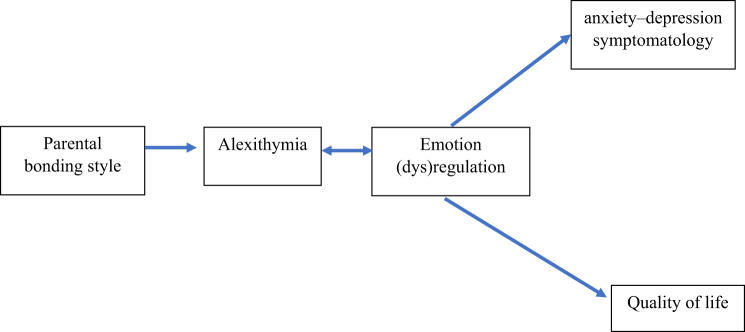 Figure 1
Peer Reviews
No public reviews on file for this paper yet. If you reviewed it on a platform where reviews are public (OpenReview, ICLR, NeurIPS, ICML), you can paste yours below so the community can read it here.
Videos
No videos yet. Explain this paper in a talk, walkthrough, or lecture? Add one.
Taxonomy
TopicsCoagulation, Bradykinin, Polyphosphates, and Angioedema · Hemophilia Treatment and Research · Urticaria and Related Conditions