High-risk biochemical recurrence in prostate cancer: identification and early intervention strategies
Ahmed Hassan Abdelaziz, Mai Mohamed Ali Ezz El Din, Emad Hamada, Mohamed Abdullah, Hassan Sayed Shaker, M. Sherif Mourad, Tarek Osman, Amr Mohamed Nowier, Dina Salah Gad

TL;DR
This paper outlines strategies to identify and manage high-risk prostate cancer patients experiencing biochemical recurrence, emphasizing multidisciplinary approaches and new therapies.
Contribution
The paper provides expert consensus on early intervention strategies and the role of ARPIs in managing high-risk biochemical recurrence in prostate cancer.
Findings
Standardized identification and treatment protocols for high-risk BCR patients are emphasized.
A multidisciplinary team approach improves personalized treatment planning and resource management.
Androgen receptor signaling pathway inhibitors show potential in optimizing patient outcomes.
Abstract
Biochemical recurrence (BCR) following primary therapy for prostate cancer (PCa) is associated with disease progression; thus, identifying patients at high risk and implementing management strategies remains critical. This expert opinion outlines a set of recommendations for identifying high-risk BCR patients, provides insights into the impact of a multidisciplinary team (MDT) approach on disease management, explores associated costs and resource utilization, and examines the role of androgen receptor signaling pathway inhibitors (ARPIs) in optimizing outcomes. The latest evidence and clinical guidelines on risk stratification, diagnostic tools, and collaborative management strategies were evaluated. Additionally, expert opinions were collected from nine oncology and urology experts, and their insights were integrated to form a comprehensive approach tailored for clinical application.…
Genes, proteins, chemicals, diseases, species, mutations and cell lines named across the full text — each resolved to its canonical identifier and authoritative record.
Click any figure to enlarge with its caption.
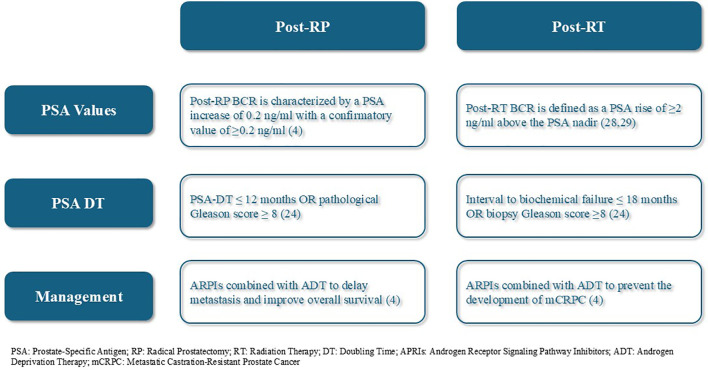 Figure 1
Peer Reviews
No public reviews on file for this paper yet. If you reviewed it on a platform where reviews are public (OpenReview, ICLR, NeurIPS, ICML), you can paste yours below so the community can read it here.
Videos
No videos yet. Explain this paper in a talk, walkthrough, or lecture? Add one.
Taxonomy
TopicsProstate Cancer Treatment and Research · Prostate Cancer Diagnosis and Treatment · Breast Cancer Treatment Studies