Leveraging fragment-based drug discovery to advance 3D scaffolds into potent ligands: application to the histamine H1 receptor
Tom Dekker, Oscar P. J. van Linden, Herman D. Lim, Mabel E. Dekker, Henry F. Vischer, Rob Leurs, Tiffany van der Meer, Maurice C. M. L. Buzink, David J. Hamilton, Barbara Zarzycka, Elwin Janssen, Maikel Wijtmans, Iwan J. P. de Esch

TL;DR
This paper shows how using 3D chemical structures in drug discovery can lead to finding potent compounds for the histamine H1 receptor.
Contribution
The study introduces new methods for incorporating 3D scaffolds into fragment-based drug discovery workflows.
Findings
A cyclobutane-containing hit was identified for the histamine H1 receptor.
A high-affinity antagonist (VUF26691) was developed with a pKi of 8.8.
FBDD successfully translated 3D chemistries into biologically active compounds.
Abstract
Fragment-based drug discovery (FBDD) often relies on screening simple, 2D aromatic fragments, with the introduction of 3D character typically being reserved for later stages of hit optimization. The use of 3D screening fragments has been limited because of concerns about reduced hit rates and limited availability arising from synthetic accessibility constraints. Consequently, the chemical diversity of screening libraries has been restricted, and the potential of 3D scaffolds remains underexplored. To address these limitations, we developed novel synthetic methodologies for constructing 3D scaffolds and integrated them into FBDD workflows, which we consider an optimal strategy to advance these chemistries into hit optimization programs. Here, we report the screening of a focused 3D fragment library and the identification of a cyclobutane-containing hit for the histamine H1 receptor. A…
Genes, proteins, chemicals, diseases, species, mutations and cell lines named across the full text — each resolved to its canonical identifier and authoritative record.
Click any figure to enlarge with its caption.
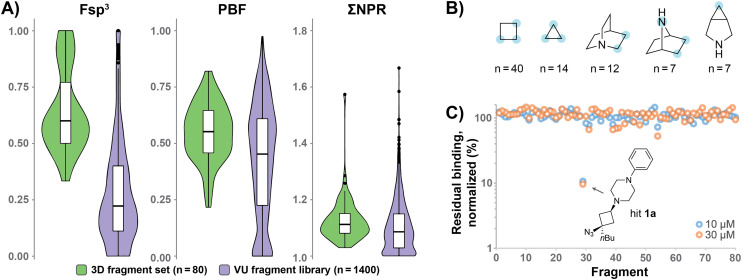 Figure 1
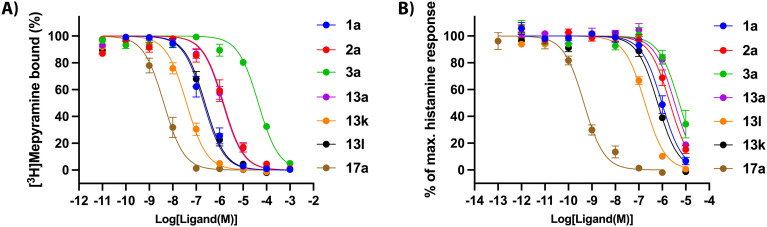 Figure 2
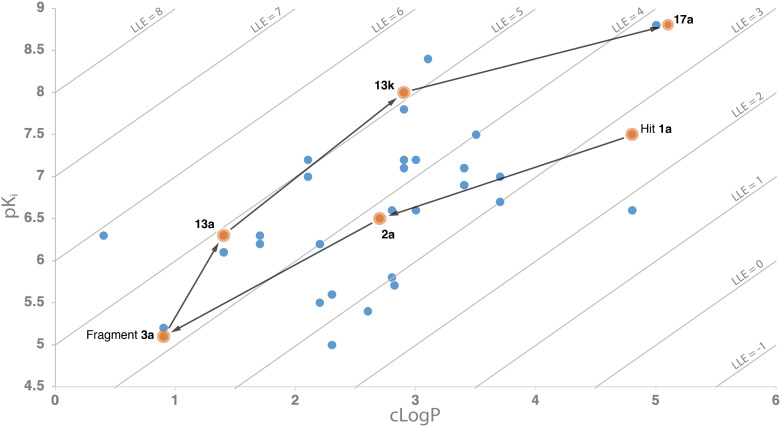 Figure 3
 Figure 4
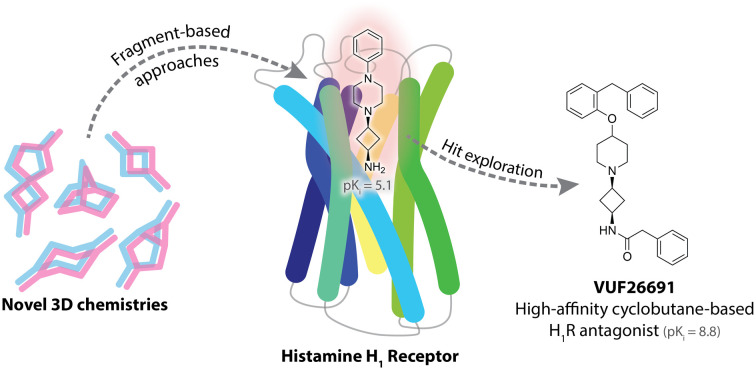 Figure 5
 Figure 6
 Figure 7
 Figure 8
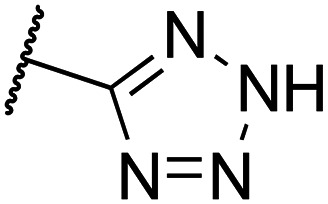 Figure 9
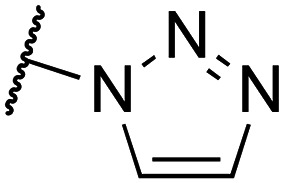 Figure 10
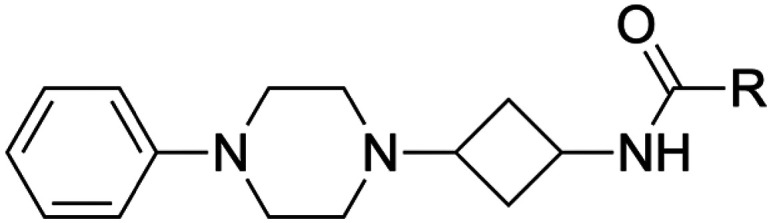 Figure 11
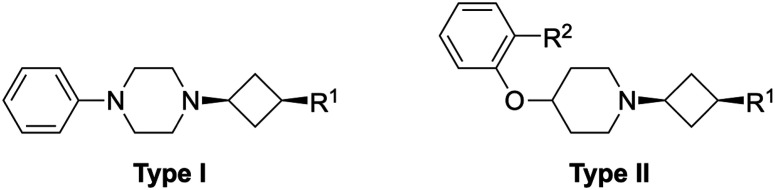 Figure 12
Peer Reviews
No public reviews on file for this paper yet. If you reviewed it on a platform where reviews are public (OpenReview, ICLR, NeurIPS, ICML), you can paste yours below so the community can read it here.
Videos
No videos yet. Explain this paper in a talk, walkthrough, or lecture? Add one.
Taxonomy
TopicsClick Chemistry and Applications · Chemical Synthesis and Analysis · Mast cells and histamine