Bacterial vaginosis in microscopic examination of Pap smears in patients with high-risk HPV is associated with viral persistence and cytological progression in a longitudinal study
Lara Linz, Nina Zachau, Sibylle Spieth, Patrick Finzer

TL;DR
This study found that bacterial vaginosis in Pap smears is linked to persistent HPV infection and increased risk of cervical lesions in women.
Contribution
The study demonstrates that bacterial vaginosis is a risk factor for HPV persistence and progression, suggesting its inclusion in cervical cancer screening.
Findings
Patients with bacterial vaginosis had higher HPV persistence and progression rates compared to controls.
Lactobacillus flora was associated with higher HPV clearance rates across both cohorts.
Bacterial vaginosis was linked to increased risk of precancerous cervical lesions, especially in the one-year cohort.
Abstract
The vaginal microbiome is increasingly studied using sequencing approaches; however, the exact bacterial community structure in vaginal diseases, e.g. bacterial vaginosis (BV), remains unclear. Vaginal Pap smears routinely obtained in preventive screening programs can also be evaluated with high accuracy regarding microbial colonization by means of microscopy. This longitudinal retrospective case control study aims to investigate the relationship between microscopic vaginal flora observed in Pap-smears and Human Papilloma Virus (HPV) clearance, persistence or progression using HPV-PCR tests and the results of the Pap-smears. Two cohorts of high-risk HPV positive patients were formed. Cohort A (n = 136) was observed over a two-year time period 2020–2022, while cohort B (n = 160) was observed over a one-year period from 2021 to 2022. Each case group consisted of BV-positive patients that…
Genes, proteins, chemicals, diseases, species, mutations and cell lines named across the full text — each resolved to its canonical identifier and authoritative record.
Click any figure to enlarge with its caption.
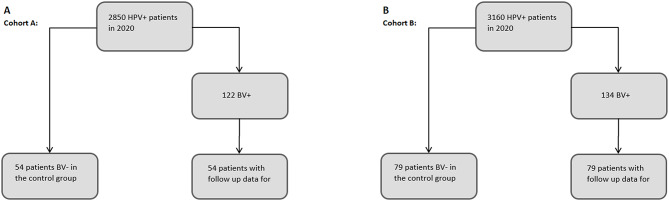 Figure 1
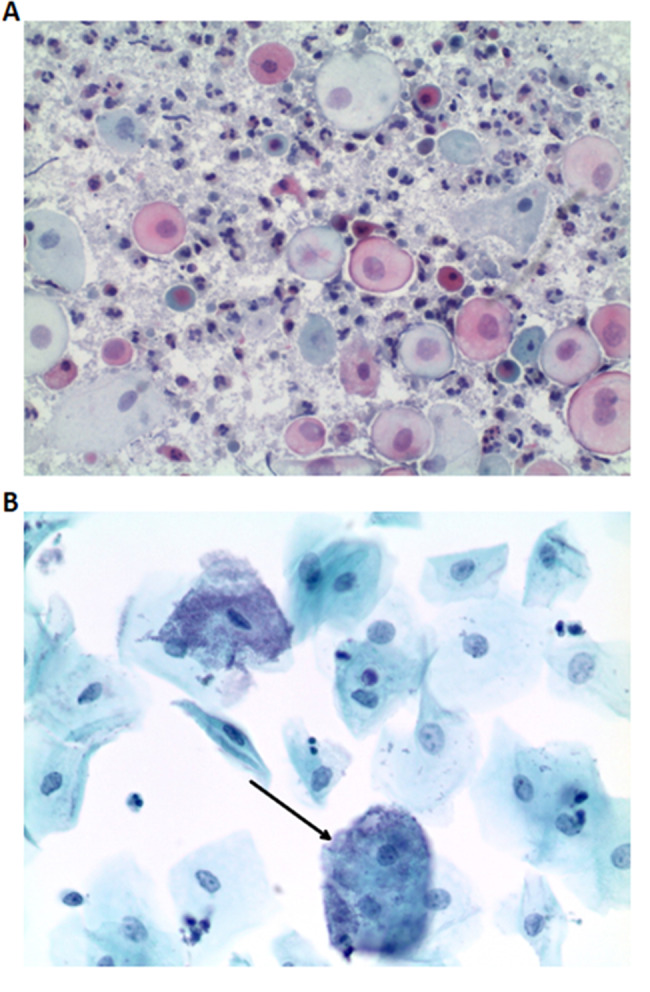 Figure 2
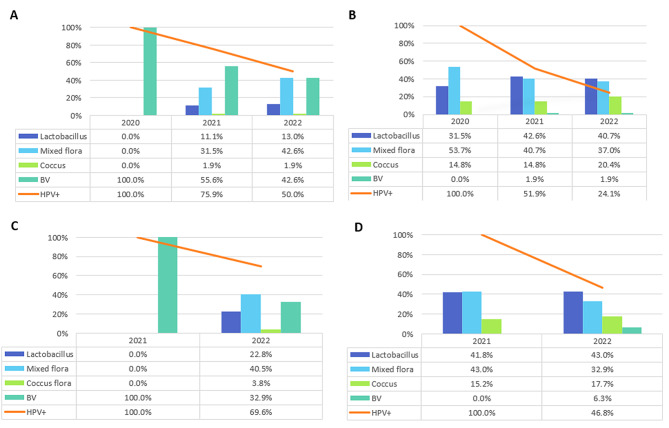 Figure 3
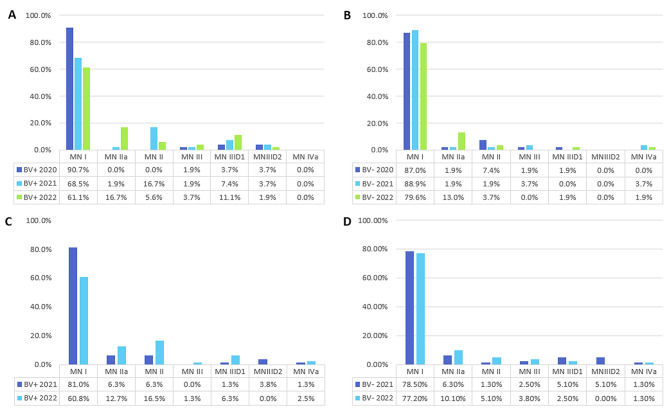 Figure 4
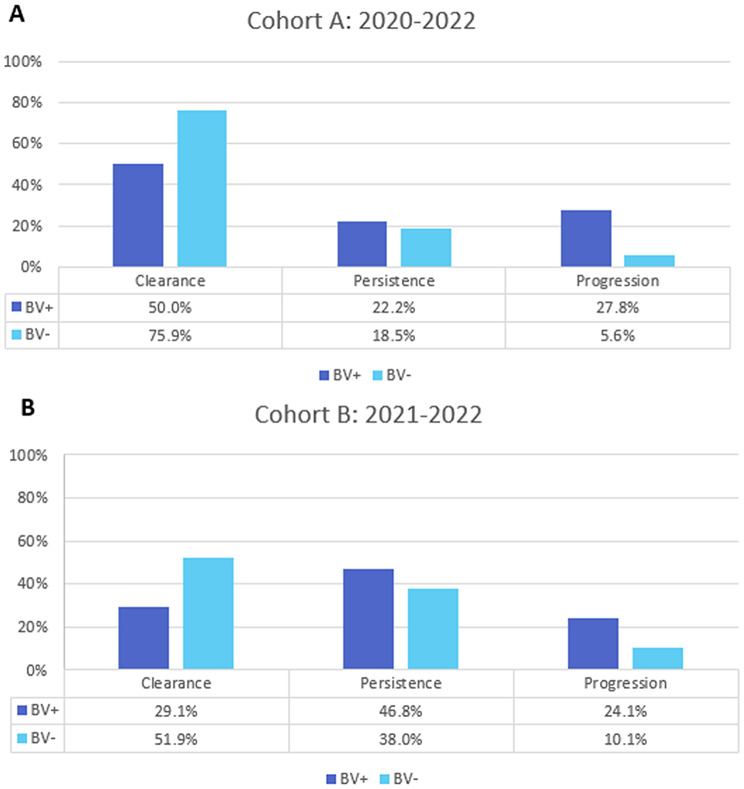 Figure 5
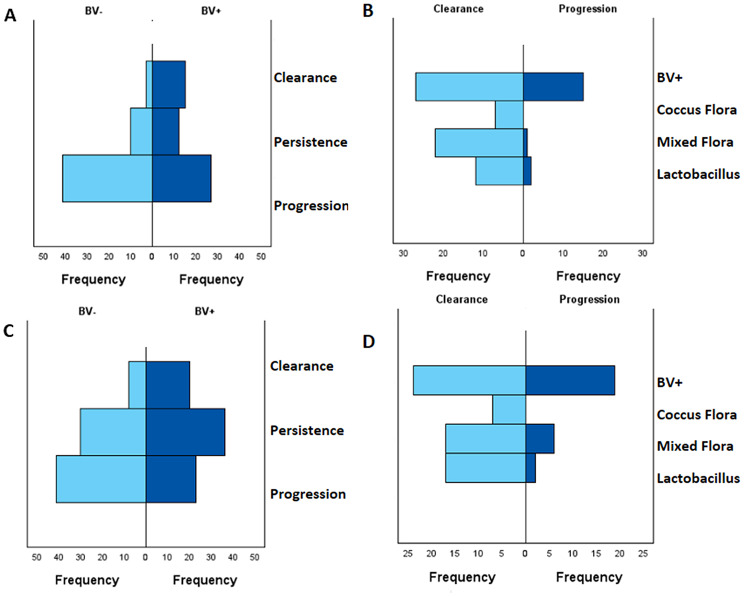 Figure 6
 Figure 7
 Figure 8
Peer Reviews
No public reviews on file for this paper yet. If you reviewed it on a platform where reviews are public (OpenReview, ICLR, NeurIPS, ICML), you can paste yours below so the community can read it here.
Videos
No videos yet. Explain this paper in a talk, walkthrough, or lecture? Add one.
Taxonomy
TopicsReproductive tract infections research · Cervical Cancer and HPV Research · Insects and Parasite Interactions