Time-series-based forecasting of accident-related referrals to Maharaj Nakorn Chiang Mai Hospital, Northern Thailand, during each year and especially the “Seven dangerous Days” periods
Pimwarat Srikummoon, Patrinee Traisathit, Kaweesak Chittawatanarat, Kamtone Chandacham, Areerat Kittikhunakon, Thippapha Piriyahaphan, Suttipong Kawilapat, Narain Chotirosniramit

TL;DR
This study uses time-series models to predict emergency department referrals from road accidents in Chiang Mai, Thailand, especially during high-risk festival periods.
Contribution
A novel time-series forecasting approach that accounts for structural changes and festival-related surges in accident referrals.
Findings
SARIMA models best predicted motorcycle and car crash referrals, while ARIMA models were optimal for New Year and Songkran periods.
Adjusting for structural changes improved prediction accuracy compared to baseline models.
Forecasting models can help hospitals prepare for increased patient referrals during high-risk times.
Abstract
Road traffic crashes are a leading cause of death and disability globally and are a significant contributor to emergency department (ED) referrals, which places a considerable burden on ED resources and staff. As a major tourist destination and the largest city in northern Thailand, Chiang Mai experiences a surge in visitors, particularly during the New Year and Songkran festivals, which are referred to as the “Seven Dangerous Days” periods. The objective of the present study was to predict the number of crash-related ED referrals at Maharaj Nakorn Chiang Mai Hospital using time-series analysis. Data from 19,164 patients referred to the ED in Maharaj Nakorn Chiang Mai Hospital between May 2007 and December 2022 were used to develop ARIMA and SARIMA models. The predicted number of referrals from these models was then compared with the observed number of referrals collected from 2023 to…
Genes, proteins, chemicals, diseases, species, mutations and cell lines named across the full text — each resolved to its canonical identifier and authoritative record.
Click any figure to enlarge with its caption.
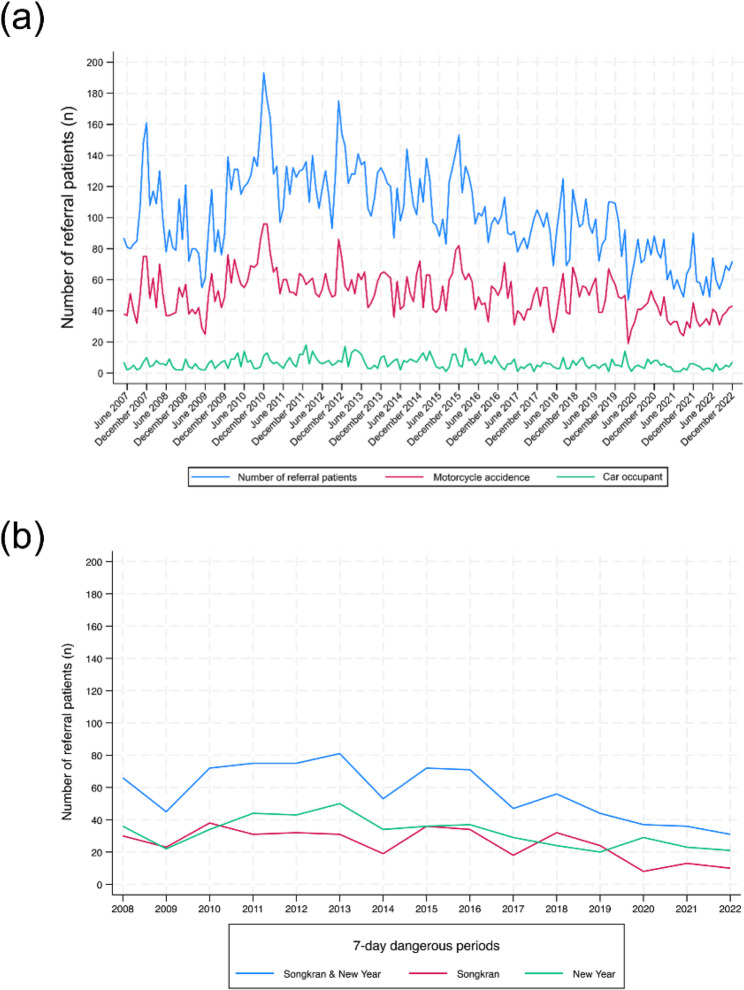 Figure 1
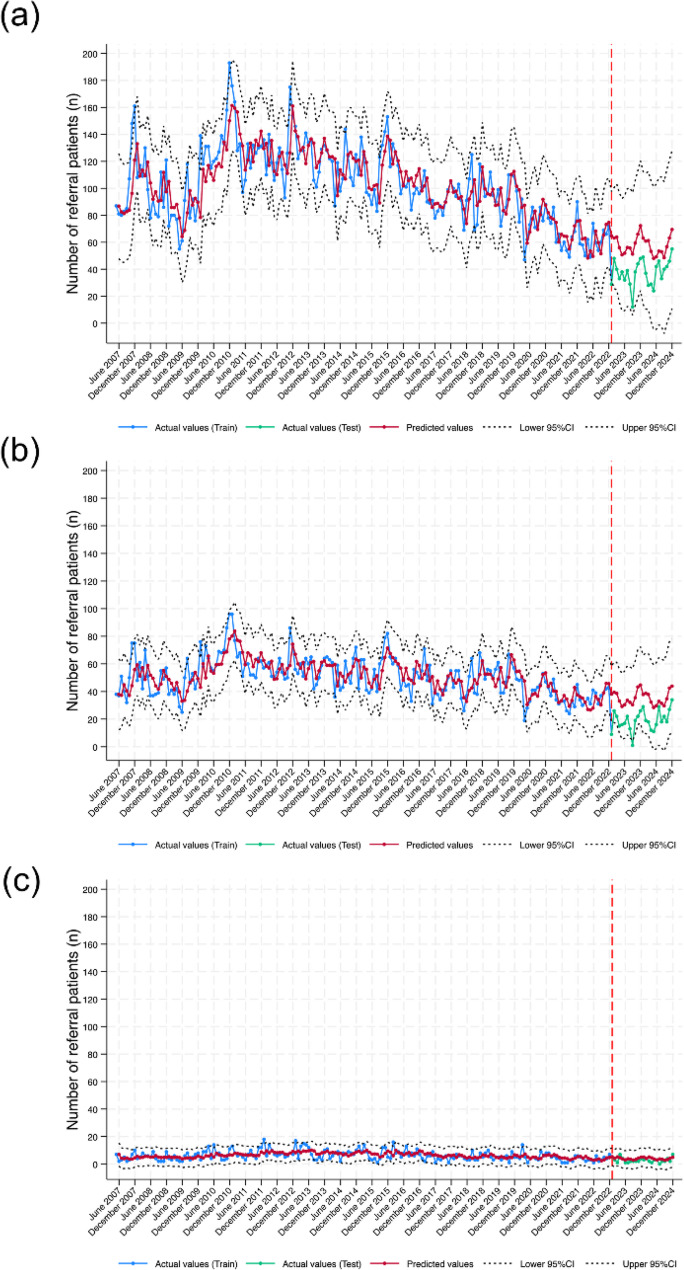 Figure 2
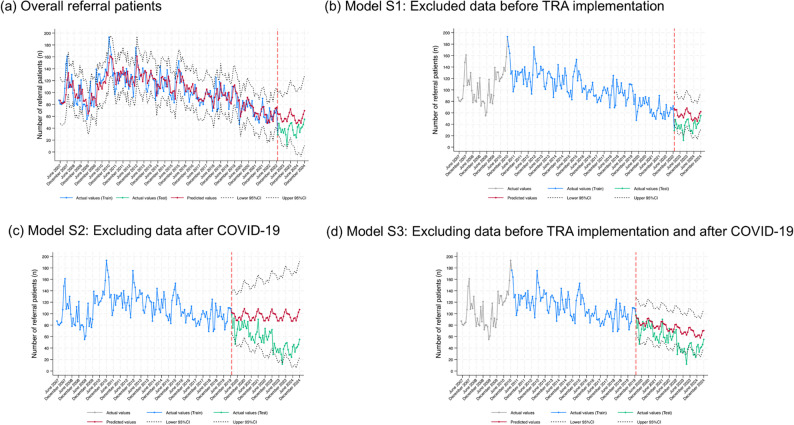 Figure 3
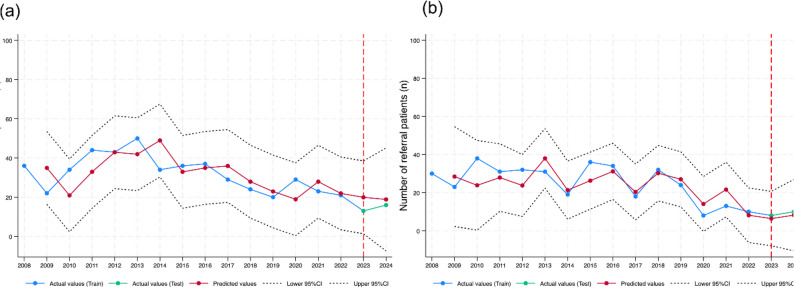 Figure 4
Peer Reviews
No public reviews on file for this paper yet. If you reviewed it on a platform where reviews are public (OpenReview, ICLR, NeurIPS, ICML), you can paste yours below so the community can read it here.
Videos
No videos yet. Explain this paper in a talk, walkthrough, or lecture? Add one.
Taxonomy
TopicsEmergency and Acute Care Studies · Trauma and Emergency Care Studies · Hospital Admissions and Outcomes