Electrical Control of Intersubband Transitions in Few-Layer WSe2 Multivalley Quantum Wells Probed by Electronic Raman Scattering
Philipp Wutz, Yinong Zhang, Felix Hofmann, Paulo E. Faria Junior, Yao Lu, Philip Soul, Yu-Han Bao, Kenji Watanabe, Takashi Taniguchi, Jaroslav Fabian, Sebastian Bange, John M. Lupton, Kai-Qiang Lin

TL;DR
Researchers demonstrated electrical control of light-matter interactions in few-layer WSe2 quantum wells, enabling tunable optoelectronic applications.
Contribution
First demonstration of electrically tunable intersubband transitions in van der Waals quantum wells using Raman scattering.
Findings
Intersubband transitions in WSe2 can be tuned by over 100 meV using an electric field.
Tunability is consistent across 3 to 7 layers of WSe2, with measured dipole moments and polarizabilities.
Artificially stacked WSe2 layers show twist-angle-dependent manipulation of transitions.
Abstract
Semiconducting quantum wells have enabled revolutionary applications in diode lasers, IR photodetectors, and optical modulators. Recently, van der Waals (vdW) quantum wells have emerged as a promising frontier, offering inherently atomically sharp interfaces and facile integration into device structures without the constraints of lattice matching. Tunability of intersubband transitions is essential for applications of quantum wells but remains unexplored in vdW structures. Here, we report valley-selective, electric-field-activated electronic Raman scattering from intersubband transitions in natural WSe2 multilayers and demonstrate electrical tunability by over 100 meV. We validate the generality of such tunability in 3 to 7 layers of WSe2 and quantify the effective dipole moments and polarizabilities that determine the quantum-confined Stark effect. These intersubband transitions are…
Genes, proteins, chemicals, diseases, species, mutations and cell lines named across the full text — each resolved to its canonical identifier and authoritative record.
Click any figure to enlarge with its caption.
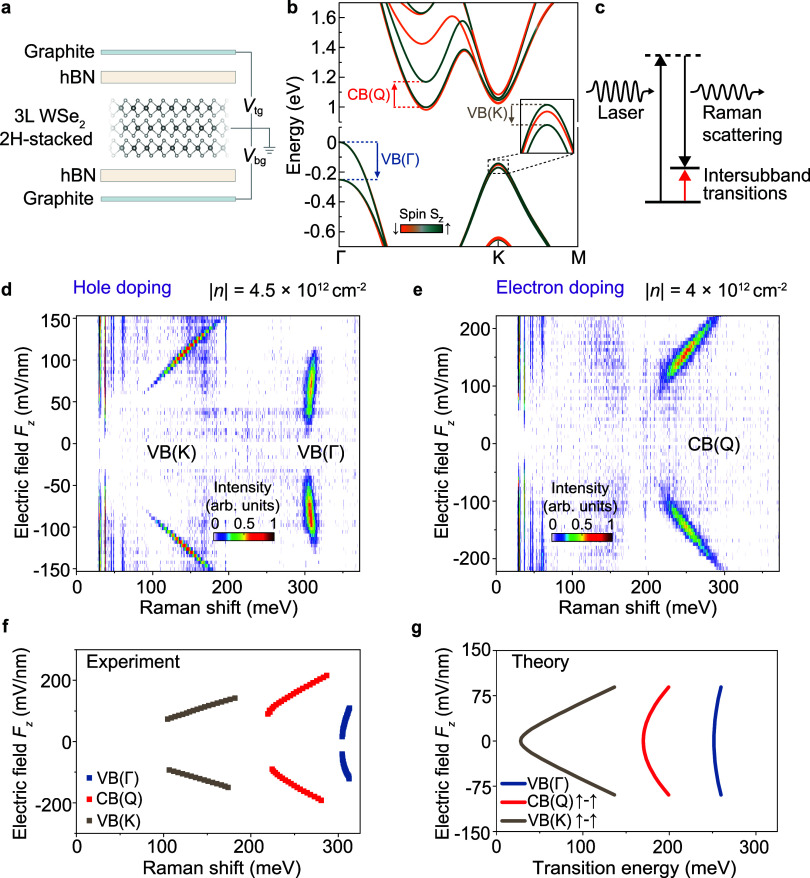 Figure 1
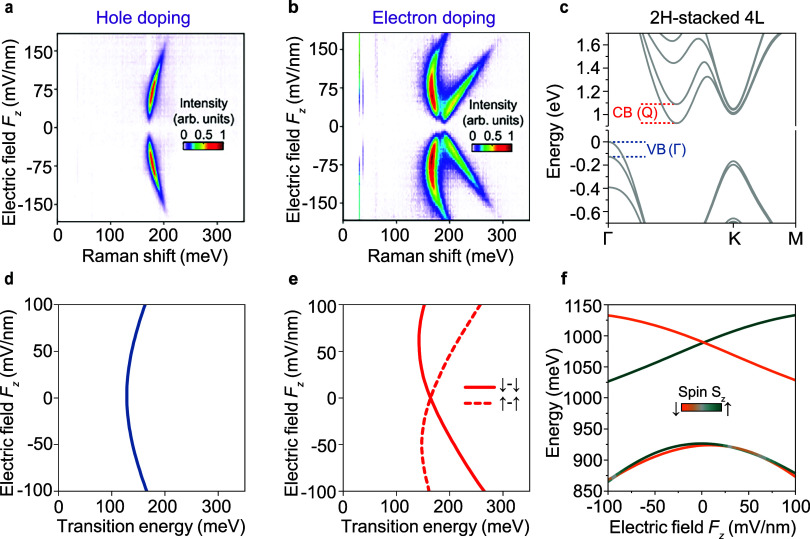 Figure 2
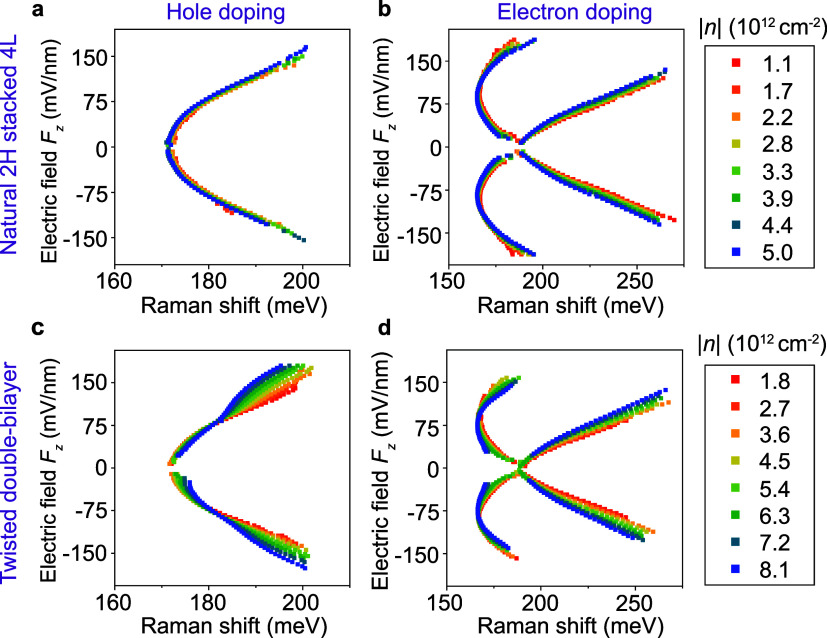 Figure 3
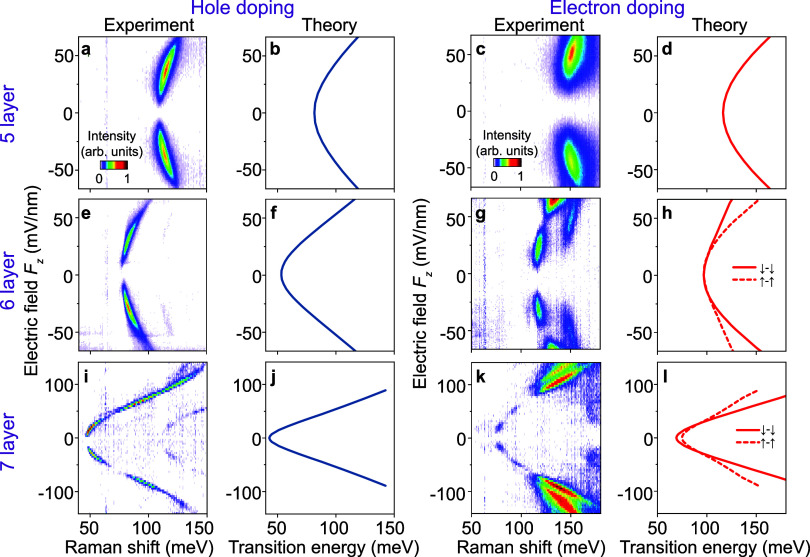 Figure 4
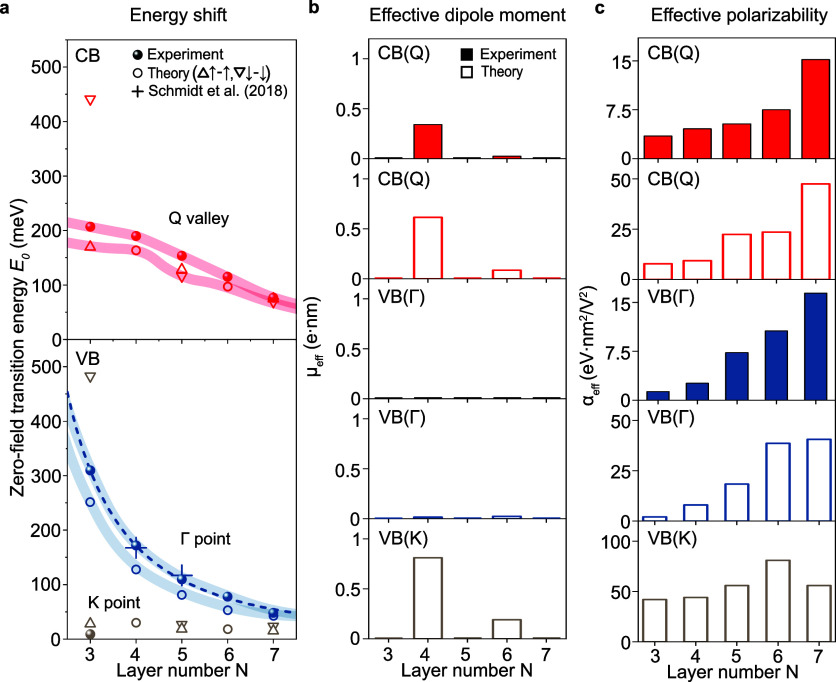 Figure 5
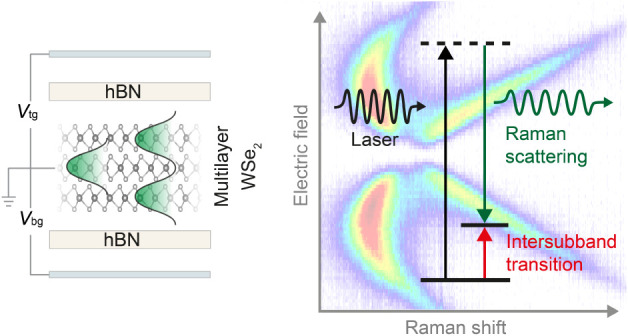 Figure 6
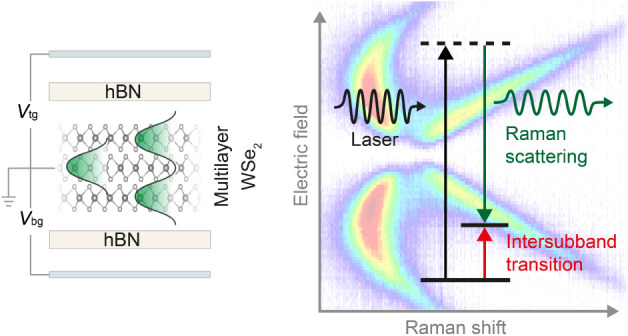 Figure 7
 Figure 8
 Figure 9
 Figure 10
 Figure 11
Peer Reviews
No public reviews on file for this paper yet. If you reviewed it on a platform where reviews are public (OpenReview, ICLR, NeurIPS, ICML), you can paste yours below so the community can read it here.
Videos
No videos yet. Explain this paper in a talk, walkthrough, or lecture? Add one.
Taxonomy
Topics2D Materials and Applications · Graphene research and applications · Topological Materials and Phenomena