It is Separation, Not Contact: Electrification at Water–Hydrophobe Interfaces during Wetting–Dewetting Cycles
Yinfeng Xu, Himanshu Mishra

TL;DR
This paper shows that water-hydrophobe electrification is driven by separation, not contact, and is history-dependent across wetting-dewetting cycles.
Contribution
The study reveals that intercycle coupling and separation kinetics, not contact, control electrification at water-hydrophobe interfaces.
Findings
Electrification at water-hydrophobe interfaces is governed by liquid-solid separation, not contact formation.
Charge transfer depends nonlinearly on the velocity and acceleration of the receding meniscus during liquid release.
Charge generated during liquid release influences subsequent uptake, showing intercycle coupling and history dependence.
Abstract
When water contacts hydrophobic materialssuch as air, hydrocarbons, or fluorocarbons–the interface acquires charge, yet how dynamic wetting–dewetting governs this electrification remains largely unexplored. Here, using controlled pipetting experiments with hydrophobic capillaries, we show that electrification at water–hydrophobe interfaces is governed by liquid–solid separation rather than contact formation. By systematically varying liquid uptake and release rates over 3 orders of magnitude, we find that the charge transferred during a pipetting cycle depends nonlinearly on the velocity and acceleration of the receding liquid meniscus, while the advancing (uptake) motion contributes negligibly. High-resolution charge measurements reveal that, although net charge is conserved, the charge generated during liquid release in a given cycle directly influences the charge acquired during…
Genes, proteins, chemicals, diseases, species, mutations and cell lines named across the full text — each resolved to its canonical identifier and authoritative record.
Click any figure to enlarge with its caption.
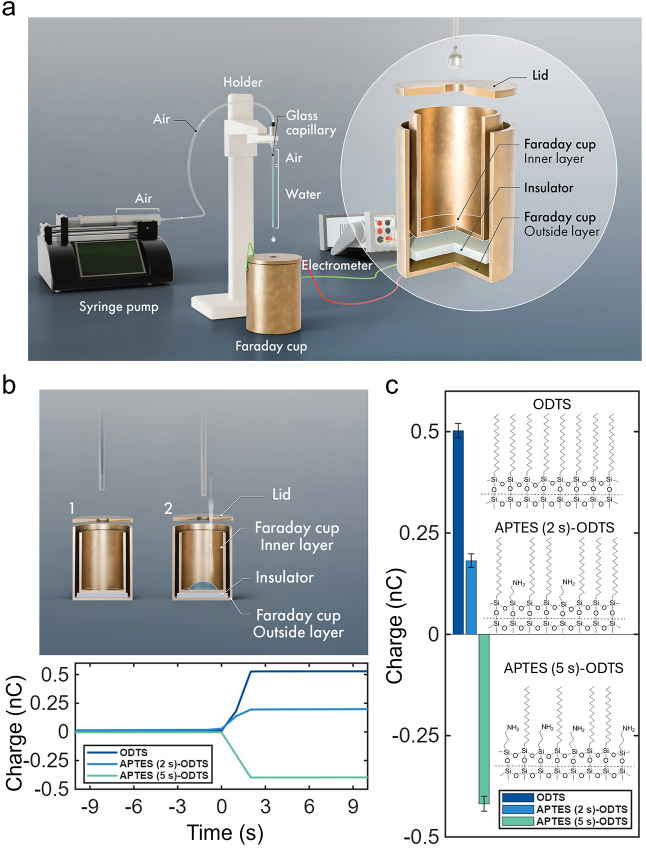 Figure 1
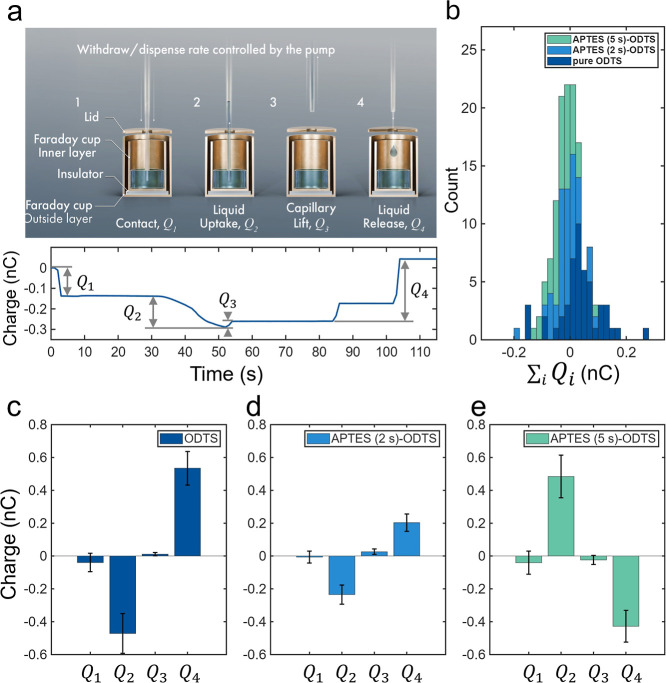 Figure 2
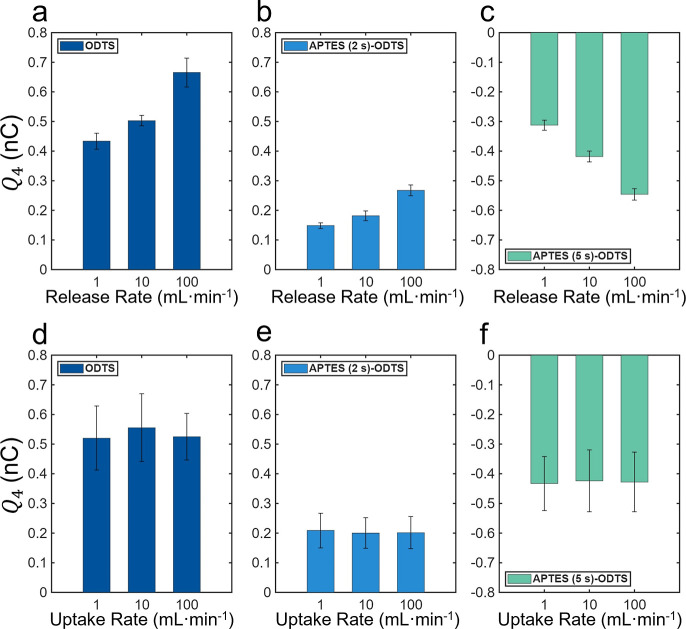 Figure 3
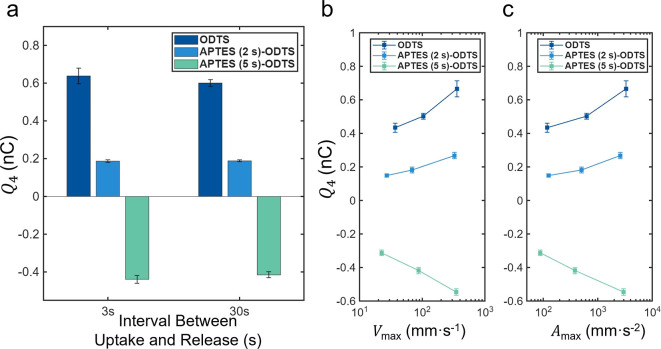 Figure 4
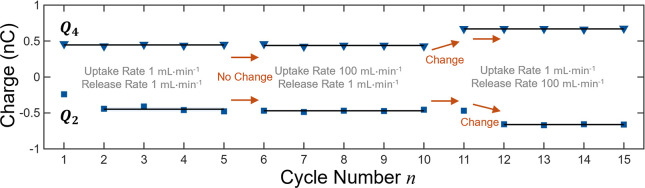 Figure 5
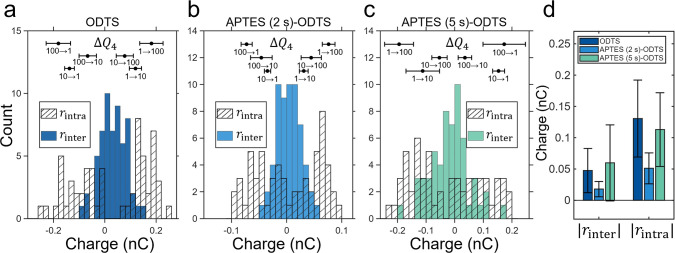 Figure 6
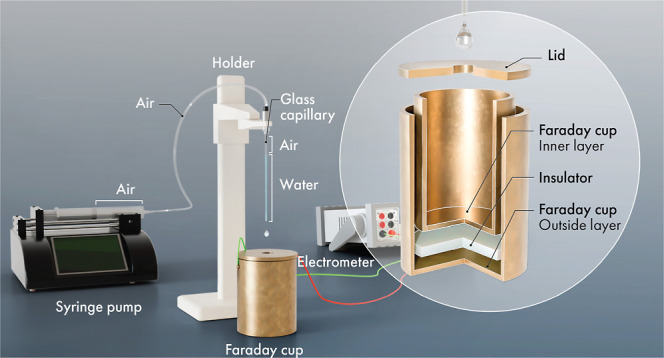 Figure 7
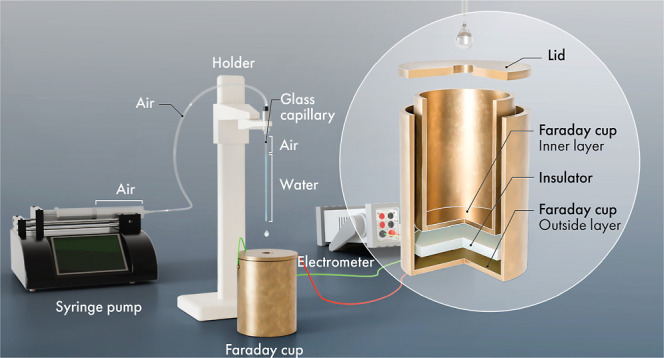 Figure 8
 Figure 9
 Figure 10
 Figure 11
 Figure 12
 Figure 13
 Figure 14
Peer Reviews
No public reviews on file for this paper yet. If you reviewed it on a platform where reviews are public (OpenReview, ICLR, NeurIPS, ICML), you can paste yours below so the community can read it here.
Videos
No videos yet. Explain this paper in a talk, walkthrough, or lecture? Add one.
Taxonomy
TopicsElectrowetting and Microfluidic Technologies · Electrohydrodynamics and Fluid Dynamics · Surface Modification and Superhydrophobicity