Tracer Diffusivity in Amphiphilic Polymer Model Co-Networks
Sebastian Seitel, Lynn K. R. J. Zank, Stephanie Ihmann, Frank Böhme, Michael Lang, Bradley D. Olsen, Sebastian Seiffert

TL;DR
This study explores how star-shaped polymers move through a special type of polymer network, revealing how their movement is affected by the network's structure and the surrounding environment.
Contribution
The paper introduces a novel analysis of tracer diffusivity in amphiphilic polymer co-networks using complementary experimental techniques.
Findings
FRS shows Fickian diffusion for all tracers in APCNs swollen in toluene.
PEG tracers exhibit entangled behavior at lower concentrations than expected.
Selective solvent swelling enhances diffusion while maintaining concentration dependence.
Abstract
Amphiphilic polymer conetworks (APCNs) are highly interesting material for membranes, drug delivery, or tissue engineering since their heterogeneous structure and interactions allow for the control of the diffusion of molecules differing by architecture, size, and interactions. We investigate the diffusion of hydrophilic and hydrophobic star polymers in model APCNs formed by heterocomplementary end-linking of tetra-poly(ethylene glycol) (t-PEG) and tetra-poly(ε-caprolactone) (t-PCL). Using Fluorescence Recovery After Photobleaching (FRAP) and Forced Rayleigh Scattering (FRS), we gain complementary insights into star polymer transport across different length and time scales. We compare the diffusion of hydrophilic t-PEG and hydrophobic t-PCL of various molecular weights across a wide range of APCN polymer volume fractions, swollen in a cosolvent (toluene) and a selective solvent…
Genes, proteins, chemicals, diseases, species, mutations and cell lines named across the full text — each resolved to its canonical identifier and authoritative record.
Click any figure to enlarge with its caption.
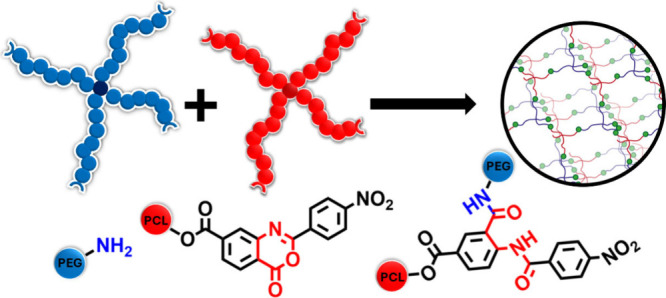 Figure 1
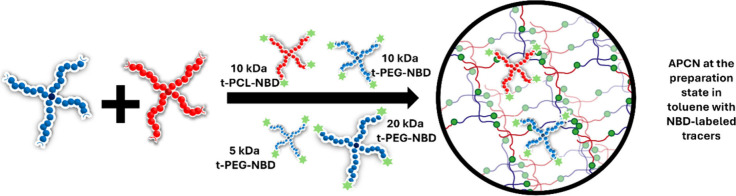 Figure 2
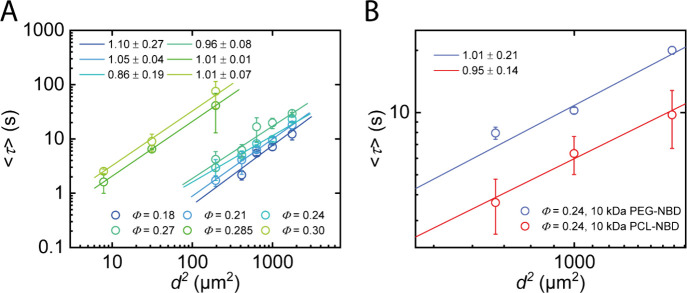 Figure 3
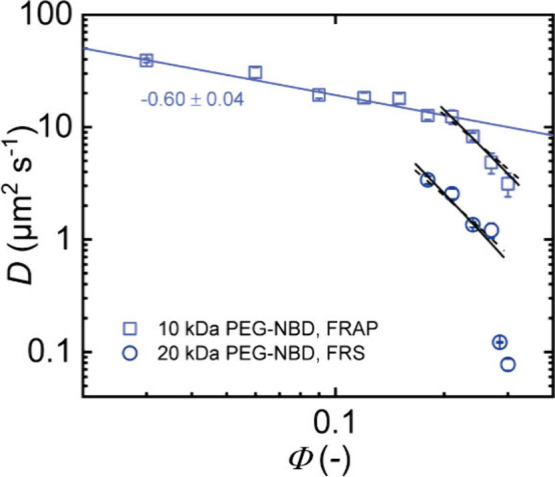 Figure 4
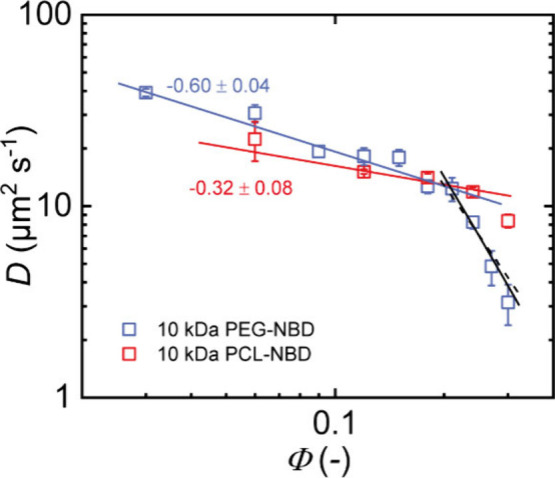 Figure 5
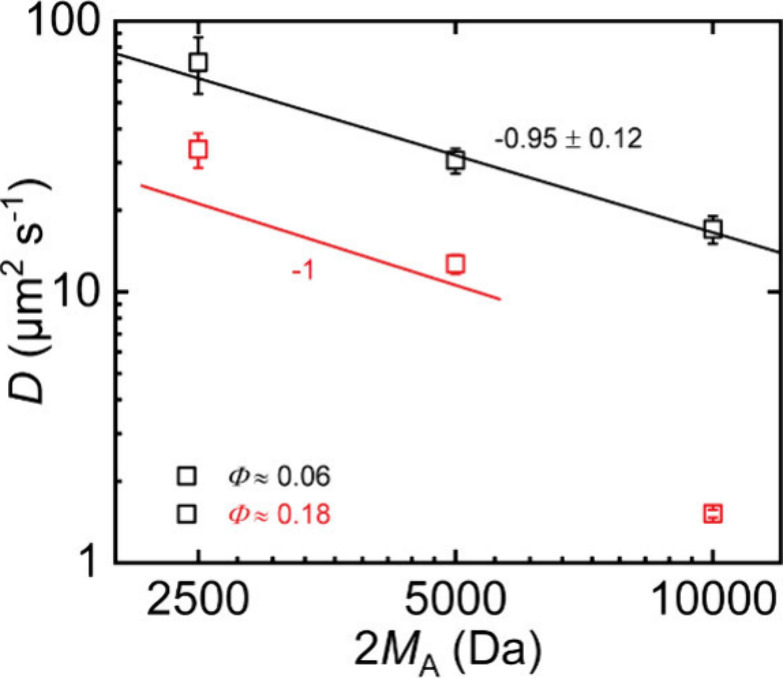 Figure 6
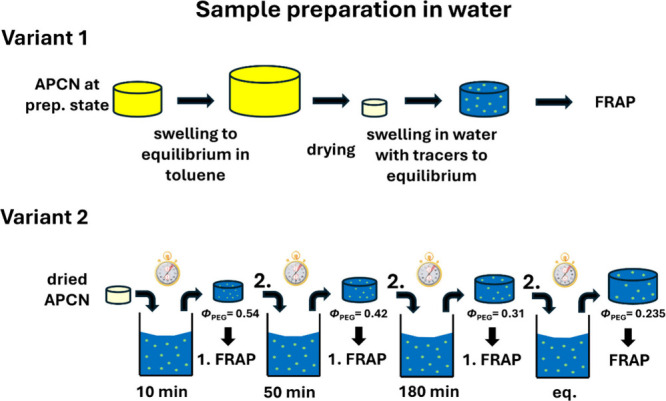 Figure 7
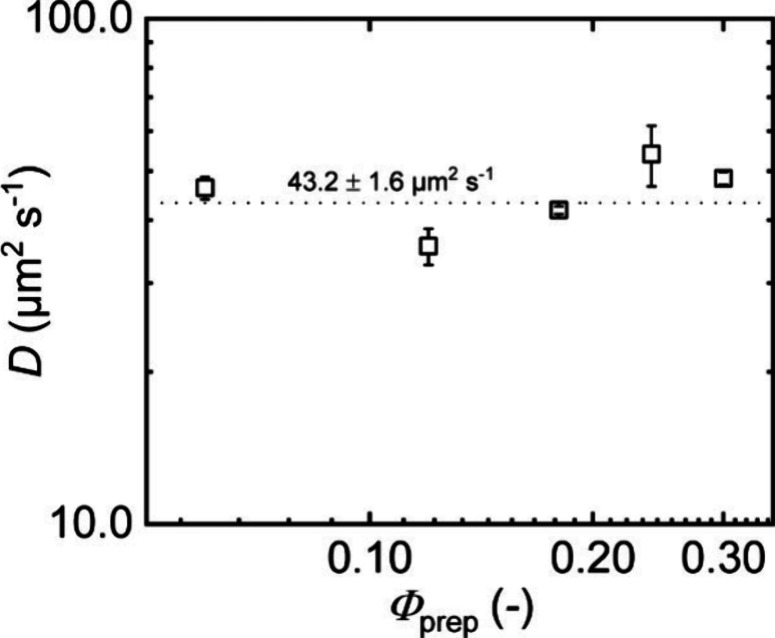 Figure 8
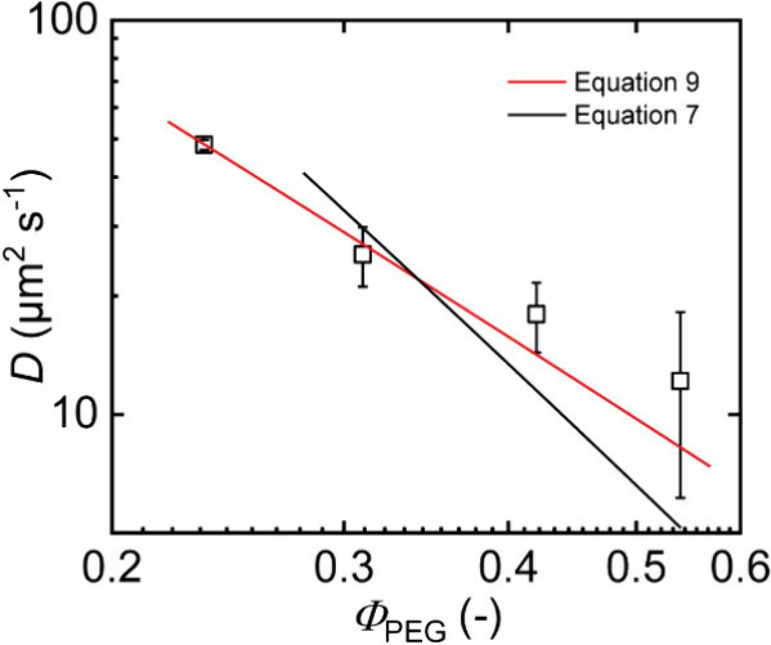 Figure 9
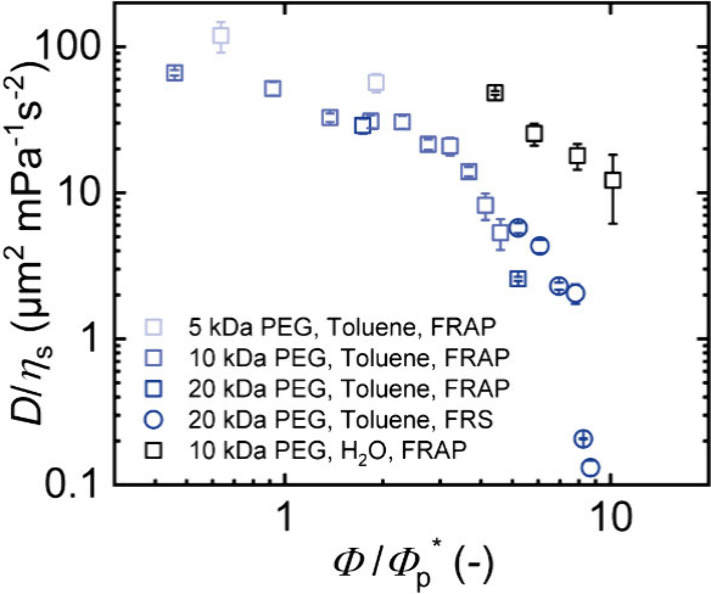 Figure 10
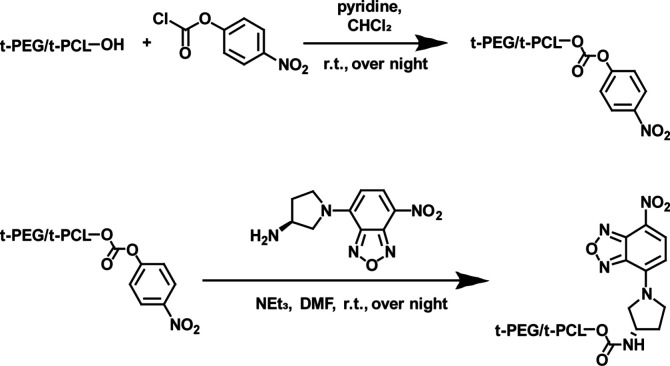 Figure 11
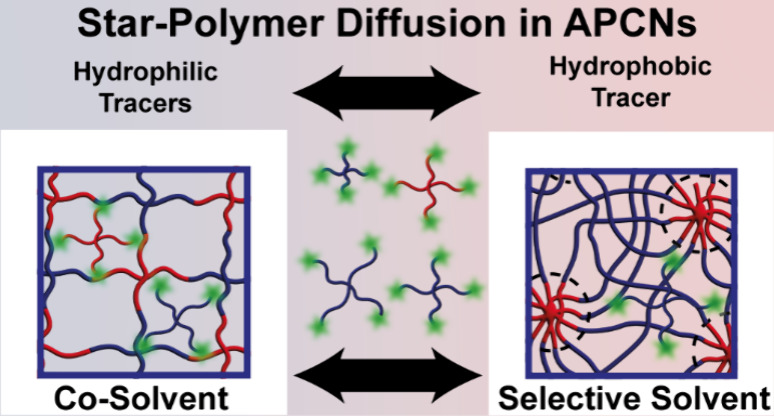 Figure 12
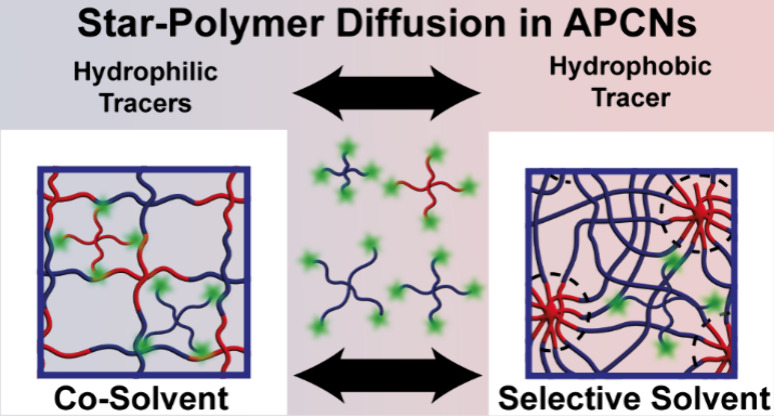 Figure 13
 Figure 14
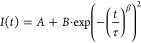 Figure 15
 Figure 16
 Figure 17
 Figure 18
 Figure 19
 Figure 20
 Figure 21
 Figure 22
Peer Reviews
No public reviews on file for this paper yet. If you reviewed it on a platform where reviews are public (OpenReview, ICLR, NeurIPS, ICML), you can paste yours below so the community can read it here.
Videos
No videos yet. Explain this paper in a talk, walkthrough, or lecture? Add one.
Taxonomy
TopicsPolymer Surface Interaction Studies · Hydrogels: synthesis, properties, applications · Block Copolymer Self-Assembly