Conjugable, Antifouling, and Non-immunogenic Coatings for Gold Nanoparticles by Multivalent Grafting of Azide-Bearing Polyoxazoline Brushes
Tobias Komsthöft, Michele do Nascimento Tomaz, Pedro R. M. Veloso, Ana R. S. Ribeiro, Lucca Trachsel, Jutta Horejs-Höck, Mark W. Tibbitt, Samuele Tosatti, Emanuele Papini, Stefan Zürcher, Fabrizio Mancin

TL;DR
This paper introduces a new coating for gold nanoparticles that prevents protein adhesion and immune activation while allowing easy modification.
Contribution
A novel polyoxazoline-based coating for gold nanoparticles is developed, offering antifouling, non-immunogenic, and conjugable properties.
Findings
The coating provides excellent colloidal stability to gold nanoparticles.
The coating significantly reduces protein adsorption and immune cell activation.
The polymer coating allows for easy functionalization of gold nanoparticles.
Abstract
Inorganic nanoparticles (NP), particularly gold nanoparticles, hold great promise for biomedical applications. However, one of the major challenges in the implementation of therapeutic applications based on inorganic nanoparticles is the individuation of appropriate coatings, which are indeed responsible for stability, escape from the immune system, and further functionalization. In this paper, we explore the properties of the multi-azide-containing and highly nonfouling polymer PAcrAm-g-(PMCA, NH2, ND), based on poly(oxazoline) derivatives grafted to a poly(acrylamide), as a coating for gold nanoparticles that can grant stability and easiness of derivatization and can prevent nonspecific protein adhesion on gold nanoparticles (Au-NP). We found that the addition of the polymer to citrate-stabilized gold nanoparticles led to the formation of NP suspensions with excellent colloidal…
Genes, proteins, chemicals, diseases, species, mutations and cell lines named across the full text — each resolved to its canonical identifier and authoritative record.
Click any figure to enlarge with its caption.
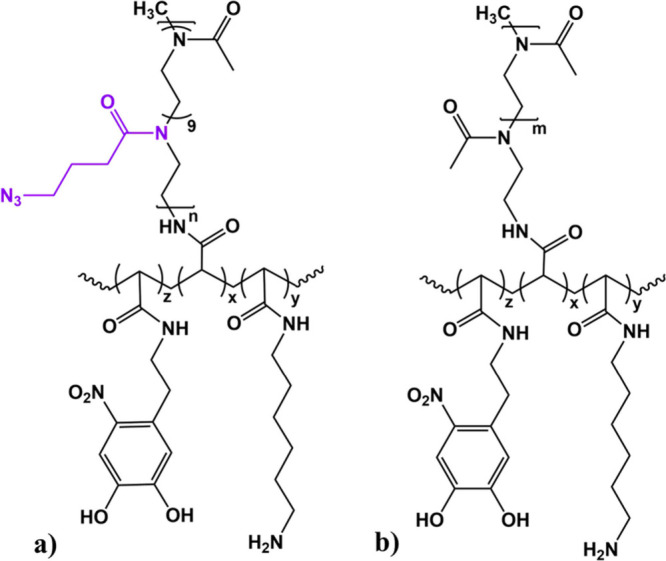 Figure 1
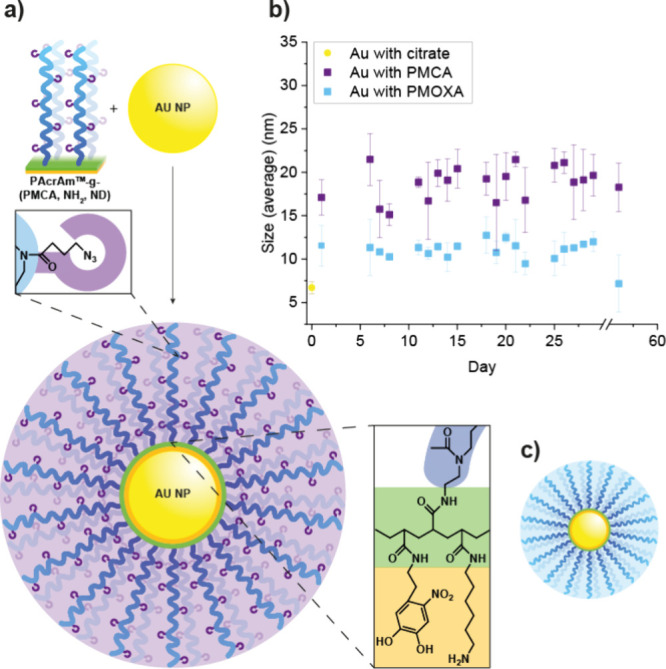 Figure 2
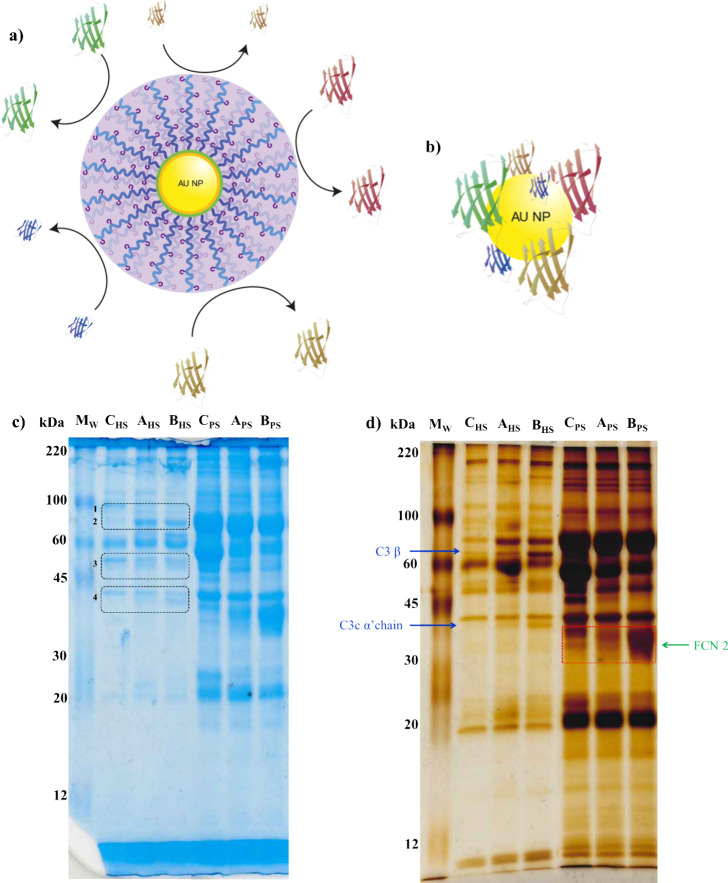 Figure 3
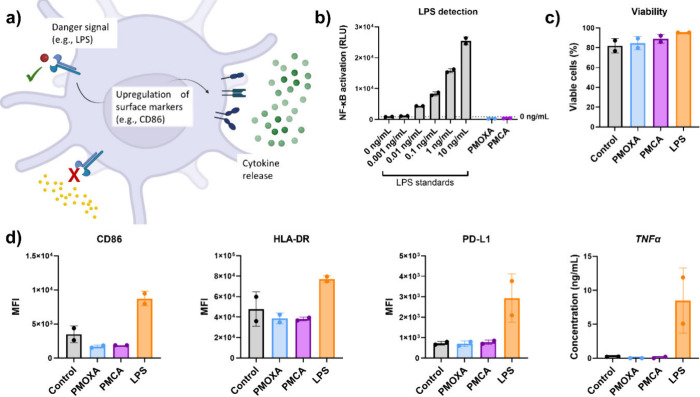 Figure 4
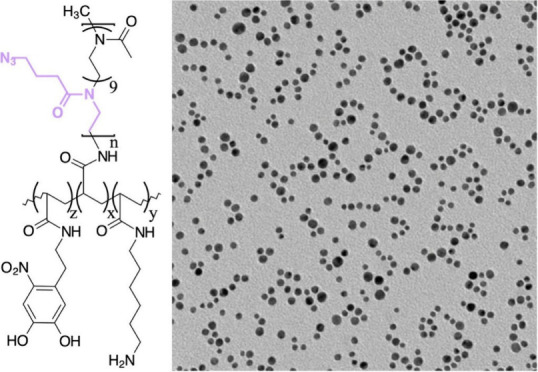 Figure 5
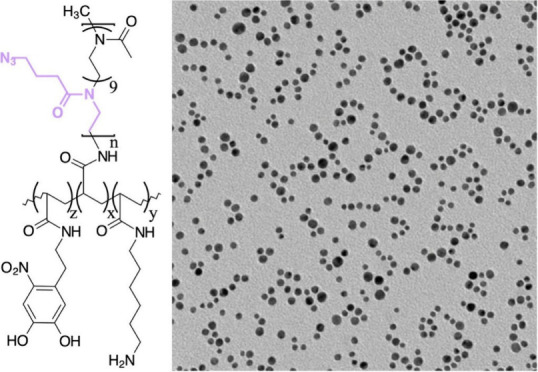 Figure 6
 Figure 7
 Figure 8
 Figure 9
 Figure 10
 Figure 11
Peer Reviews
No public reviews on file for this paper yet. If you reviewed it on a platform where reviews are public (OpenReview, ICLR, NeurIPS, ICML), you can paste yours below so the community can read it here.
Videos
No videos yet. Explain this paper in a talk, walkthrough, or lecture? Add one.
Taxonomy
TopicsPolymer Surface Interaction Studies · Nanoparticles: synthesis and applications · Nanoparticle-Based Drug Delivery