Ingestion of Surface Residues Dominates Quaternary Ammonium Compounds (QACs) Exposure in Chinese Urban Homes: Evidence from Silicone Wristband Passive Sampling and Urinary Biomonitoring
Min Hu, Li Li, Xiaozhen Zhang, Xixian Fang, Mengyao Ran, Zhong Lv, Md Mehedi Hasan Nafis, Zihao Zhang, Xi He, Haoran Xia, Sheng Wan, Yuge Liang, Jia Zhao, Xinrui Leng, Yao Cheng, Jianbang Xiang, Zongwei Cai, Guomao Zheng

TL;DR
This study finds that ingesting surface residues is the main way people are exposed to QACs in urban homes in China.
Contribution
The study introduces urinary biomarkers and silicone wristbands for assessing QAC exposure routes.
Findings
Silicone wristbands and dust showed strong correlations in QAC concentrations.
Urinary biomarkers confirmed ingestion of surface residues as a major exposure route for C10- and C12-BACs.
C12-BACs accounted for nearly half of total exposure via ingestion.
Abstract
The quantitative characterization of multiple exposure routes to quaternary ammonium compounds (QACs) remains underexplored. In this study, paired samples of indoor dust, bulk air, hand wipes, silicone wristbands, and urine were collected from 109 adults residing in urban homes from South China in 2023. First, seven urinary biomarkers, including hydroxylated and carboxylated metabolites of C10–C14 benzylalkyldimethylammonium compounds (BACs), were identified using a combined in silico and in vitro workflow. Then, 23 QACs, including 6 C8–C18 BACs, 6 dialkyldimethylammonium compounds (C8–C18 DADMACs), 6 alkyltrimethylammonium compounds (C8–C18 ATMACs), and 5 emerging QACs, were ubiquitously detected in various environmental matrices, including dust (median ∑QAC concentrations of 39.6 μg/g), bulk air (130 pg/m3), hand wipes (1420 ng for two hands), and silicone wristbands (225 ng/g),…
Genes, proteins, chemicals, diseases, species, mutations and cell lines named across the full text — each resolved to its canonical identifier and authoritative record.
Click any figure to enlarge with its caption.
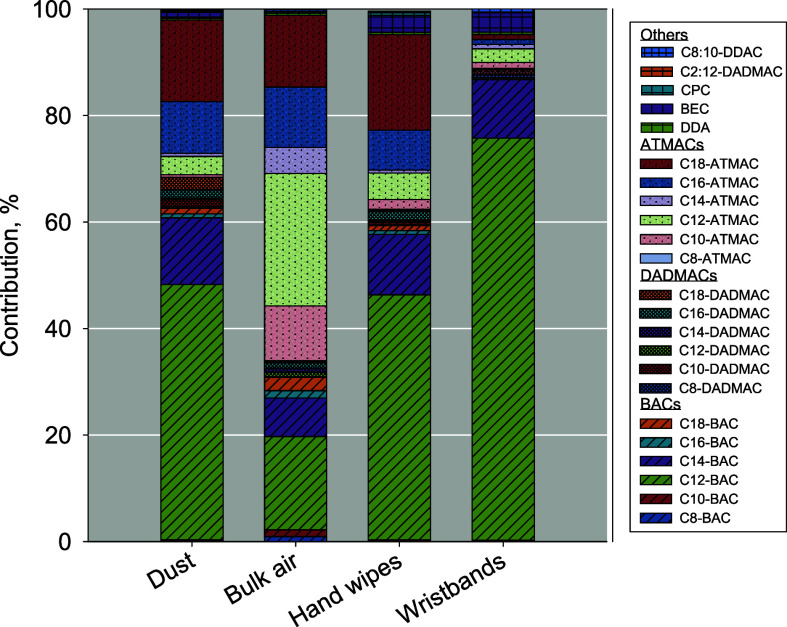 Figure 1
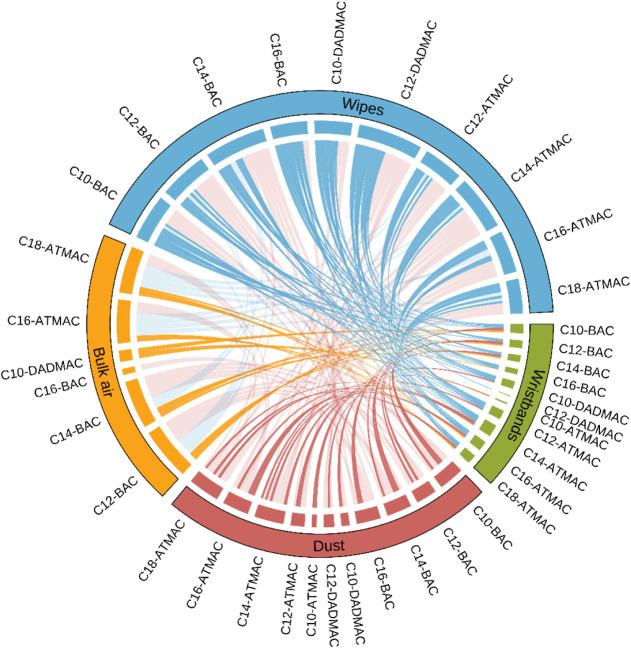 Figure 2
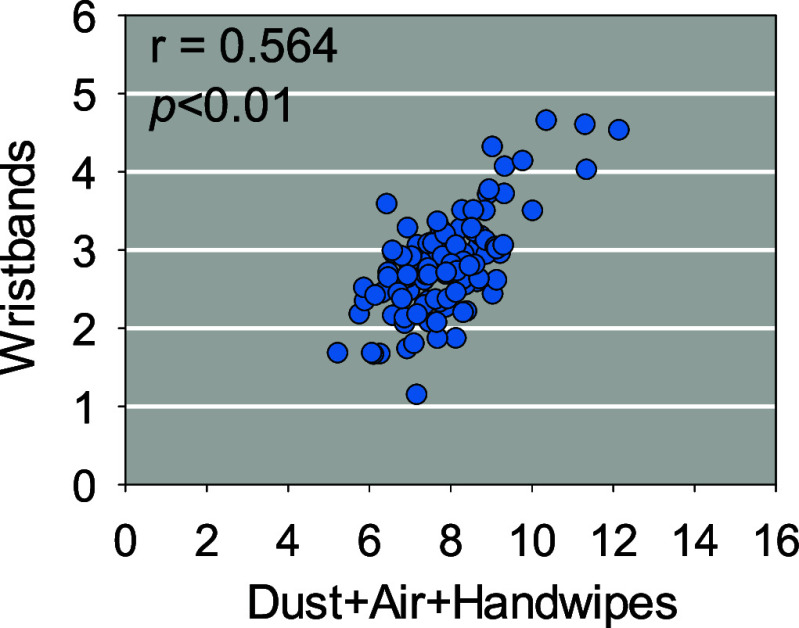 Figure 3
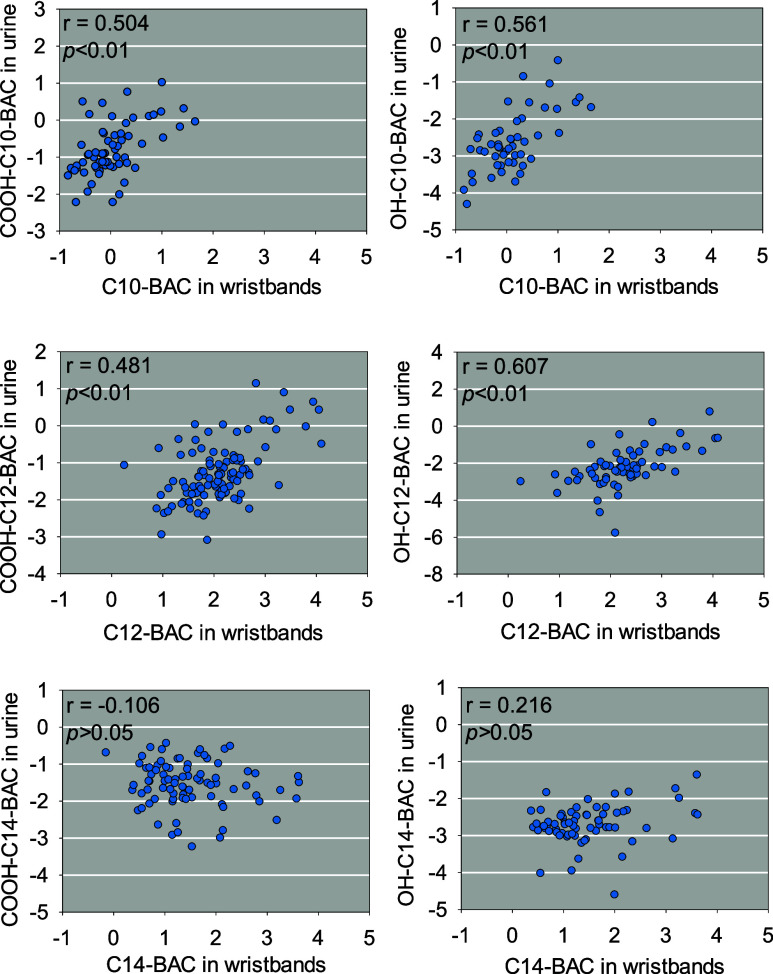 Figure 4
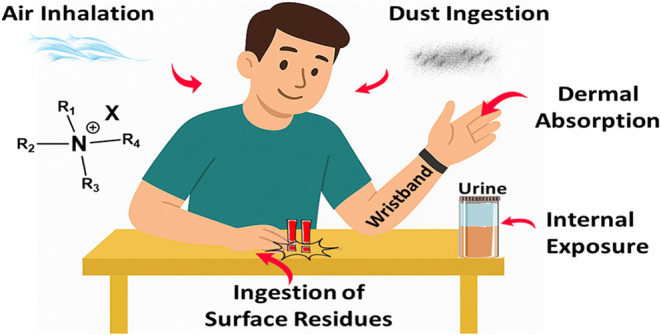 Figure 5
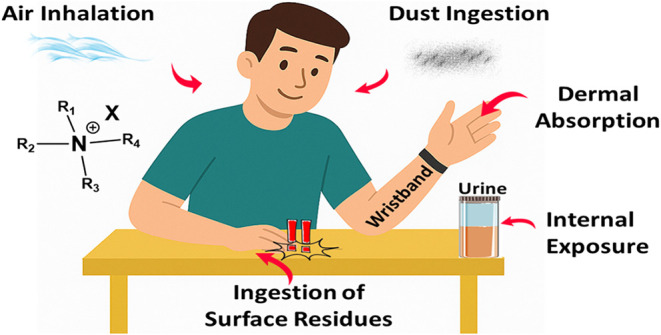 Figure 6
 Figure 7
 Figure 8
Peer Reviews
No public reviews on file for this paper yet. If you reviewed it on a platform where reviews are public (OpenReview, ICLR, NeurIPS, ICML), you can paste yours below so the community can read it here.
Videos
No videos yet. Explain this paper in a talk, walkthrough, or lecture? Add one.
Taxonomy
TopicsEnvironmental Chemistry and Analysis · Water Treatment and Disinfection · Per- and polyfluoroalkyl substances research