Adsorption-Induced Surface Magnetism
Miloš Baljozović, Shiladitya Karmakar, André L. Fernandes Cauduro, Mothuku Shyam Sundar, Marco Lozano, Manish Kumar, Diego Soler-Polo, Andreas K. Schmid, Ashutosh V. Bedekar, Pavel Jelinek, Karl-Heinz Ernst

TL;DR
This study shows how adsorbing certain molecules on a copper surface can create magnetism, offering new ways to design spin-polarized states in hybrid materials.
Contribution
The paper introduces a novel mechanism for inducing surface magnetism through molecular adsorption without using magnetic materials.
Findings
Spin-polarized states form on Cu(100) when TO[11]H molecules are adsorbed.
Strong chemisorption and hybridization between molecular and copper states drive spin polarization.
A modified theoretical model explains the threshold for spin polarization emergence.
Abstract
We report the emergence of adsorption-induced magnetism from heterohelicene molecules on a nonmagnetic Cu(100) surface. Spin-polarized low-energy electron microscopy measurements reveal spin-dependent electron reflectivity for enantiopure 7,12,17-trioxa[11]helicene (TO[11]H) monolayers, indicating the formation of a spin-polarized state localized in the topmost copper layer. Control experiments on clean Cu(100) and TO[11]H on highly oriented pyrolytic graphite show no such effect, excluding artifacts and chirality-induced spin selectivity as origins. Spin-polarized density functional theory calculations with hybrid functionals attribute the magnetism to strong chemisorption, which induces hybridization between the molecular HOMO and copper s- and d-states, driving asymmetric spin-polarized charge redistribution at the interface. An extended Newns–Anderson–Grimley model incorporating…
Genes, proteins, chemicals, diseases, species, mutations and cell lines named across the full text — each resolved to its canonical identifier and authoritative record.
Click any figure to enlarge with its caption.
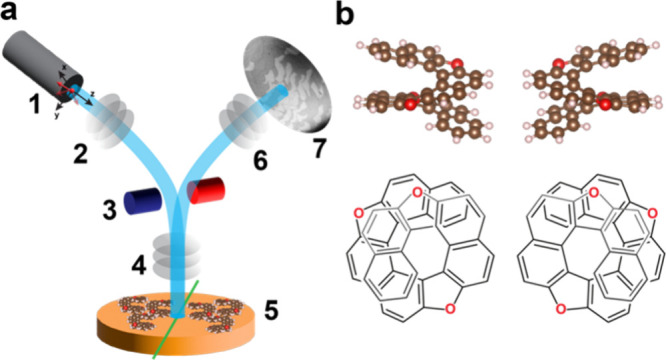 Figure 1
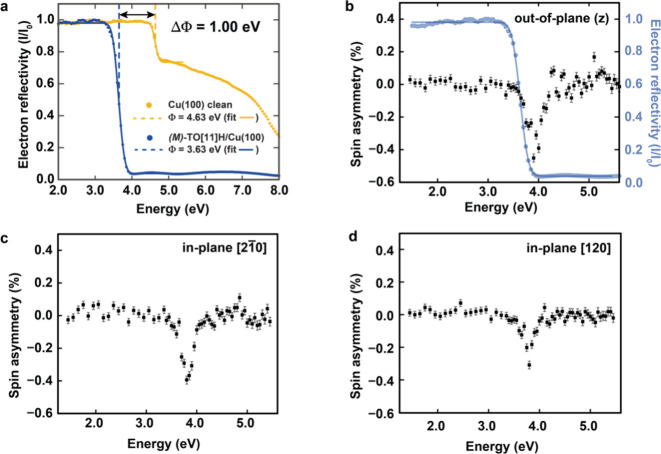 Figure 2
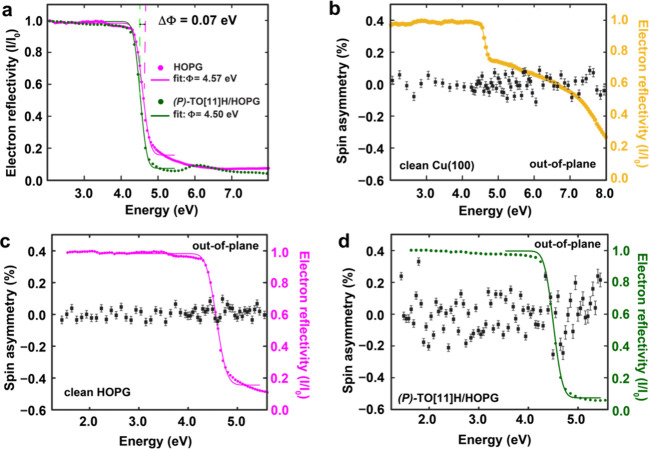 Figure 3
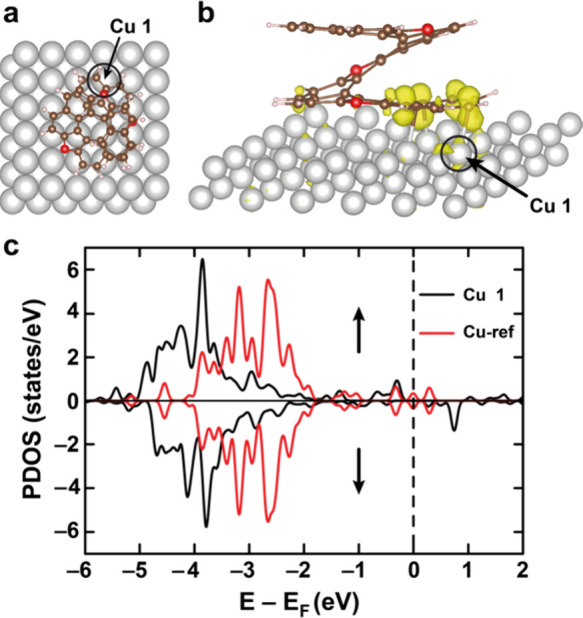 Figure 4
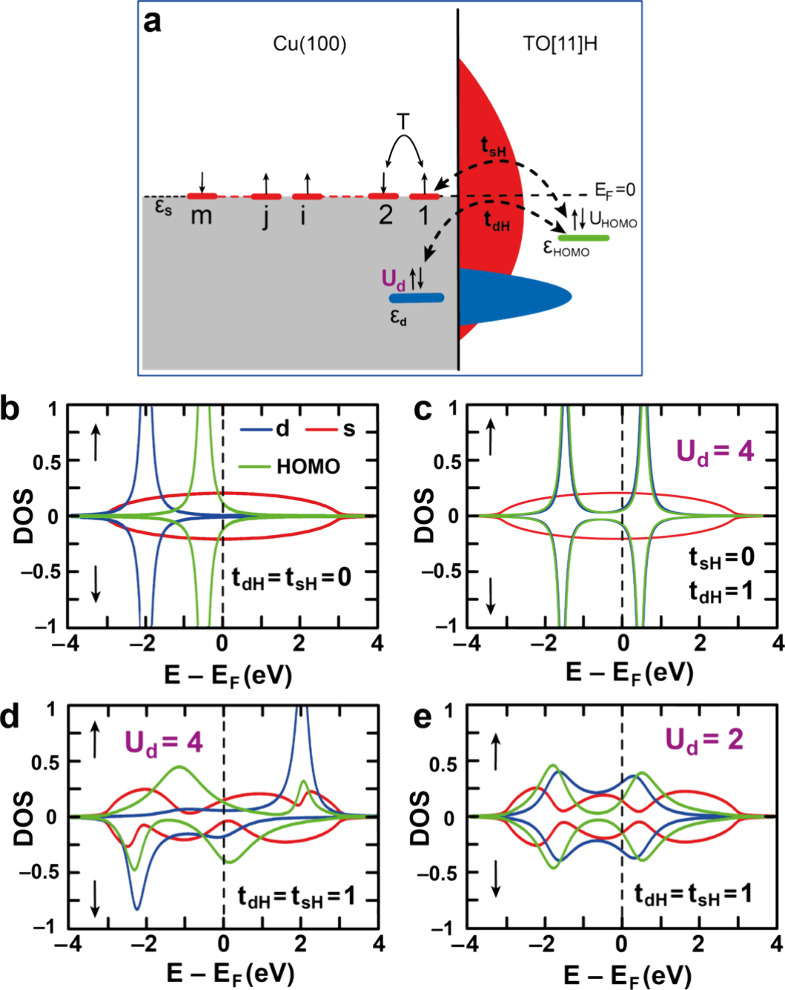 Figure 5
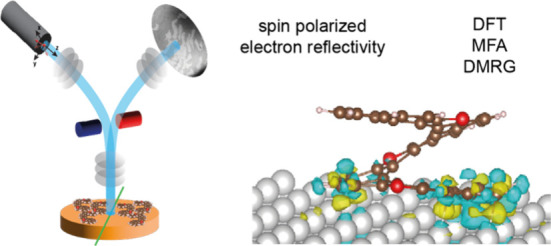 Figure 6
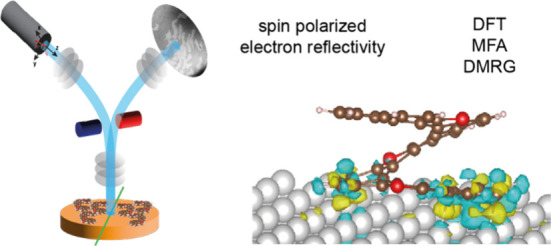 Figure 7
 Figure 8
 Figure 9
 Figure 10
 Figure 11
 Figure 12
 Figure 13
 Figure 14
 Figure 15
 Figure 16
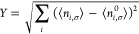 Figure 17
 Figure 18
 Figure 19
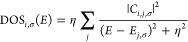 Figure 20
 Figure 21
Peer Reviews
No public reviews on file for this paper yet. If you reviewed it on a platform where reviews are public (OpenReview, ICLR, NeurIPS, ICML), you can paste yours below so the community can read it here.
Videos
No videos yet. Explain this paper in a talk, walkthrough, or lecture? Add one.
Taxonomy
TopicsSynthesis and Properties of Aromatic Compounds · Surface Chemistry and Catalysis · Graphene research and applications