Controlling Mixed Mo/MoS2 Domains on Si by Molecular Beam Epitaxy for the Hydrogen Evolution Reaction
Eunseo Jeon, Vincent Masika Peheliwa, Marie Hrůzová Kratochvílová, Tim Verhagen, Yong-Kul Lee

TL;DR
Researchers used molecular beam epitaxy to control the structure of MoS2 films on silicon, improving their performance in hydrogen production.
Contribution
A method to engineer defect-rich MoS2 films via MBE, enhancing catalytic activity for hydrogen evolution.
Findings
Defect-engineered MoS2 films achieved overpotentials as low as −0.33 V at −10 mA cm–2.
Electrochemical surface area reached up to 8.0 cm2 with turnover frequencies exceeding 23 mmol H2 g–1 s–1.
Sulfur-deficient growth conditions activated basal planes and improved conductivity.
Abstract
Molybdenum disulfide (MoS2) is a prototypical layered transition-metal dichalcogenide whose electrocatalytic performance is governed by a delicate balance between crystallinity, defect density, and electronic conductivity. Here we report a systematic molecular beam epitaxy (MBE) study in which annealing temperature, deposition cycle number, and Mo/S thickness ratio were independently varied to control the structural and electronic properties of MoS2 thin films. The successful epitaxial growth of atomically uniform MoS2 directly on Si substrates enables strong interfacial coupling and efficient charge transfer, offering a viable route toward semiconductor-integrated catalytic architectures. X-ray diffraction, Raman spectroscopy, and X-ray absorption analyses reveal that higher annealing temperatures and excessive deposition cycles enhance crystallinity but reduce edge-site density and…
Genes, proteins, chemicals, diseases, species, mutations and cell lines named across the full text — each resolved to its canonical identifier and authoritative record.
Click any figure to enlarge with its caption.
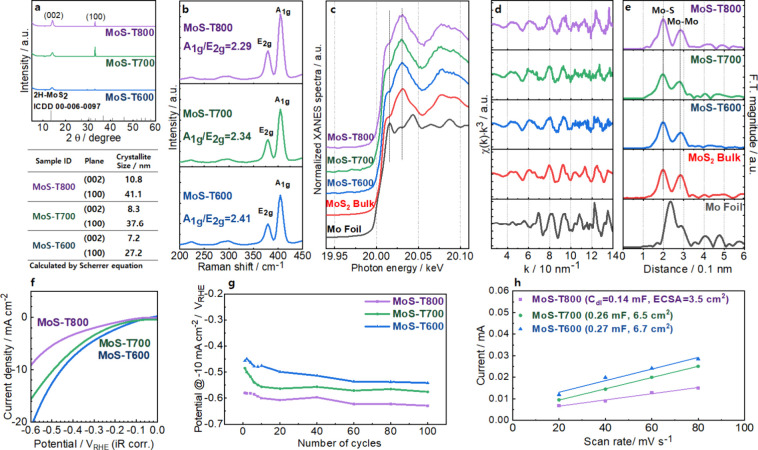 Figure 1
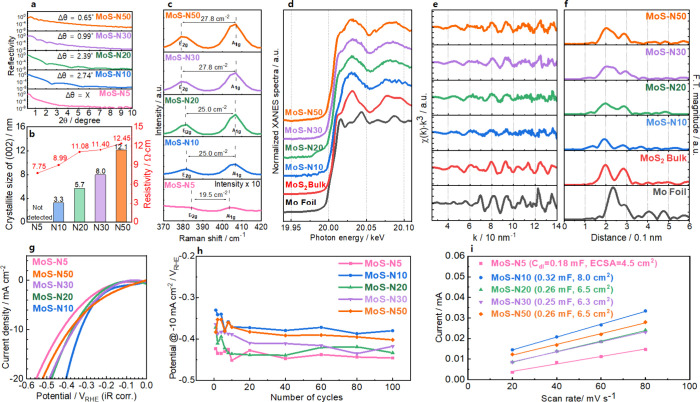 Figure 2
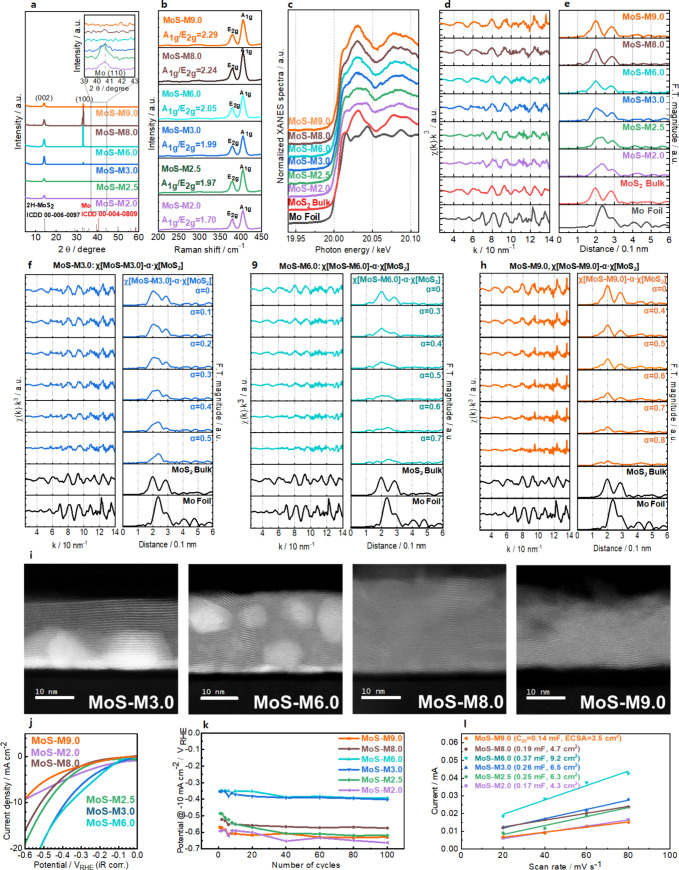 Figure 3
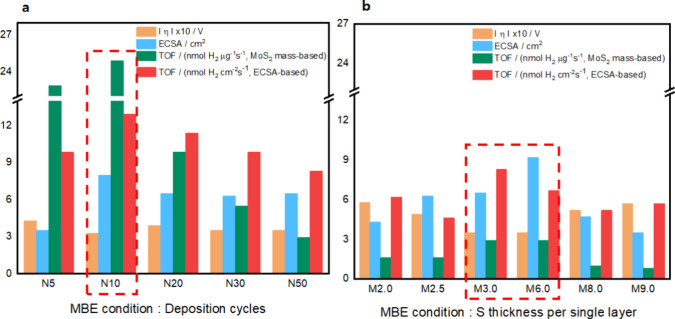 Figure 4
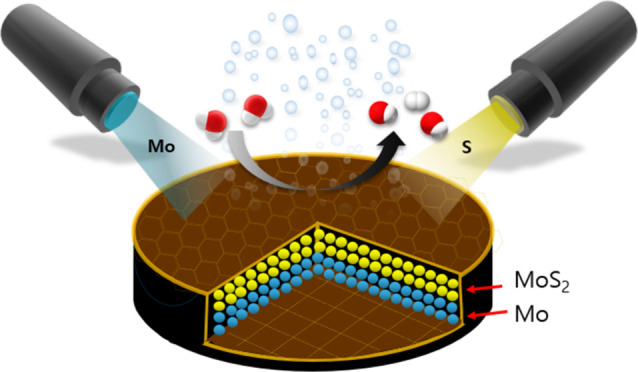 Figure 5
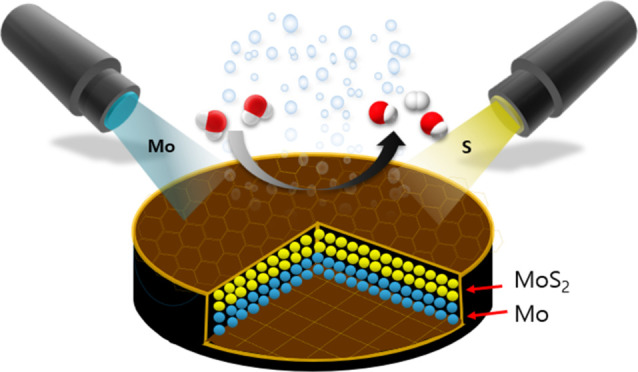 Figure 6
 Figure 7
Peer Reviews
No public reviews on file for this paper yet. If you reviewed it on a platform where reviews are public (OpenReview, ICLR, NeurIPS, ICML), you can paste yours below so the community can read it here.
Videos
No videos yet. Explain this paper in a talk, walkthrough, or lecture? Add one.
Taxonomy
Topics2D Materials and Applications · Electrocatalysts for Energy Conversion · Nanowire Synthesis and Applications