Separating Sampling Bias From Abundance Shows That Different Methods Catch Different Wild Bees
Max W. McCarthy, Dylan T. Simpson, Andrew H. Aldercotte, Colleen Smith, Tina Harrison, Rachael Winfree

TL;DR
This study shows that different bee sampling methods catch different species, even when accounting for the number of bees collected, highlighting the need to consider sampling biases in ecological research.
Contribution
The study introduces a method to separate sampling bias from abundance differences, revealing distinct biases of pan traps, vane traps, and hand netting in wild bee sampling.
Findings
Hand netting captured more bee species than pan traps, which captured more than vane traps for a given number of individuals.
Pan traps overrepresented 8 genera and underrepresented 7 compared to hand netting.
Pan traps poorly represented large-bodied bee genera compared to other methods.
Abstract
Ecological community sampling methods have taxonomic biases, producing samples where relative abundances of taxa may differ from the underlying sampled community. Evaluating sampling methods' relative biases is therefore necessary for accurately interpreting community data. Wild bees (Hymenoptera: Apoidea) have been the focus of intensive community sampling and many studies have compared the properties of samples collected by different methods. However, comparative studies have often conflated differences in sampling bias with differences in effort and absolute abundance between methods, potentially obscuring methods' true biases.Here, we compare wild bee communities in the northeastern United States as sampled by pan traps, vane traps, and hand netting. Using a dataset of simultaneous sampling by different methods, we compare sample richness and composition between pairs of methods…
Genes, proteins, chemicals, diseases, species, mutations and cell lines named across the full text — each resolved to its canonical identifier and authoritative record.
Click any figure to enlarge with its caption.
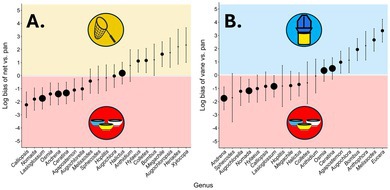 Figure 1
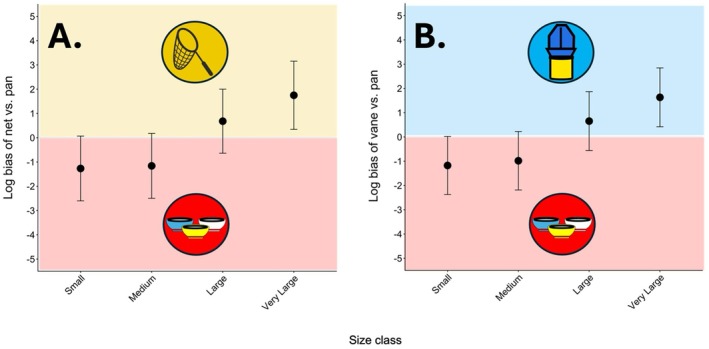 Figure 2
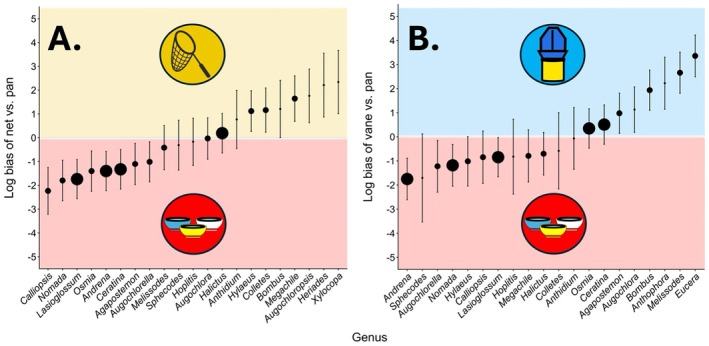 Figure 3
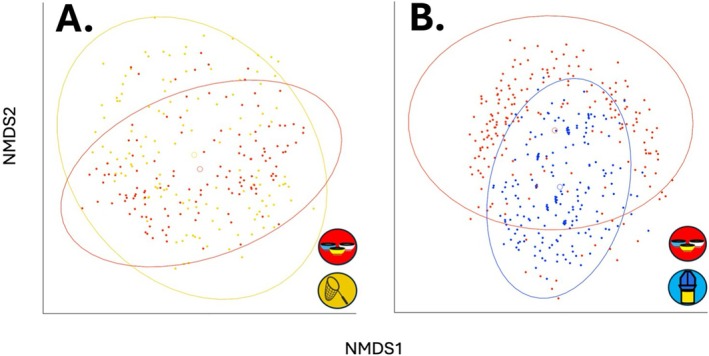 Figure 4
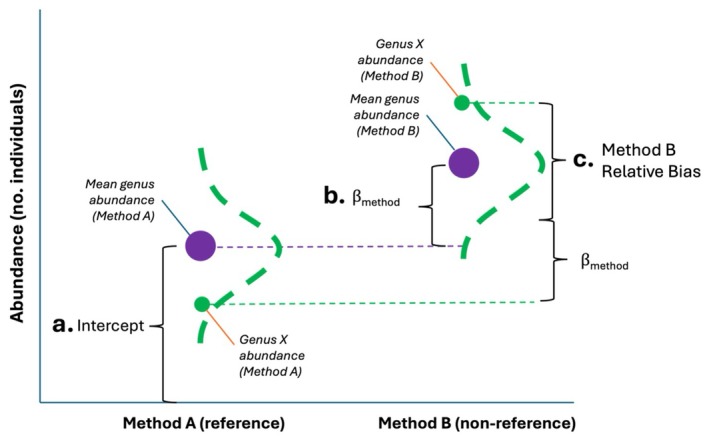 Figure 5
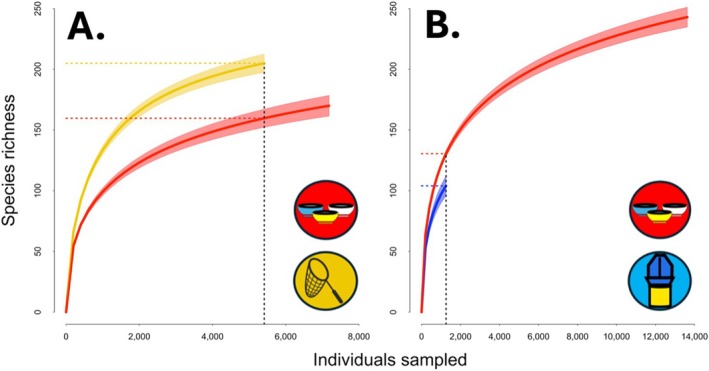 Figure 6
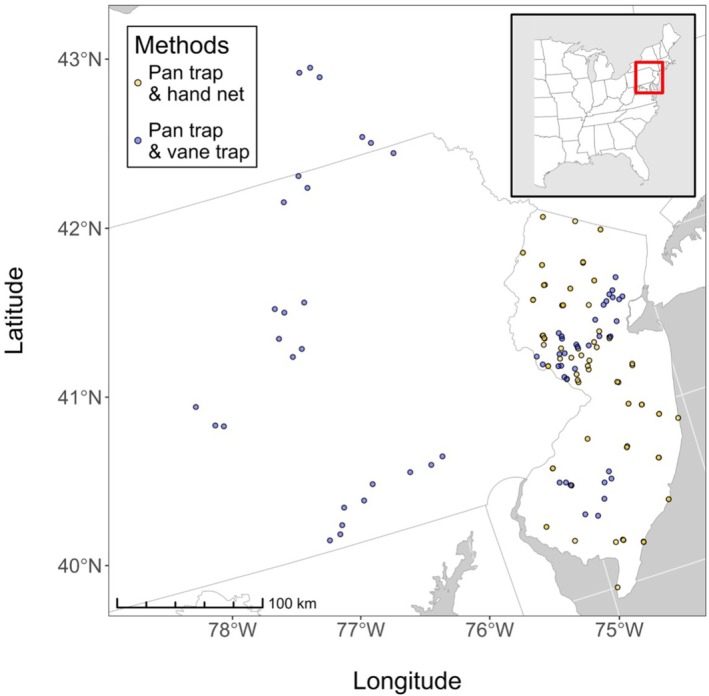 Figure 7
Peer Reviews
No public reviews on file for this paper yet. If you reviewed it on a platform where reviews are public (OpenReview, ICLR, NeurIPS, ICML), you can paste yours below so the community can read it here.
Videos
No videos yet. Explain this paper in a talk, walkthrough, or lecture? Add one.
Taxonomy
TopicsPlant and animal studies · Insect and Arachnid Ecology and Behavior · Species Distribution and Climate Change