A point-based system to determine authorship eligibility in a large clinical trial: Insights from the ISCHEMIA trial’s authorship nomination system
Shari Esquenazi-Karonika, Judith S. Hochman, June Lyo, Mark Xavier, Sean M. O’Brien, Stavroula Boumakis, Anna Naumova, Patenne D. Mathews, Jerome L. Fleg, David J. Maron

TL;DR
The ISCHEMIA trial developed a fair and transparent system to assign authorship based on performance, ensuring equitable recognition in large clinical research teams.
Contribution
A novel point-based system for authorship eligibility was implemented and evaluated in a large clinical trial.
Findings
72% of sites that randomized at least 15 participants had authorship positions in published manuscripts.
Most respondents found the system transparent (81%), objective (83%), and equitable for early career researchers and minorities.
61% of respondents indicated this was their first trial with performance-based authorship criteria.
Abstract
In team science, invitation to writing groups can be subjective and secretive. Confronted with this challenge in the ISCHEMIA trial, with 320 participating sites, 4 coordinating centers, 6 core laboratories, and numerous committees, we adapted an existing model to develop a transparent, objective, and equitable method for determining authorship eligibility. We developed a scoring system based on site performance of tasks critical to trial success that meet the ICJME criteria for authorship. Sites were ranked according to points earned, and points required for potential authorship were communicated to all sites. Site investigators were surveyed for their manuscript topic preferences for writing groups. Beyond the point-based system, authorship positions were also reserved for trial contributors who were not site investigators. To date, 50 original, peer-reviewed ISCHEMIA trial…
Genes, proteins, chemicals, diseases, species, mutations and cell lines named across the full text — each resolved to its canonical identifier and authoritative record.
Click any figure to enlarge with its caption.
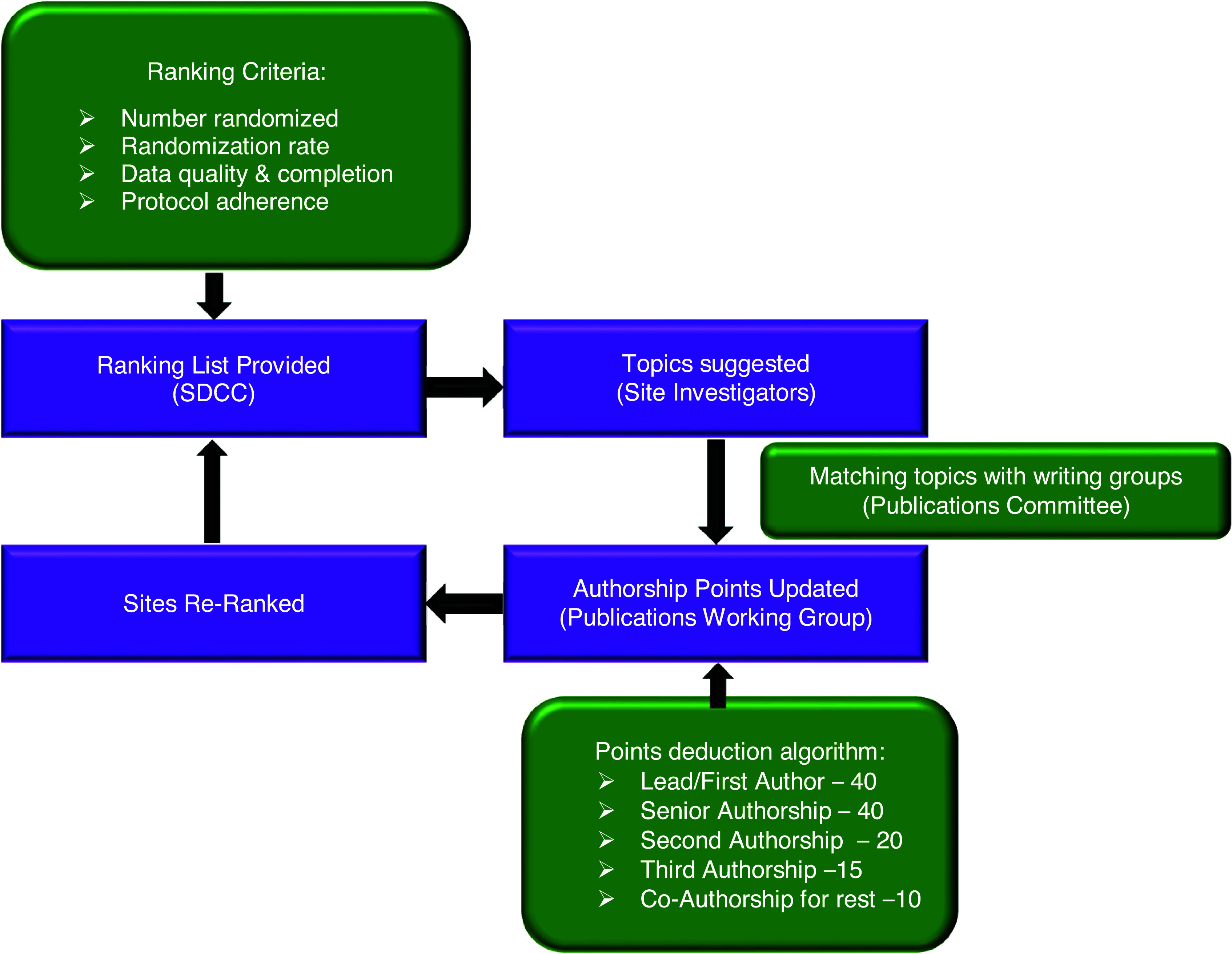 Figure 1
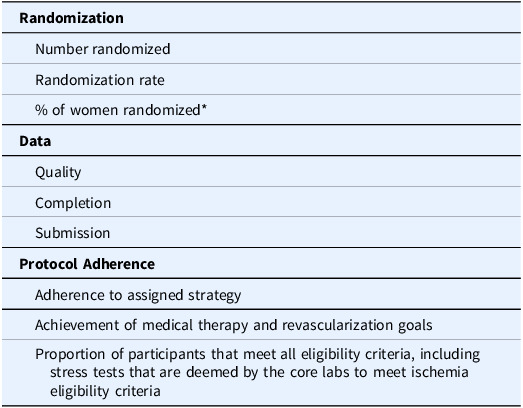 Figure 2
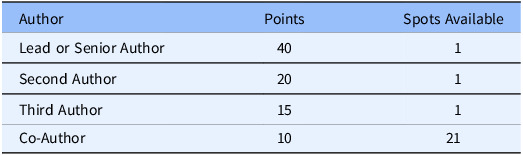 Figure 3
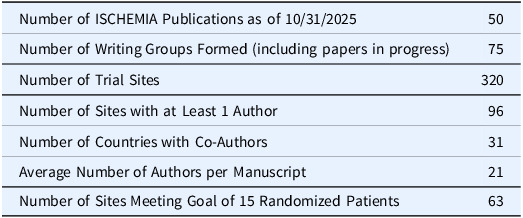 Figure 4
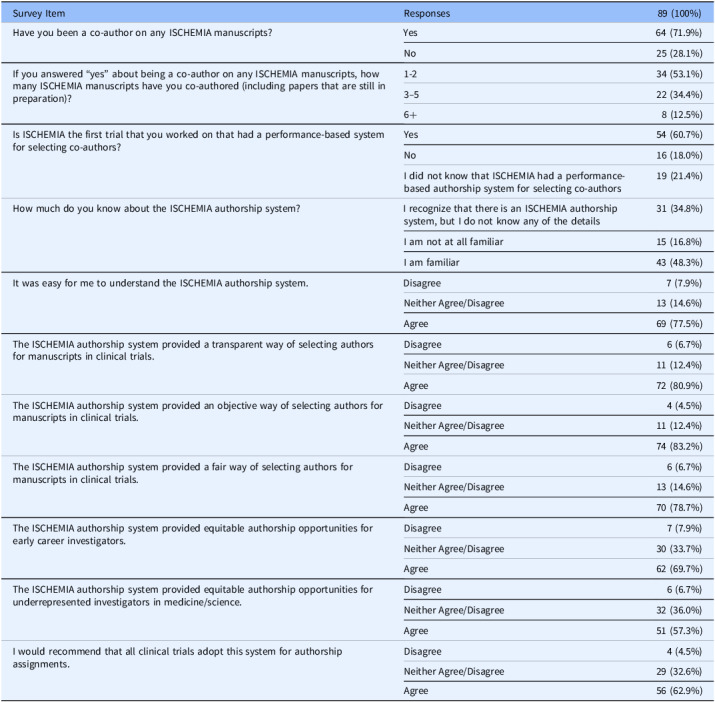 Figure 5
Peer Reviews
No public reviews on file for this paper yet. If you reviewed it on a platform where reviews are public (OpenReview, ICLR, NeurIPS, ICML), you can paste yours below so the community can read it here.
Videos
No videos yet. Explain this paper in a talk, walkthrough, or lecture? Add one.
Taxonomy
TopicsSex and Gender in Healthcare · scientometrics and bibliometrics research · Academic integrity and plagiarism