Religious parents receive more alloparental aid in rural Bangladesh
Theodore Samore, Richard Sosis, John Shaver, Radim Chvaja, Matthew Conrad, Anushe Hassan, Robert F. Lynch, Susan Schaffnit, Laure Spake, Joseph Watts, Mary K. Shenk, Rebecca Sear, Nurul Alam

TL;DR
In rural Bangladesh, religious parents receive more help from others in raising their children, with differences based on gender and the visibility of religious practices.
Contribution
This study explores how religious rituals signal commitment and elicit alloparental aid, considering both parents and ritual visibility.
Findings
Parents practicing religious rituals more frequently receive greater alloparental support from co-religionists.
Women’s private religious practices affect only household alloparents, while men’s public practices have broader effects.
The study considers both mothers and fathers in the context of religious signaling and cooperation.
Abstract
Researchers have long speculated about the evolutionary benefits of religiosity. One explanation for the evolution of religious ritual is that rituals signal commitment to co-religionists. As a major domain of prosocial behaviour, alloparental care – or care directed at children by non-parents – is a plausible benefit of religious signalling. The religious alloparenting hypothesis posits that parents who signal religious commitment receive greater alloparental support. Prior research on religiosity, cooperation, and allocare tends to treat individuals as isolated units, despite the inherent collective nature of religious cooperation. Here, we address this limitation in a survey-based study of 710 parents in rural Bangladesh. Instead of focusing only on mothers, we consider the interplay between both mothers and fathers in eliciting allocare, and leverage variation in the covertness of…
Genes, proteins, chemicals, diseases, species, mutations and cell lines named across the full text — each resolved to its canonical identifier and authoritative record.
Click any figure to enlarge with its caption.
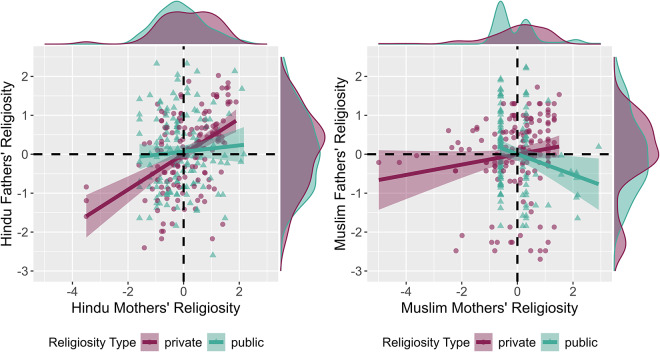 Figure 1
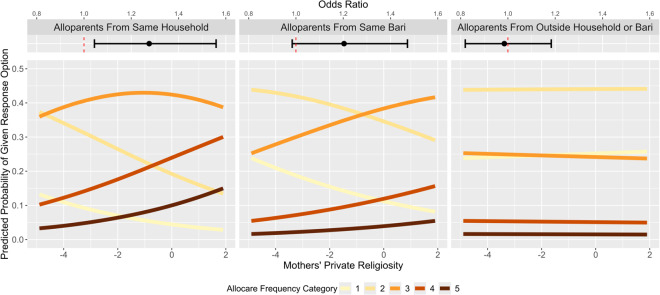 Figure 2
 Figure 3
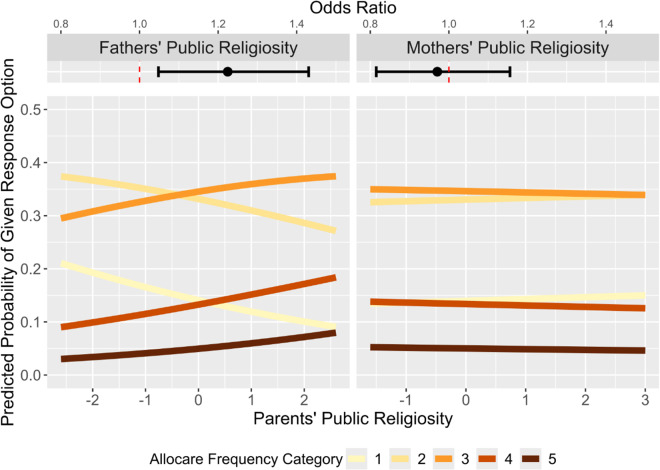 Figure 4
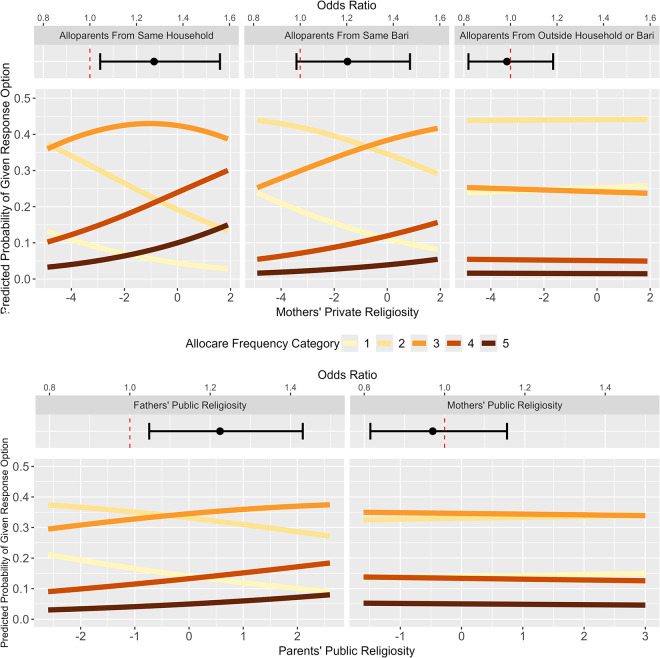 Figure 5
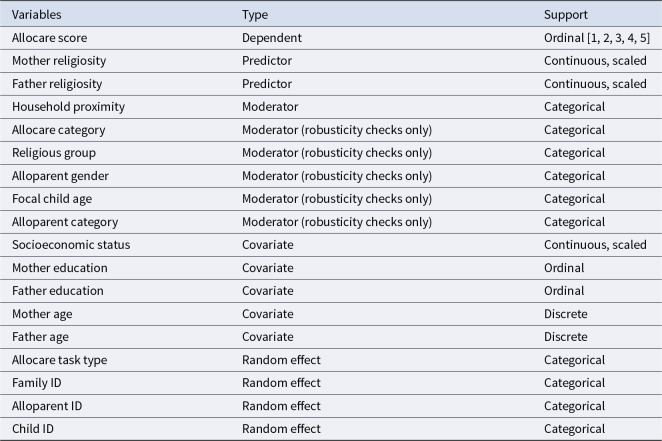 Figure 6
Peer Reviews
No public reviews on file for this paper yet. If you reviewed it on a platform where reviews are public (OpenReview, ICLR, NeurIPS, ICML), you can paste yours below so the community can read it here.
Videos
No videos yet. Explain this paper in a talk, walkthrough, or lecture? Add one.
Taxonomy
TopicsEvolutionary Game Theory and Cooperation · Evolutionary Psychology and Human Behavior · Experimental Behavioral Economics Studies