Predicting S1 TDDFT Energies from ZINDO Calculations Using Message-Passing ΔML with Electronically Informed Descriptors
Adam Coxson, Ömer H. Omar, Marcos del Cueto, Alessandro Troisi

TL;DR
This paper introduces a machine learning method that improves the accuracy of energy predictions for organic molecules, making low-cost calculations as reliable as more expensive ones.
Contribution
A novel ΔML framework using message-passing neural networks and electronic descriptors to correct ZINDO calculations toward TDDFT accuracy.
Findings
The ΔML model improved ZINDO S1 energy correlation from 0.77 to 0.96 on a 9500 molecule test set.
The model achieved a 0.99 correlation on 24,000 molecules when mapping ZINDO to ωB97X-D/6-31G* energies.
The method also enhanced S1 oscillator strength predictions from 0.524 to 0.839 correlation.
Abstract
We present a machine learning approach (ΔML) capable of enhancing the accuracy of semiempirical excited-state energy calculations to a level close to that of Time-Dependent Density Functional Theory (TDDFT). Using a data set of 7600 organic π-conjugated molecules calculated at the ZINDO and M06-2X/3-21G* TDDFT computational levels, we trained a set of models to learn the systematic errors of the low-level method and correct it toward higher-level accuracy values. The best performing model improved the correlation of ZINDO S1 energy predictions from 0.77 to 0.96 on a 9500 molecule test set of TDDFT target energies. Our ΔML-ZINDO model presents a negligible additional cost (∼2 ms per molecule) to a standard ZINDO calculation (∼2 s per molecule), enabling the computational screening of large data sets of molecules. Critical to the performance of the model is the AttentiveFP Message-Passing…
Genes, proteins, chemicals, diseases, species, mutations and cell lines named across the full text — each resolved to its canonical identifier and authoritative record.
Click any figure to enlarge with its caption.
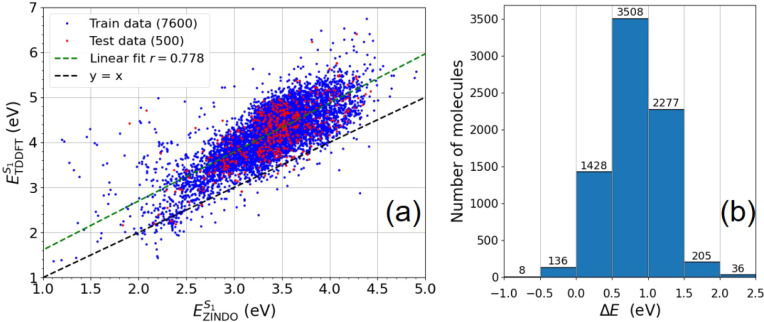 Figure 1
 Figure 2
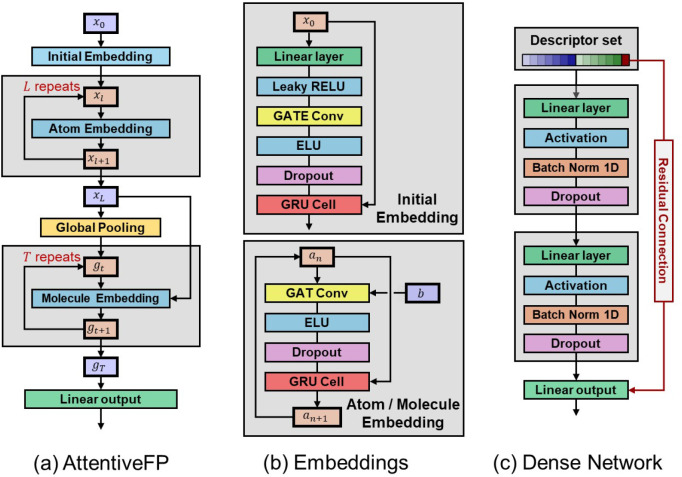 Figure 3
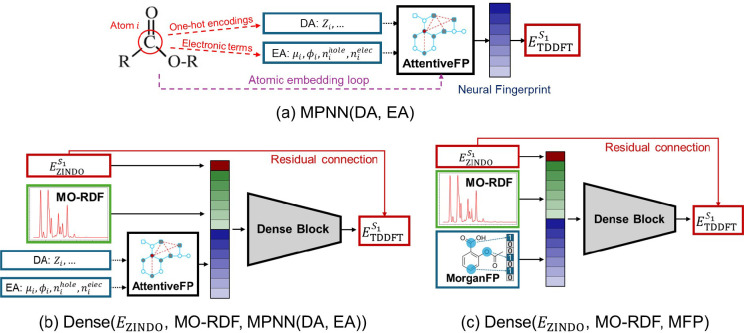 Figure 4
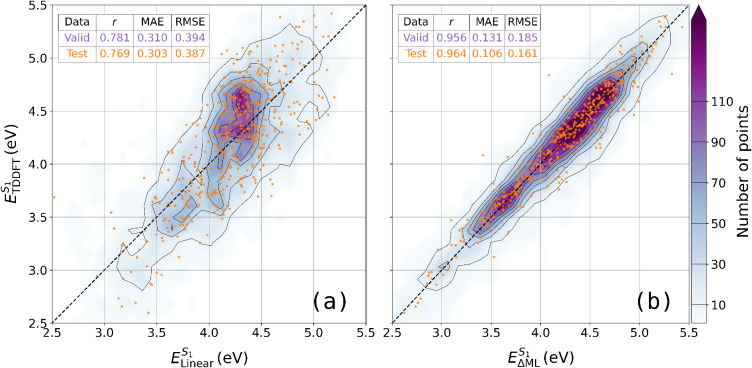 Figure 5
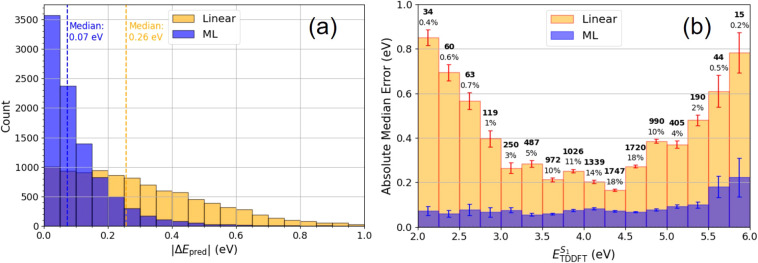 Figure 6
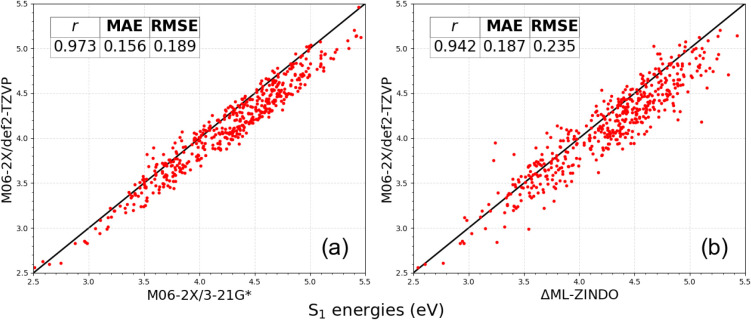 Figure 7
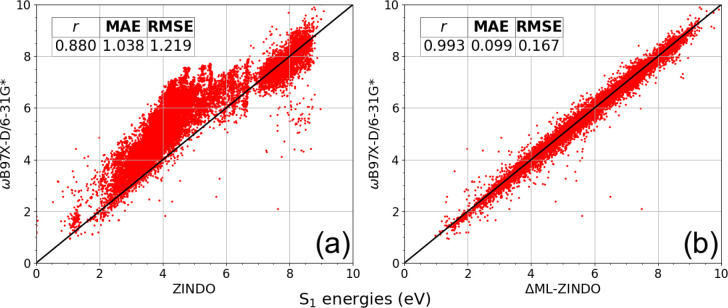 Figure 8
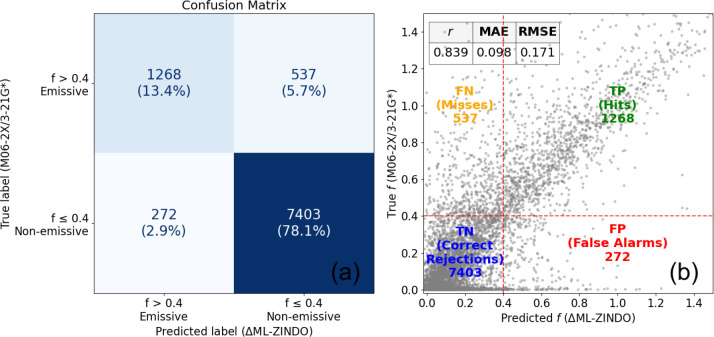 Figure 9
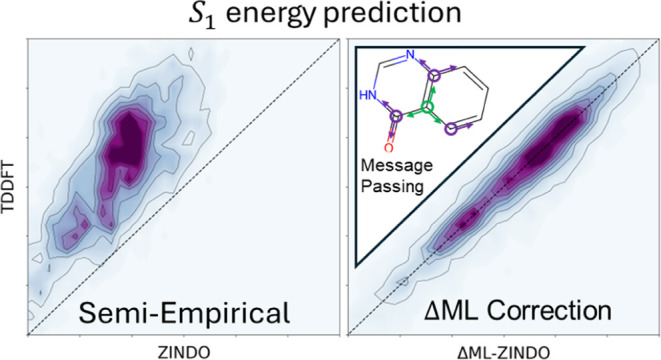 Figure 10
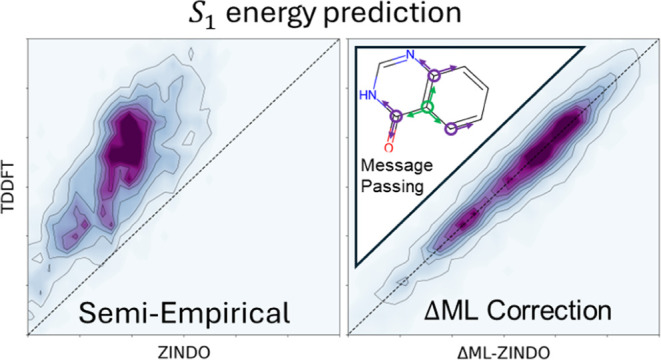 Figure 11
 Figure 12
 Figure 13
 Figure 14
 Figure 15
 Figure 16
 Figure 17
 Figure 18
 Figure 19
 Figure 20
 Figure 21
 Figure 22
 Figure 23
 Figure 24
 Figure 25
 Figure 26
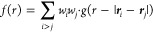 Figure 27
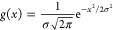 Figure 28
 Figure 29
 Figure 30
 Figure 31
 Figure 32
 Figure 33
 Figure 34
 Figure 35
 Figure 36
 Figure 37
 Figure 38
 Figure 39
 Figure 40
 Figure 41
 Figure 42
Peer Reviews
No public reviews on file for this paper yet. If you reviewed it on a platform where reviews are public (OpenReview, ICLR, NeurIPS, ICML), you can paste yours below so the community can read it here.
Videos
No videos yet. Explain this paper in a talk, walkthrough, or lecture? Add one.
Taxonomy
TopicsMachine Learning in Materials Science · Advanced Chemical Physics Studies · Advanced Physical and Chemical Molecular Interactions