Immunotherapy response in microsatellite-stable poorly differentiated thyroid carcinoma with mismatch repair deficiency and high tumor mutational burden
João Henrique Feldmann, João Felipe Feldmann, Cassio Murilo Hidalgo-Filho, Gustavo Luis Contado Alves, Rafael Sarlo Vilela, Sérgio Gonçalves, Gilberto de Castro Júnior

TL;DR
A rare thyroid cancer patient responded well to immunotherapy despite lacking typical biomarkers, suggesting new genetic factors could predict treatment success.
Contribution
This case highlights somatic mutations in DNA repair genes as potential biomarkers for immunotherapy response in microsatellite-stable PDTC.
Findings
A PDTC patient with microsatellite stability and high tumor mutational burden showed a sustained partial response to pembrolizumab.
Loss of MSH2/MSH6 and mutations in MSH2 and ATM were associated with immunotherapy response despite MSS status.
The case suggests DNA repair gene mutations may serve as alternative biomarkers for immunotherapy eligibility in PDTC.
Abstract
Poorly differentiated thyroid carcinoma (PDTC) is a rare and aggressive malignancy with a poor prognosis. Immunotherapy is typically guided by agnostic biomarkers such as microsatellite instability-high or high tumor mutational burden (TMB); however, these biomarkers are uncommon in PDTC. Therefore, identifying alternative predictive biomarkers remains an urgent necessity. We report the case of a 71-year-old woman who presented with life-threatening locoregional disease and was ineligible for radioiodine or tyrosine kinase inhibitors due to a prior subarachnoid hemorrhage. Molecular profiling of the resected tumor revealed a high TMB (10 mut/Mb), somatic mutations in MSH2 and ATM, and microsatellite stability (MSS). Immunohistochemistry demonstrated complete loss of MSH2/MSH6 expression, while PD-L1 expression was 20% (tumor proportion score). Based on these findings, pembrolizumab was…
Genes, proteins, chemicals, diseases, species, mutations and cell lines named across the full text — each resolved to its canonical identifier and authoritative record.
Click any figure to enlarge with its caption.
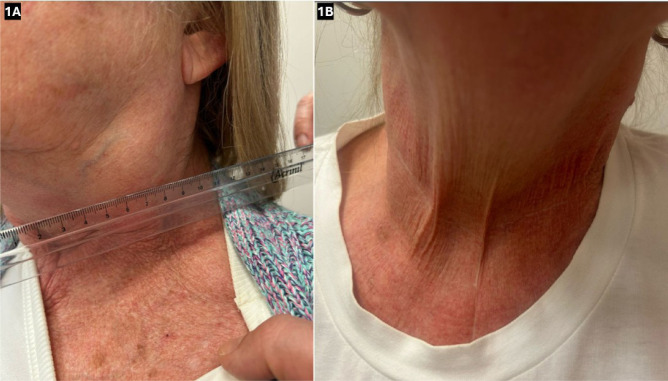 Figure 1
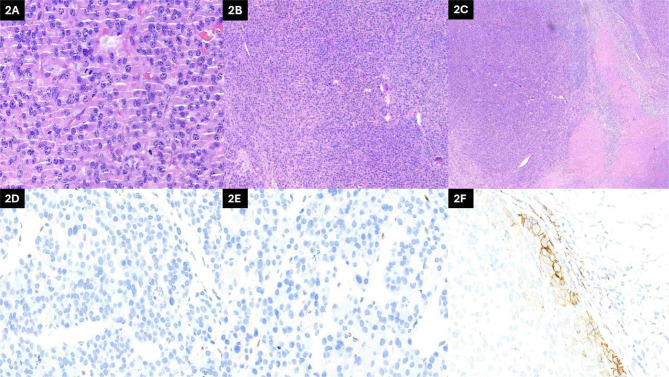 Figure 2
Peer Reviews
No public reviews on file for this paper yet. If you reviewed it on a platform where reviews are public (OpenReview, ICLR, NeurIPS, ICML), you can paste yours below so the community can read it here.
Videos
No videos yet. Explain this paper in a talk, walkthrough, or lecture? Add one.
Taxonomy
TopicsThyroid Cancer Diagnosis and Treatment · Genetic factors in colorectal cancer · Cancer Immunotherapy and Biomarkers