Metal Ion-Specific Modulation of Network Connectivity and Defects in Poly(ethylene glycol)–Peptide Conjugate Assemblies and Hydrogels
Mostafa Ahmadi, Kamila Wittek, Hanna Sophie Rieger, Marius Thomas, Lars Hartmann, Pol Besenius, Sebastian Seiffert

TL;DR
This study shows how metal ions can control the structure and properties of self-assembling peptide-polymer materials, making them more stable and responsive.
Contribution
The novel contribution is demonstrating how specific metal ions modulate the self-assembly and mechanical properties of peptide–polymer conjugates.
Findings
Metal ions like Co2+, Ni2+, Cu2+, and Zn2+ significantly enhance network stability and viscoelastic properties of the hydrogels.
Coordination geometry of metal ions influences the global assembly and nanofiber morphology of the conjugates.
Metal coordination improves network recovery and expands the linear viscoelastic region of the hydrogels.
Abstract
Self-assembling peptide–polymer conjugates offer a versatile platform to engineer nanostructures with tunable morphology and functions. Here we show that alternating phenylalanine–histidine pentapeptide units, conjugated to a short linear poly(ethylene glycol), show pH-induced assembly into β-sheet nanofibers that act as multifunctional cross-links in the resulting hydrogels. Circular dichroism spectra demonstrate that the self-assembly is enthalpy driven at low concentrations, while rheological results suggest that the network connectivity at high concentrations is compromised by the entropic penalty of chain stretching. Metal ions (Co2+, Ni2+, Cu2+, Zn2+) enhance secondary structures, with coordination geometry-dependent change of the global assembly. Common impacts of metal coordination include orders-of-magnitude higher network stability, an expanded linear viscoelastic region, and…
Genes, proteins, chemicals, diseases, species, mutations and cell lines named across the full text — each resolved to its canonical identifier and authoritative record.
Click any figure to enlarge with its caption.
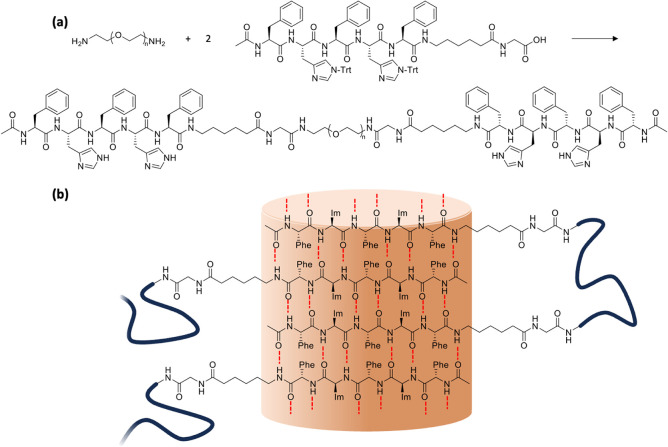 Figure 1
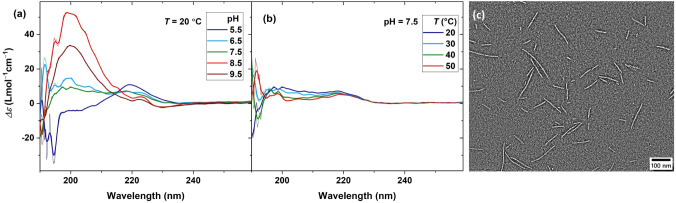 Figure 2
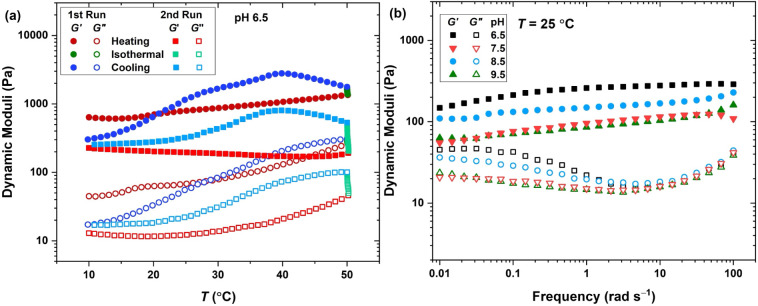 Figure 3
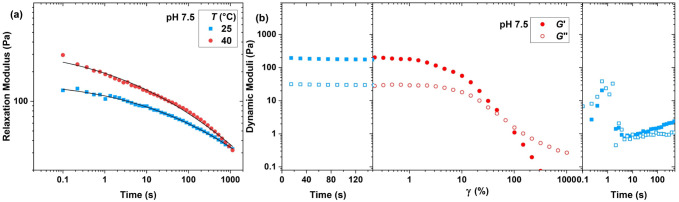 Figure 4
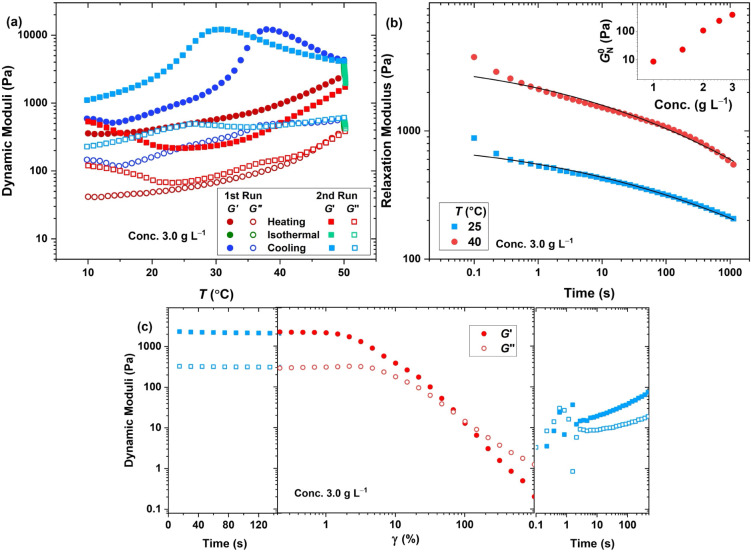 Figure 5
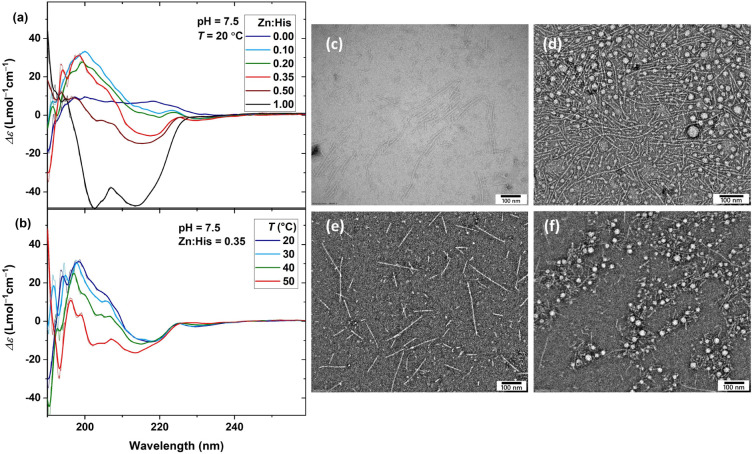 Figure 6
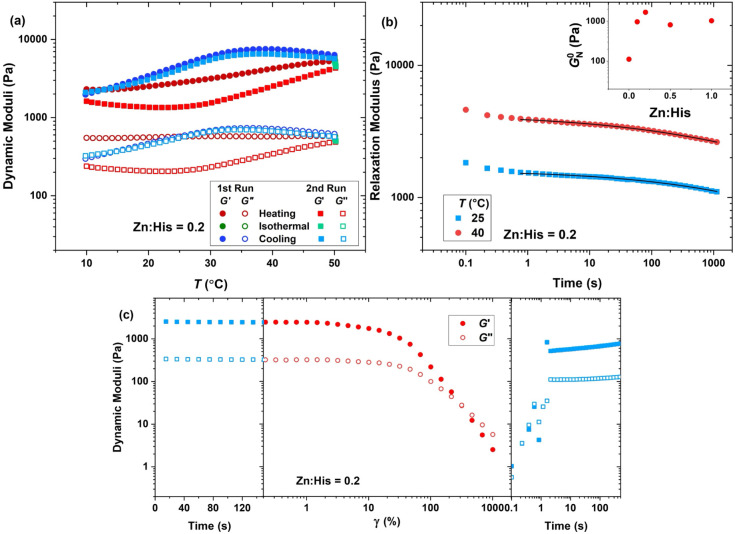 Figure 7
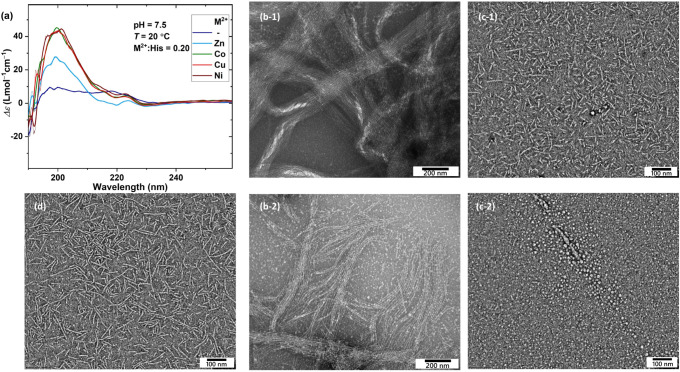 Figure 8
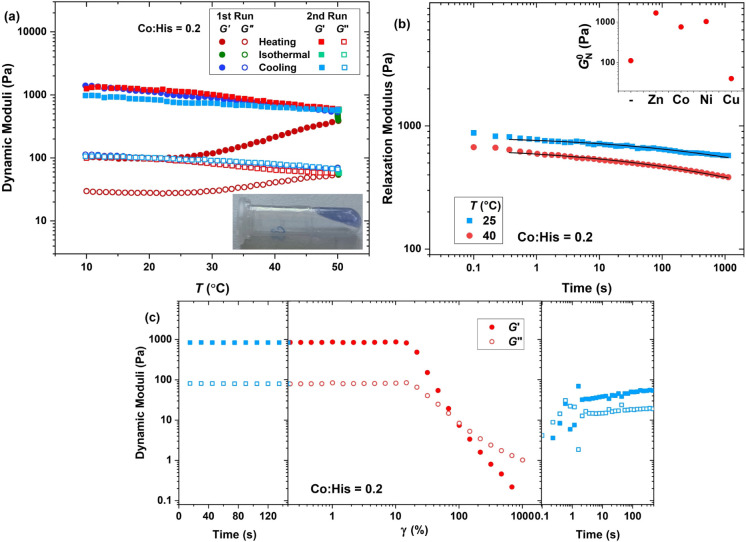 Figure 9
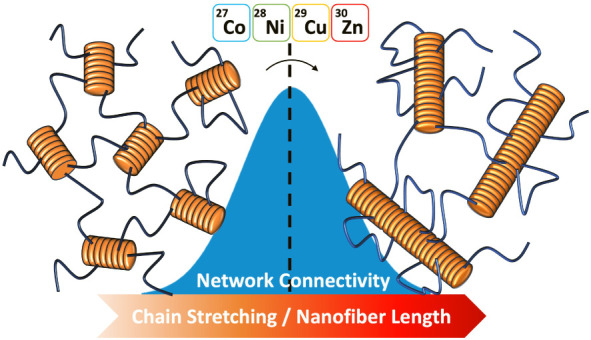 Figure 10
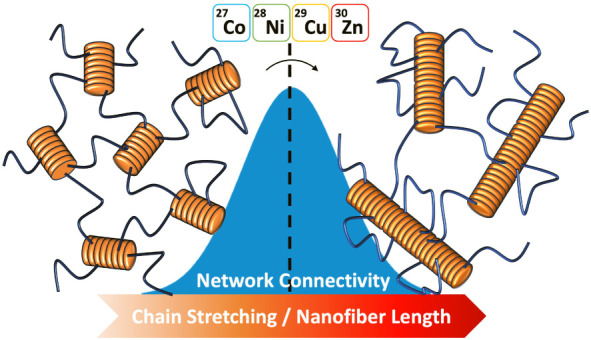 Figure 11
Peer Reviews
No public reviews on file for this paper yet. If you reviewed it on a platform where reviews are public (OpenReview, ICLR, NeurIPS, ICML), you can paste yours below so the community can read it here.
Videos
No videos yet. Explain this paper in a talk, walkthrough, or lecture? Add one.
Taxonomy
TopicsSupramolecular Self-Assembly in Materials · Hydrogels: synthesis, properties, applications · Polydiacetylene-based materials and applications