Distinct contributions of O‐acetylserine sulfhydrylases to cysteine biosynthesis in Pseudomonas aeruginosa
Noemi Massa, Flavia Catalano, Silvia Fruncillo, Francesca Troilo, Marta Mellini, Filippo Favretto, Livia Leoni, Giordano Rampioni, Alessandro Giuffrè, Adele di Matteo, Alessandra Astegno

TL;DR
This study explores how two enzymes in Pseudomonas aeruginosa help make cysteine, a key amino acid, and how they differ in their functions and interactions.
Contribution
The study reveals distinct biochemical and structural roles of PaCysK and PaCysM in cysteine biosynthesis in Pseudomonas aeruginosa.
Findings
PaCysK and PaCysM both play essential but overlapping roles in cysteine production.
PaCysK prefers sulfide, while PaCysM can use both sulfide and thiosulfate as sulfur sources.
PaCysK does not form a complex with P. aeruginosa CysE1, but can interact with CysE from Salmonella.
Abstract
Cysteine biosynthesis in bacteria proceeds primarily via the de novo pathway, involving serine acetyltransferase (CysE) and O‐acetylserine sulfhydrylase (OASS). This pathway is absent in humans, and its inhibition impairs microbial fitness, virulence, and antibiotic resistance, making its enzymes attractive antimicrobial targets. Most bacteria encode two OASS isoforms: CysK, which forms the cysteine synthase complex (CSC) with CysE, and CysM, which typically acts independently. While conserved, their biochemical properties and regulatory roles vary across species. Here, we investigated CysK (PaCysK) and CysM (PaCysM) from Pseudomonas aeruginosa, an opportunistic pathogen of major concern due to intrinsic antibiotic resistance. We characterized their steady‐state and pre‐steady‐state kinetics, structural features, and assessed substrate preferences through microbiological analyses of…
Genes, proteins, chemicals, diseases, species, mutations and cell lines named across the full text — each resolved to its canonical identifier and authoritative record.
Click any figure to enlarge with its caption.
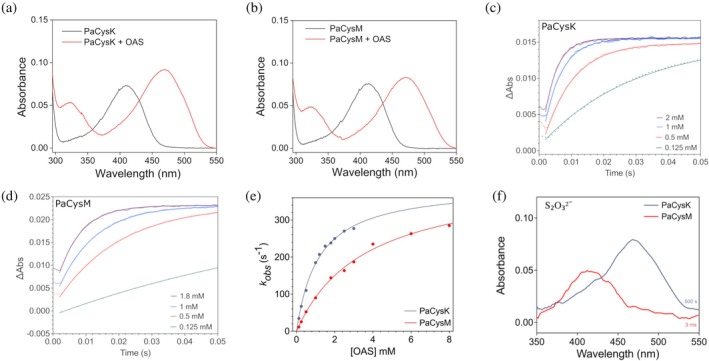 Figure 1
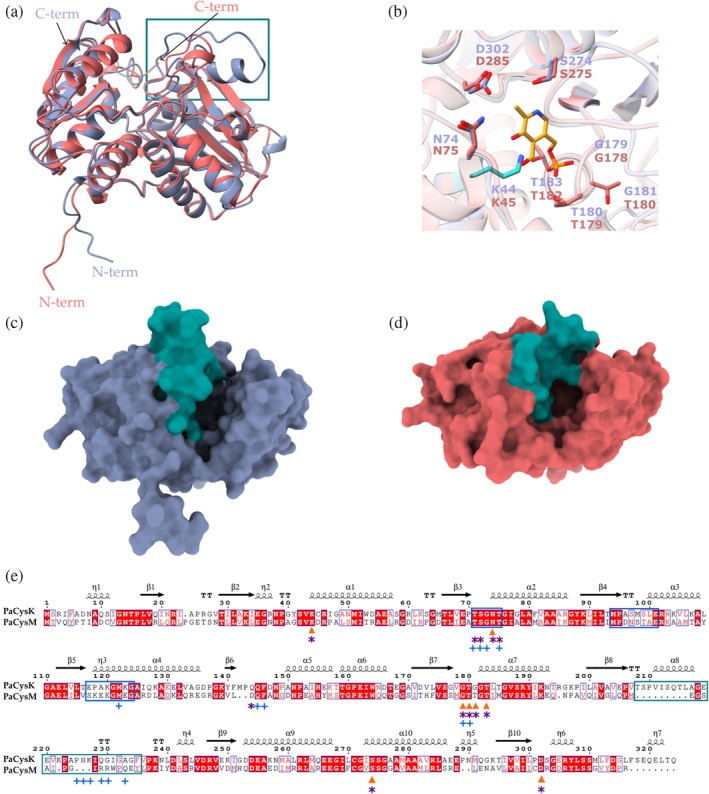 Figure 2
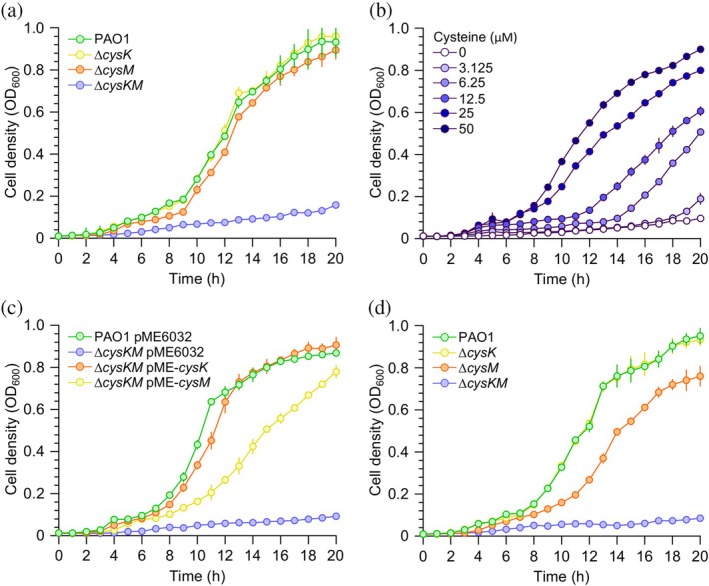 Figure 3
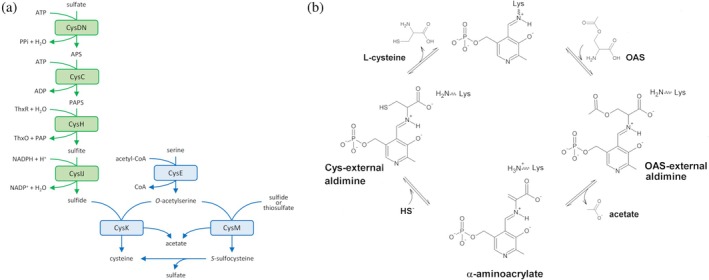 Figure 4
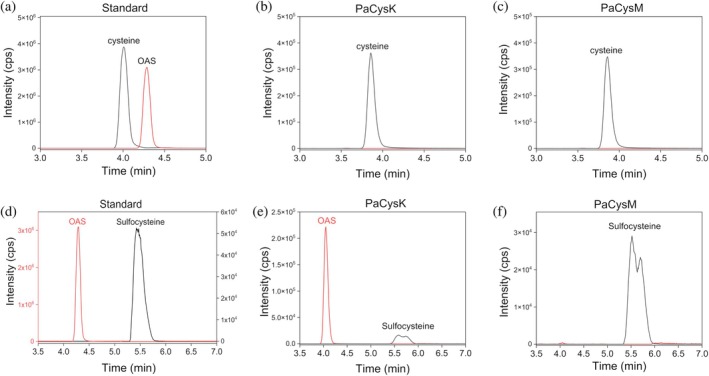 Figure 5
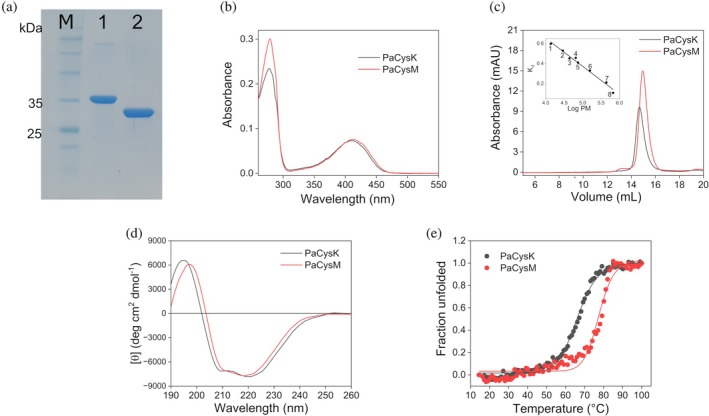 Figure 6
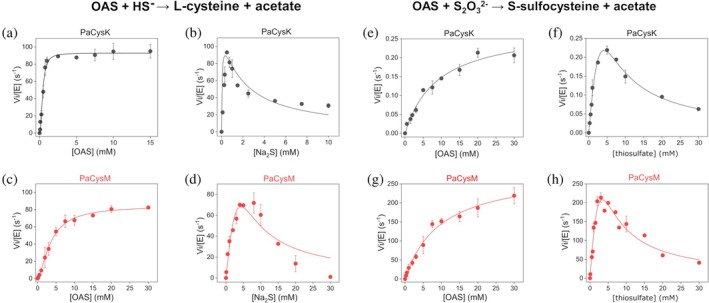 Figure 7
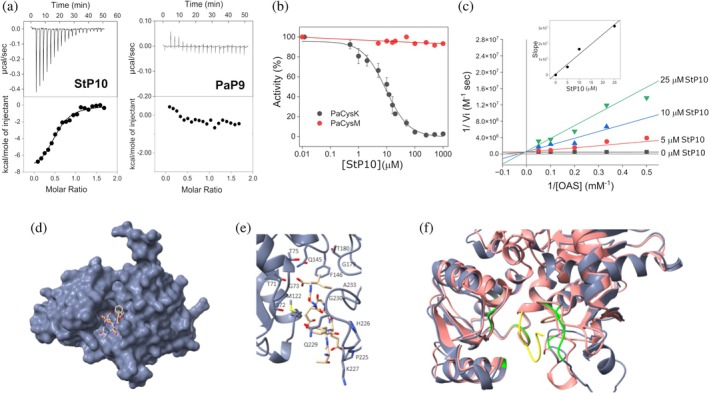 Figure 8
Peer Reviews
No public reviews on file for this paper yet. If you reviewed it on a platform where reviews are public (OpenReview, ICLR, NeurIPS, ICML), you can paste yours below so the community can read it here.
Videos
No videos yet. Explain this paper in a talk, walkthrough, or lecture? Add one.
Taxonomy
TopicsNitrogen and Sulfur Effects on Brassica · Sulfur Compounds in Biology · Folate and B Vitamins Research