To contact or not: an investigation into the polymeric surface interactions with human insulin and their therapeutic implications
Megren H. A. Fagihi, Chanaka Premathilaka, Laura Zopf, Tiina OʼNeill, Massimiliano Garré, Sourav Bhattacharjee

TL;DR
This study investigates how insulin interacts with polymer surfaces, leading to clumping that may reduce its effectiveness in treating diabetes.
Contribution
The novel use of FITC-labeled insulin and fluorescence lifetime measurements to map pH changes in insulin agglomerates.
Findings
Amine-terminated polymers caused larger insulin agglomerates with significant pH fluctuations.
Acid-terminated polymers showed less pronounced effects on insulin structure and pH.
Polymer interactions may reduce insulin bioactivity and glycemic control.
Abstract
Insulin, a therapeutic peptide used to treat Type I diabetes, interacts with polymers commonly found in healthcare settings via various hydrophobic interactions, which can trigger insulin agglomeration, thereby reducing its bioavailability and therapeutic efficacy. In this study, a fluorescein isothiocyanate (FITC)-labeled human insulin (λex = 490 nm; λem = 498–530 nm) suspension (0.125 mg mL−1, 0.25 mg mL−1, and 0.5 mg mL−1) prepared at pH 3 was interacted with fluorescent amine- (λex = 560 nm; λem = 570–650 nm) and acid-terminated (λex = 625 nm; λem = 640–720 nm) polystyrene particles (1 µm) at 37 °C for t = 2 h, 4 h, 24 h, 48 h, and 72 h. The variable fluorescence lifetime of FITC, driven by pH fluctuations, was used as a molecular pH meter to map pH alterations within insulin agglomerates. Larger agglomerates, with higher lifetime variations, were noticed for the amine-terminated…
Genes, proteins, chemicals, diseases, species, mutations and cell lines named across the full text — each resolved to its canonical identifier and authoritative record.
Click any figure to enlarge with its caption.
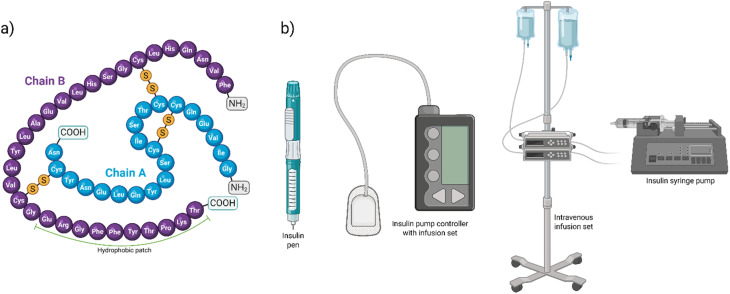 Figure 1
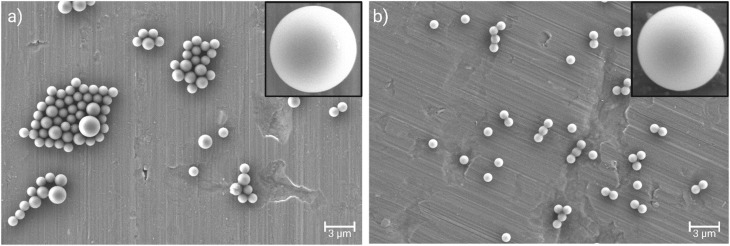 Figure 2
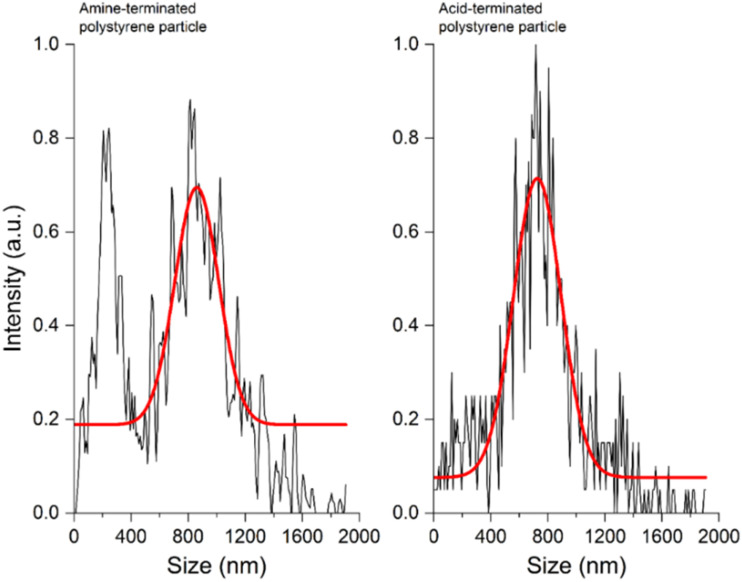 Figure 3
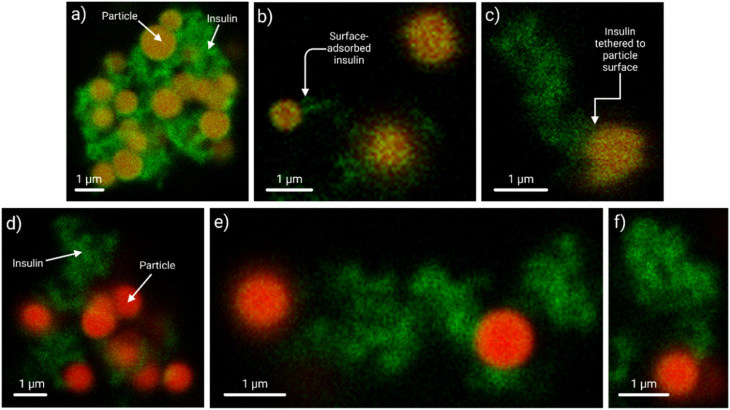 Figure 4
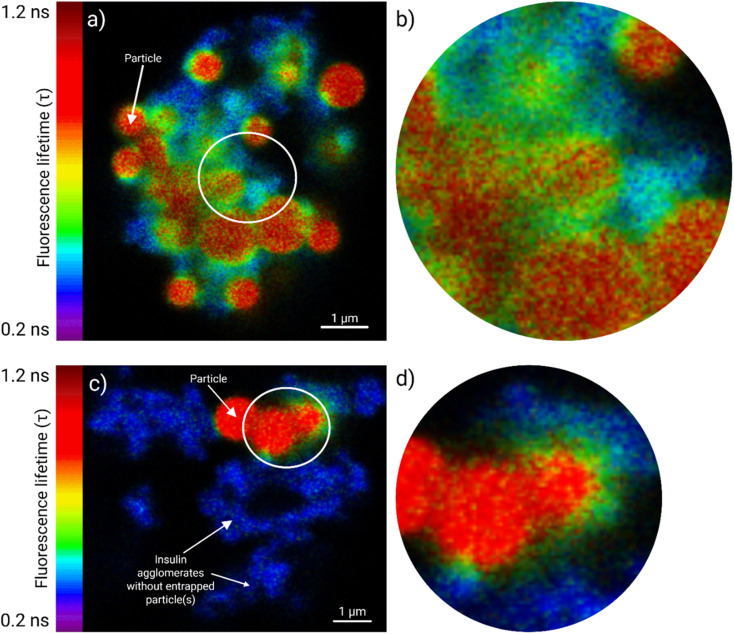 Figure 5
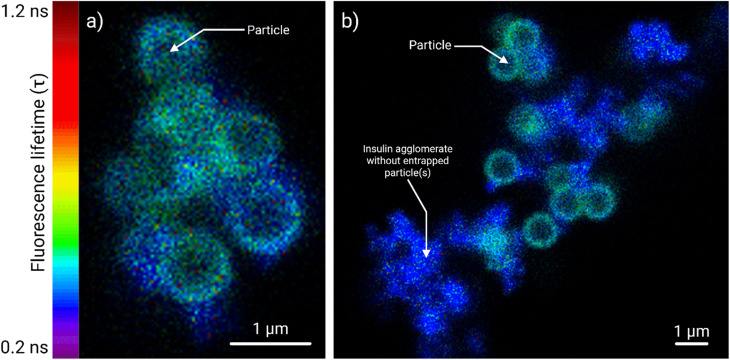 Figure 6
 Figure 7
Peer Reviews
No public reviews on file for this paper yet. If you reviewed it on a platform where reviews are public (OpenReview, ICLR, NeurIPS, ICML), you can paste yours below so the community can read it here.
Videos
No videos yet. Explain this paper in a talk, walkthrough, or lecture? Add one.
Taxonomy
TopicsAdvanced Drug Delivery Systems · Hydrogels: synthesis, properties, applications · Polymer Surface Interaction Studies